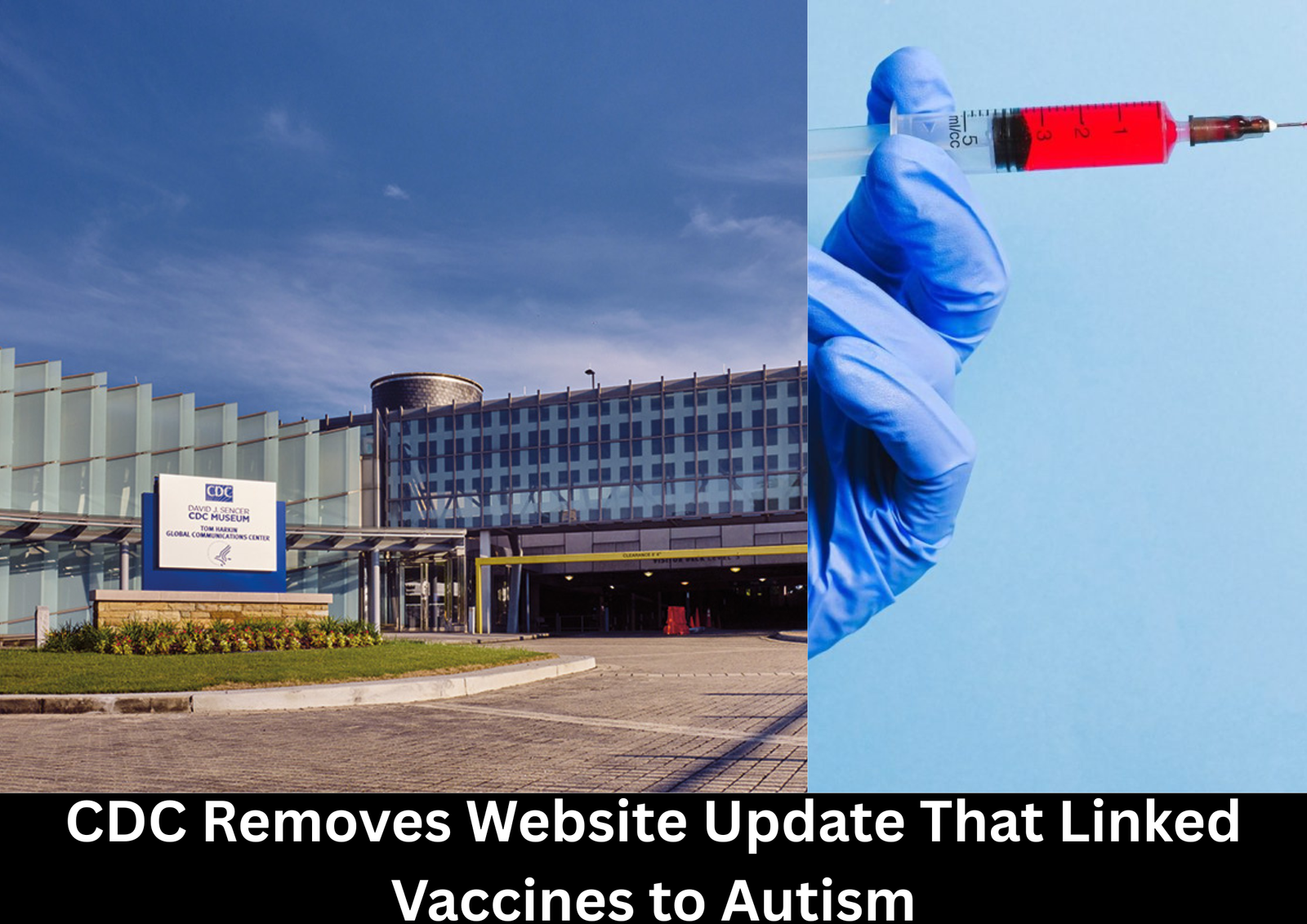
In Washington, the Centers for Disease Control and Prevention (CDC) has rolled back a brief and controversial update to its childhood vaccine information page after lawmakers, scientists, and state officials sharply criticized the change. The reference, which appeared online for only about a day, was widely viewed as lending undue legitimacy to a disproven theory linking vaccines to autism.
The update, titled “Perspectives on Vaccine Safety,” included a line noting that “some families have expressed concern” about a connection between childhood immunizations and autism. The language was added without undergoing the CDC’s standard scientific review process, prompting immediate alarm among public health experts who said the wording risked confusing the public about established medical research.
The timing of the change raised further questions. It came shortly after the CDC Director met with Robert F. Kennedy Jr., a long-time critic of vaccine policies who recently joined a federal health equity advisory group. Following the meeting, Kennedy publicly suggested that the CDC had agreed to revise information on its website-comments that drove a surge of traffic to the agency’s pages and contributed to brief technical issues.
Members of both political parties quickly condemned the updated wording. Senator Bill Cassidy, a physician and Republican from Louisiana, reminded reporters that extensive research has repeatedly found no link between vaccines and autism. In Massachusetts, Governor Maura Healey issued a statement describing the language as “misleading and harmful,” warning that even subtle changes can erode trust in vital public health guidance.
By the evening of November 21, the CDC restored the original page and said the update had been published “prematurely” without completing the required internal review. Agency officials emphasized that its long-standing guidance on vaccine safety has not changed.
The incident has reignited debate over how scientific agencies should handle political pressure, public skepticism, and the spread of misleading claims. As the CDC works to improve communication and rebuild trust after years of polarization, the brief website change has become a reminder of how closely the public watches even small shifts in official messaging.