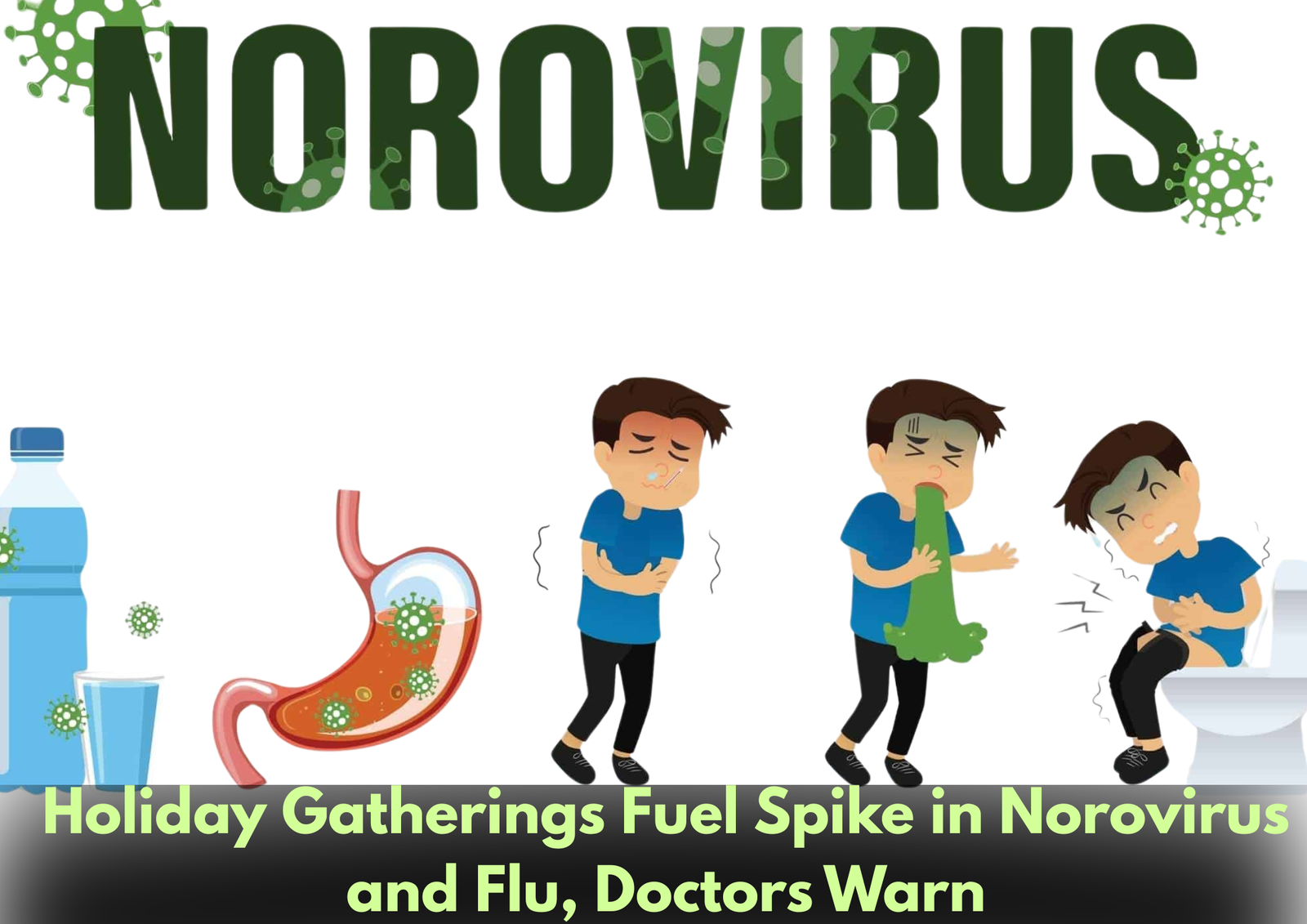
As millions of Americans prepare to travel for Thanksgiving, health officials are reporting a sharp rise in norovirus infections nationwide. Data reviewed this week shows that the highly contagious virus-often linked to sudden vomiting and diarrhea-is spreading earlier and faster than usual across several regions of the country.
Early Surge Raises Concerns
Health specialists note that norovirus typically increases in winter, but current surveillance reports highlight an unusually swift jump in cases. Laboratories across the U.S. have recorded a sustained climb in positive test results, signaling widespread community transmission just as families begin gathering for holiday celebrations.
The Northeast appears to be experiencing the most significant spike, with positivity rates reaching levels not seen in more than a decade. States in the South and West are also reporting elevated case numbers and increased hospital visits related to gastrointestinal illnesses.
What to Know About Norovirus
Often referred to as the “winter vomiting virus,” norovirus is one of the most common causes of stomach-related outbreaks in the United States. The virus spreads easily-from touching contaminated surfaces, consuming infected food or water, or being in close contact with someone who is ill. Even microscopic particles released during vomiting can carry the virus.
Only a small number of viral particles are needed to cause infection, which is why outbreaks can spread so quickly in households, schools, cruise ships, and other crowded environments.
Symptoms and Expected Recovery
People infected with norovirus may experience sudden vomiting, diarrhea, stomach pain, nausea, and fatigue. Some individuals also develop low-grade fever or muscle aches. Symptoms usually appear within 12 to 48 hours after exposure and tend to last one to three days.
Although most people recover without complications, dehydration is a risk-especially for older adults, young children, and individuals with weakened immune systems.
Why Contagion Remains a Challenge
One of the reasons norovirus spreads so effectively is that individuals can remain contagious long after they begin to feel better. Health authorities warn that viral shedding can continue for more than two weeks following recovery, increasing the likelihood of passing the illness to others.
How to Protect Yourself
Health experts stress that proper handwashing-using soap and warm water for at least 20 seconds-is the most effective way to prevent infection. Alcohol-based sanitizers do not reliably kill norovirus.
Additional prevention tips include:
- Avoid preparing food for others while sick and for at least 48 hours after symptoms stop.
- Clean contaminated surfaces promptly using a bleach-based disinfectant.
- Wash bedding, towels, and clothing on the hottest setting if they may have been exposed.
- Keep distance from anyone experiencing vomiting or diarrhea.
Holiday Season Complications
The uptick in norovirus is arriving during a broader wave of respiratory illnesses. Flu activity is beginning to rise earlier than anticipated, and hospitals have noted increased cases of RSV, adding pressure on healthcare systems already bracing for holiday-related travel surges.
Public health officials advise travelers to stay home if they are ill and encourage families to take extra precautions to prevent the spread of infections during gatherings.