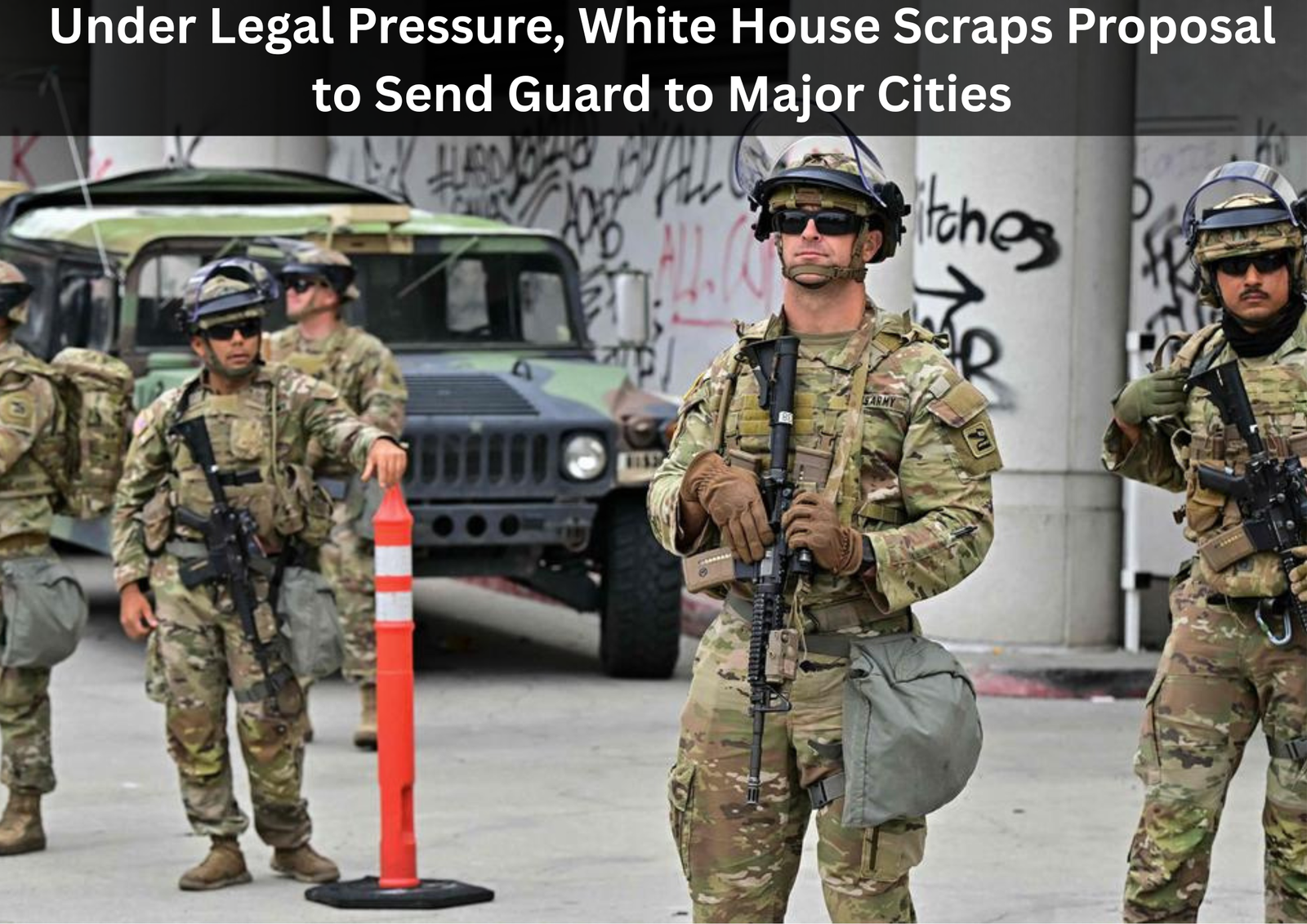
The Trump administration has withdrawn a controversial proposal to deploy National Guard troops to several major U.S. cities, stepping back from the plan after legal action from California officials and vocal resistance from local governments. The move ends a short-lived but highly charged debate over federal authority, public safety, and states’ rights.
Proposal Sparks Immediate Controversy
The original proposal, unveiled late last week, outlined a plan to send National Guard units to Chicago, Los Angeles, and Portland. According to administration officials at the time, the deployments were intended to support local authorities amid what the White House described as rising crime levels. However, specific operational details, troop numbers, and mission parameters were not publicly disclosed.
Governors of Illinois, California, and Oregon were formally notified of the request, but all three states quickly signaled opposition. City leaders in the affected regions argued that local law enforcement agencies were capable of managing public safety without federal military involvement.
Lawsuit Challenges Federal Authority
Tensions escalated further when California Governor Gavin Newsom filed a lawsuit in federal court, asserting that the proposed deployment violated constitutional limits on federal power. The legal filing argued that using National Guard forces for domestic law enforcement without state consent undermined state sovereignty and conflicted with longstanding federal statutes designed to keep military forces separate from civilian policing.
The lawsuit was filed in the U.S. District Court for the Northern District of California and sought an immediate injunction preventing any deployment within the state.
Administration Backs Away
Within days of the legal challenge, the administration reversed course. In a filing submitted by the Department of Justice, federal attorneys informed the court that there were no current plans to move forward with the National Guard deployments, effectively nullifying the lawsuit.
President Donald Trump confirmed the decision publicly through a social media post, stating that the administration had chosen to abandon the effort. He framed the withdrawal as a tactical decision, suggesting that continuing the dispute would benefit political opponents rather than improve public safety.
Local Leaders React
State and city officials welcomed the announcement. Governor Newsom praised the reversal as an affirmation of constitutional principles and the balance of power between states and the federal government. Leaders in Chicago and Portland echoed similar sentiments, reiterating that the proposed deployment was neither requested nor necessary.
Portland officials, who had been particularly outspoken, maintained that federal intervention would have escalated tensions rather than addressed underlying challenges facing the city.
Broader Implications
The episode highlights ongoing debates about the role of the federal government in addressing crime, the limits of executive authority, and the use of military resources within U.S. borders. Legal experts note that while the federal government has certain emergency powers, domestic deployments of military forces remain highly sensitive and legally constrained.
With the administration’s decision to stand down, the immediate conflict has ended, though questions surrounding federal involvement in local law enforcement are likely to resurface in future policy discussions.