
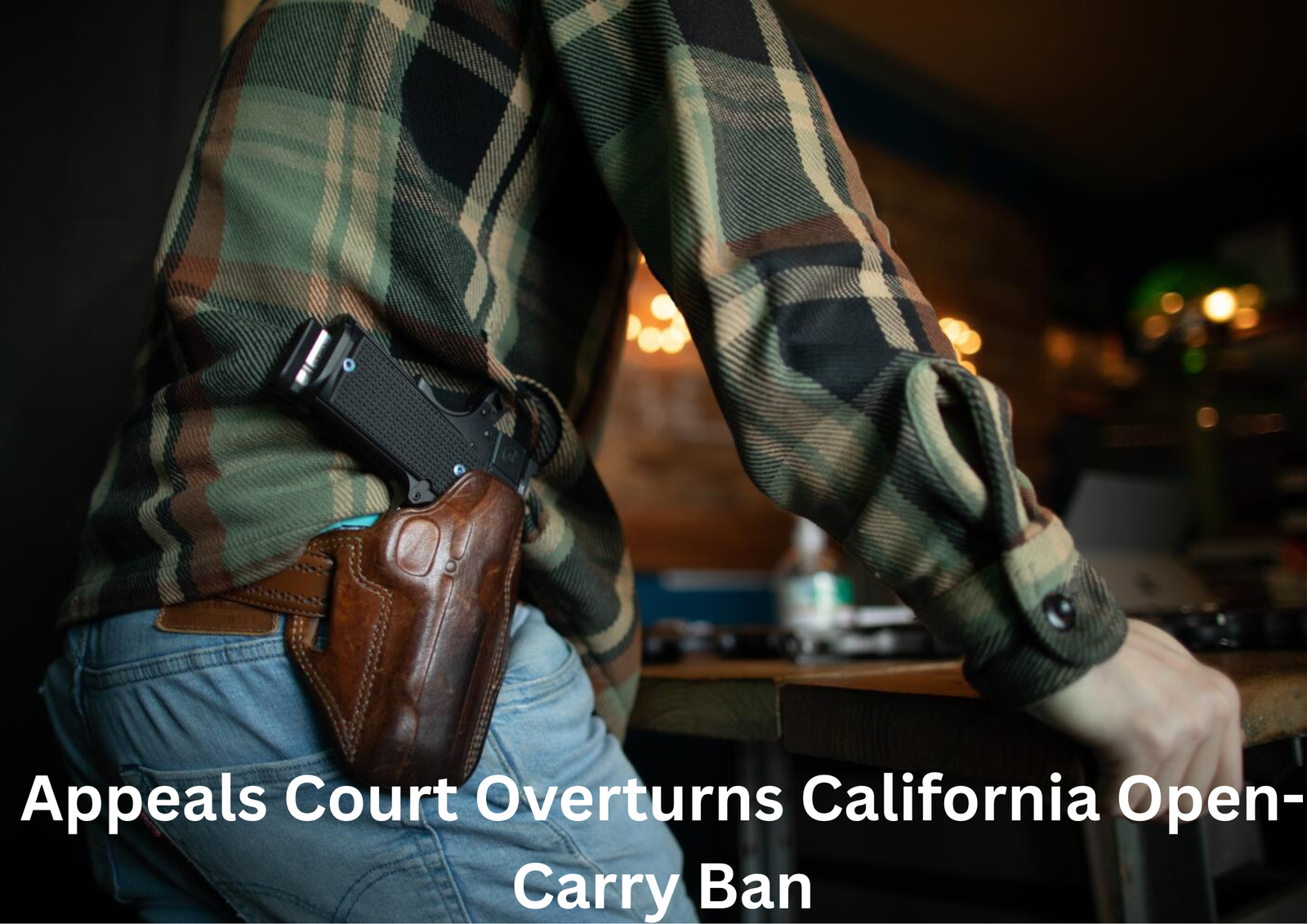
A federal appeals court has ruled that California’s long-standing ban on openly carrying firearms in most public areas violates the Second Amendment, marking a significant development in the ongoing national debate over gun regulations.
In a 2–1 decision issued Friday, a three-judge panel of the U.S. Court of Appeals for the Ninth Circuit concluded that the state’s restrictions on open carry in densely populated counties cannot be reconciled with historical firearm practices in the United States. The ruling affects counties with populations exceeding 200,000 residents, which together account for the vast majority of Californians.
Court Finds Conflict With Historical Firearm Traditions
Writing for the majority, Circuit Judge Lawrence VanDyke stated that openly carrying firearms has deep historical roots in American society, dating back to well before the adoption of the Bill of Rights. According to the court, modern regulations must align with these historical traditions in order to pass constitutional scrutiny.
The panel relied heavily on the U.S. Supreme Court’s 2022 decision in New York State Rifle & Pistol Association v. Bruen, which established that gun laws must be justified by historical precedent rather than modern policy considerations alone. Applying that standard, the judges determined that California’s broad prohibition failed to meet constitutional requirements.
Judge VanDyke also noted that open carry is generally lawful in a majority of U.S. states and that California itself permitted the open carry of unloaded handguns for self-defense purposes until legislation enacted in 2012 changed that policy.
Origins of the Law Draw Scrutiny
The ruling examined the origins of California’s public carry restrictions, including earlier legislation from the late 1960s. The court referenced historical records indicating that some firearm regulations were enacted in response to specific political movements of the era, raising concerns about whether such motivations align with constitutional principles today.
While the opinion did not invalidate all firearm regulations in the state, it questioned whether population-based bans could be justified under the Second Amendment when similar restrictions lacked clear historical support.
Case Brought by Rural California Gun Owner
The lawsuit was filed by Mark Baird, a resident of Siskiyou County in Northern California. Baird challenged the state’s open-carry laws after being unable to secure a permit, arguing that the restrictions infringed on his constitutional rights.
Although the appeals court ruled in his favor regarding the ban in heavily populated counties, it declined to overturn California’s permit system in smaller counties. The judges explained that this aspect of the challenge was not properly pursued during earlier stages of litigation, limiting the scope of their decision.
Dissent Warns of Broader Implications
Senior Circuit Judge N. Randy Smith issued a partial dissent, agreeing that California’s licensing framework is constitutional but disagreeing with the majority’s conclusion on the population-based ban. He argued that the state’s firearm laws are consistent with the Supreme Court’s guidance and should have been upheld in full.
Judge Smith cautioned that the ruling could complicate efforts by states to tailor gun regulations to local conditions and public safety concerns.
State Officials Weigh Next Steps
California Attorney General Rob Bonta’s office responded by reaffirming its commitment to defending the state’s gun safety laws. Officials indicated they are reviewing the decision and evaluating possible legal options, including further appeals.
The ruling arrives amid a wave of legal challenges to firearm regulations nationwide following the Bruen decision. In recent years, courts have issued mixed rulings, sometimes striking down gun laws while upholding others, particularly those involving sensitive public locations.
National Context and Future Legal Battles
The Ninth Circuit has previously upheld California laws restricting firearms in specific venues such as parks, bars, and stadiums. Meanwhile, the U.S. Supreme Court is expected to hear another major Second Amendment case in 2026 that will address whether federal restrictions on gun ownership for marijuana users are constitutional.
Legal analysts say the latest decision underscores the evolving nature of firearm law in the United States and signals continued uncertainty as courts attempt to balance constitutional rights with public safety considerations.
Missed Infant Vaccines Linked to Lower Measles Protection by Age Two, Researchers Warn—read this blog to understand the risks, scientific findings, and why timely immunization matters for long-term child health.