
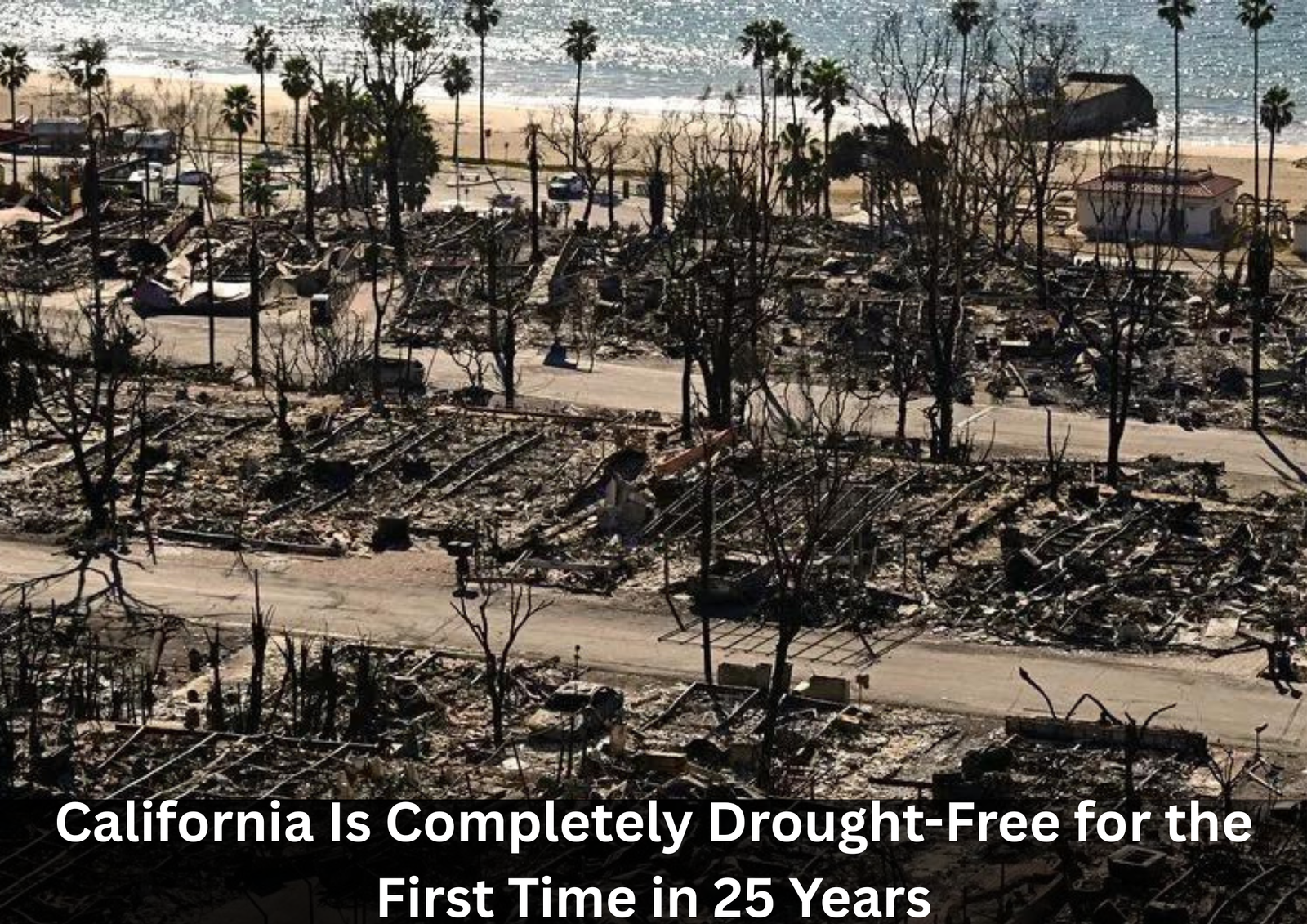
California has reached a historic climate milestone, becoming completely drought-free for the first time in approximately 25 years. The announcement came after the latest U.S. Drought Monitor update confirmed that no part of the state is currently classified as dry or drought-stricken, a sharp reversal from the water shortages that have defined much of the 21st century.
The newly released map showed that conditions across California have improved to the point where even the mildest “abnormally dry” category has disappeared. The last time the state achieved this status was in 2005, marking a quarter-century gap between drought-free reports.
Experts attribute the dramatic recovery to consecutive wet seasons and an unusually strong series of atmospheric river storms that hit the state during late 2025 and early 2026. These powerful systems delivered widespread rainfall and helped build an above-average Sierra Nevada snowpack, which plays a crucial role in the state’s water supply as it melts during warmer months.
The drought-free milestone arrives after a decade defined by some of the state’s most severe dry periods on record. Between 2011 and 2017, California endured what scientists identified as its driest period in at least 1,200 years, followed by another intense drought that peaked between 2021 and 2023. Those conditions led to sweeping water restrictions, agricultural cutbacks, and unprecedented wildfire seasons that strained communities and infrastructure.
Reservoir levels are now sitting at or above historical averages for this time of year, signaling improved stability for farms, cities, and ecosystems reliant on the state’s complex water network. Snowpack readings have also surpassed seasonal expectations, boosting confidence that water availability will remain strong heading into the summer months.
Despite the optimism, climate scientists and water officials are urging caution. California’s climate is notoriously unpredictable, frequently swinging between extremely dry and extremely wet periods. Experts warn that future droughts are inevitable, especially as climate change accelerates weather volatility across the western United States.
For now, the new drought-free designation serves as both a relief and an opportunity – a chance for the state to reinforce water storage, update conservation strategies, and prepare for the next inevitable dry cycle.
Oil Industry Signals Caution as Trump Courts $100 Billion Investment in Venezuela, raising global attention on energy politics – read my other blog for the full breakdown.