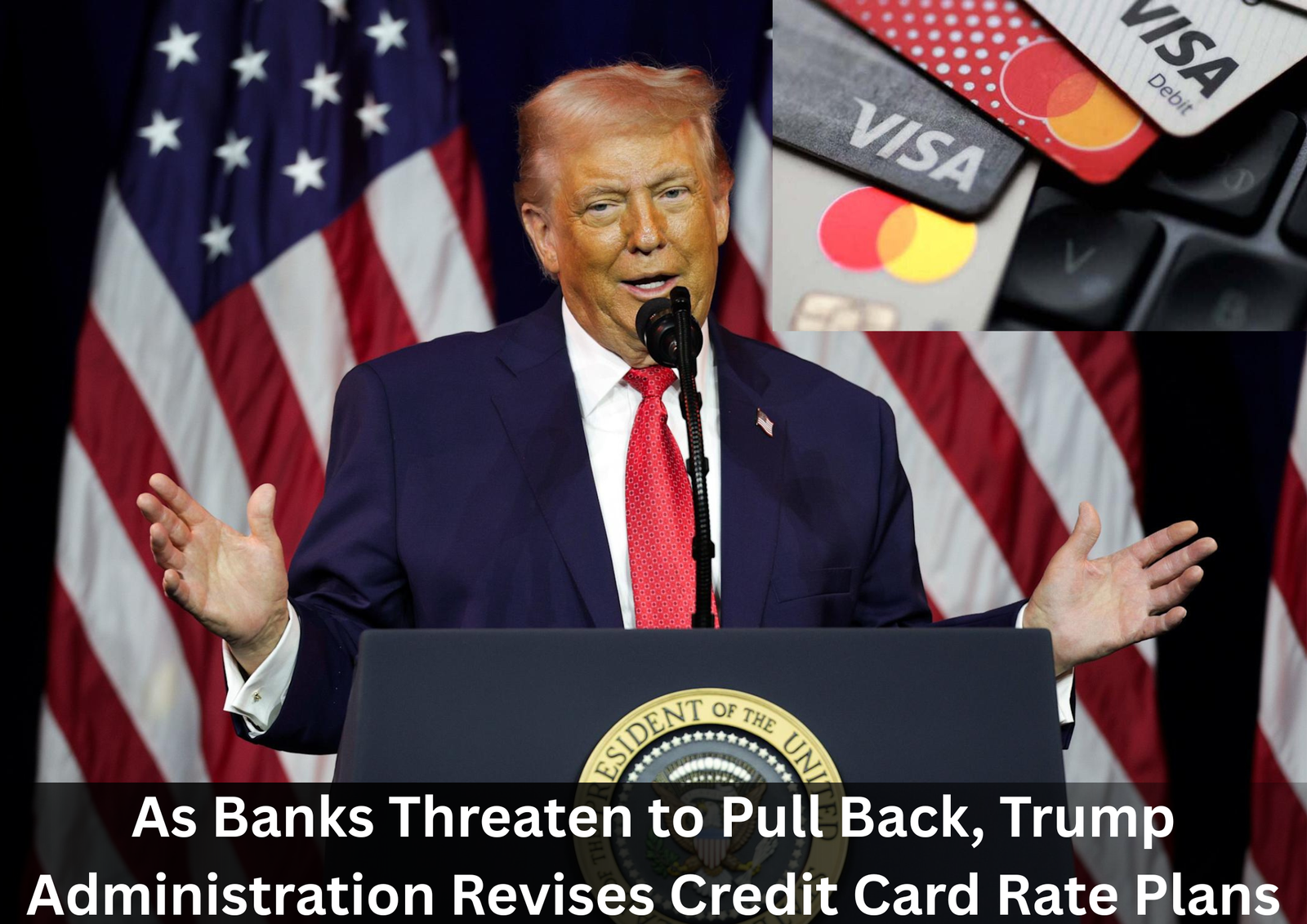
The Trump administration is reshaping its approach to credit card rate reforms after a sweeping interest rate cap proposal triggered strong backlash from major U.S. banks. Officials are now floating the idea of voluntary low-rate “Trump cards” for underserved borrowers, shifting away from an earlier demand for a mandatory 10% national rate ceiling.
The policy pivot highlights a broader fight over consumer credit affordability at a time when household revolving debt in the United States has soared to new highs.
A Push to Ease the Cost of Credit
President Donald Trump initially called for banks to limit credit card interest rates to 10% for one year beginning January 20. The proposal arrived amid rising public frustration with high borrowing costs. According to Federal Reserve figures, Americans carried roughly $1.23 trillion in credit card debt during the third quarter of 2025, while the average interest rate climbed to around 22%.
Millions of consumers currently paying double-digit rates would stand to save substantially under a cap. The administration spotlighted examples of borrowers juggling high balances after job losses or emergencies, reflecting how elevated card rates can contribute to long-term financial strain.
Voluntary ‘Trump Cards’ Enter the Discussion
After banks uniformly rejected the mandatory cap, White House economic advisor Kevin Hassett proposed an alternative model on January 16: a voluntary program in which major financial institutions would offer new cards with lower rates to creditworthy but underserved applicants.
Hassett suggested the program would not require legislation and could expand access for individuals who earn stable incomes yet are routinely denied conventional credit. Industry representatives, however, told financial media outlets they had not been contacted about the idea and were still evaluating the broader implications of the rate debate.
Banks Warn of Reduced Credit Access
Wall Street executives responded sharply to the original rate cap concept, warning they might restrict lending to protect profitability. Senior leaders at major banks cautioned that artificially low rates could reduce rewards programs, shrink credit lines, or limit card approvals – particularly for higher-risk customers.
Analysts noted that credit card lending produces steady and highly profitable returns for large banks. Should margins diminish, some firms could respond by adjusting fees or dialing back underwriting.
A Populist Flashpoint with Legislative History
The idea of limiting credit card rates to 10% has crossed traditional party lines in recent years. Lawmakers ranging from Independent Senator Bernie Sanders to Republican Senator Josh Hawley have championed similar bills. Progressive Senator Elizabeth Warren has also argued that Congress could pass a rate cap if the White House prioritizes it.
Despite bipartisan interest, House Speaker Mike Johnson and several Republican leaders dismissed the proposal, citing concerns about credit market disruptions and reduced lending. Others pointed to the administration’s own deregulatory actions, including the rollback of several Consumer Financial Protection Bureau rules last year.
Potential Consumer Gains and Tradeoffs
Studies from consumer finance researchers estimate that a nationwide cap could save borrowers roughly $100 billion in annual interest payments. However, experts also warn that banks could offset losses by raising annual fees, reducing promotional offers, or tightening credit scoring criteria, potentially leaving consumers with fewer options.
Credit card interest charges generated approximately $160 billion for lenders in 2024, underscoring why the industry views the segment as a critical profit driver.
An Uncertain Path Ahead
The shift toward voluntary “Trump cards” indicates the administration may seek a compromise rather than pursue an immediate legislative battle. The future of the initiative remains unclear, with financial institutions appearing hesitant and consumer advocates urging more robust reforms.
For now, the rate debate sits at the intersection of populist politics, financial regulation, and consumer debt – with millions of Americans watching to see whether promised relief materializes.
“Trump Unveils New Health Care Proposal, Says Plan Would Supersede Affordable Care Act – dive into the details and analysis by checking out my full blog post.”