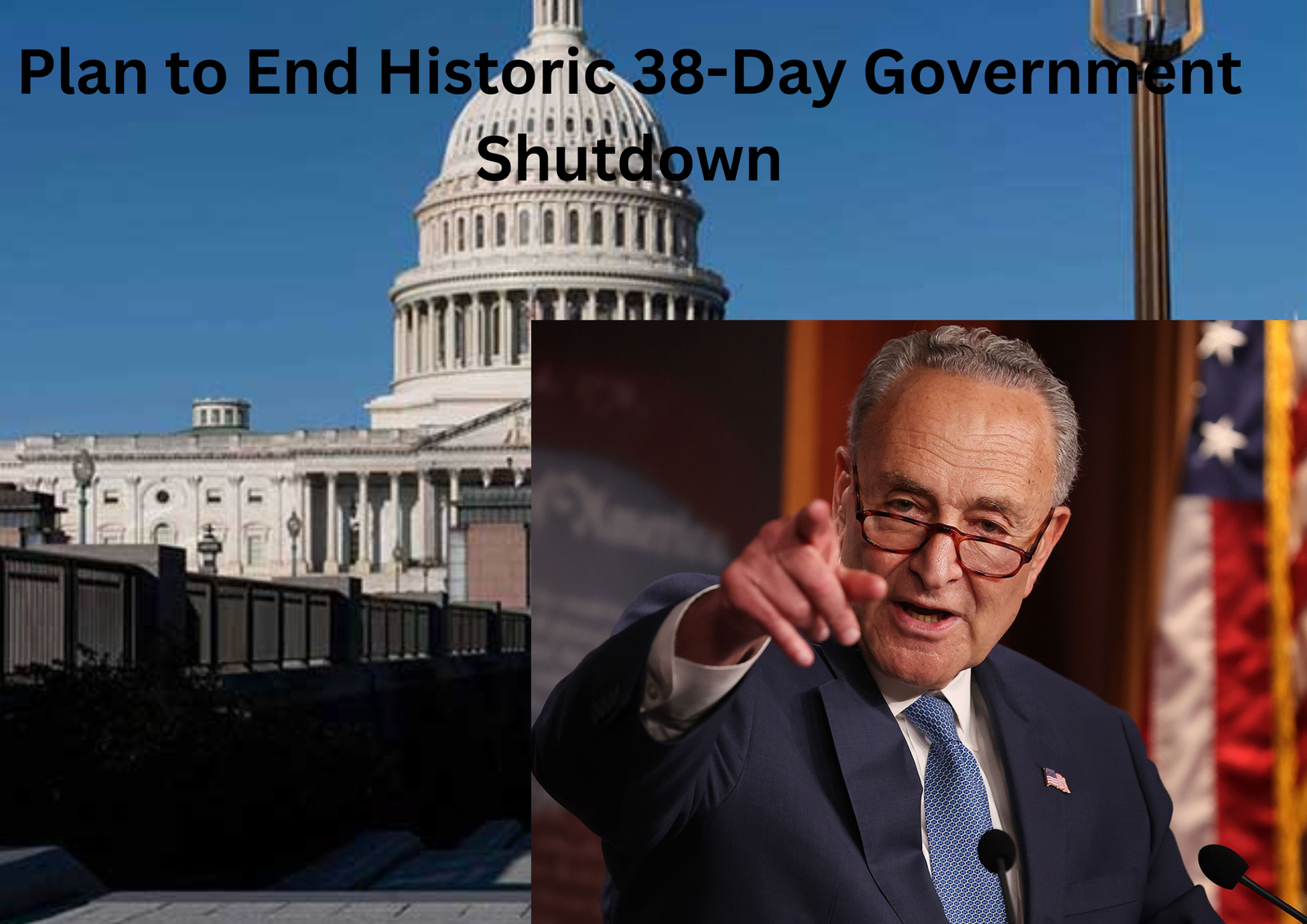
The United States government entered its 38th day of partial shutdown on Friday after Senate Republicans voted down a Democratic proposal aimed at restoring federal operations and extending the nation’s borrowing authority. The standoff, driven largely by a dispute over healthcare policy, has brought large parts of the government to a standstill, with no resolution in sight.
The proposal, introduced by Senate Majority Leader Chuck Schumer, would have temporarily funded the government through December and extended the federal debt ceiling through 2026. It was designed to provide immediate relief to federal workers and prevent a looming debt crisis.
However, Republican leaders-strongly aligned with former President Donald Trump-dismissed the offer outright. They reiterated that any deal must include a complete repeal of the Affordable Care Act (ACA), often referred to as Obamacare, a long-standing conservative priority.
“We’re not going to back down from our promise to the American people,” said Senate Minority Leader Mitch McConnell. “The Affordable Care Act has failed millions of families, and this shutdown is part of the fight to finally fix it.”
Democrats sharply condemned the rejection, accusing Republicans of using federal workers and the economy as leverage in their ideological battle. Schumer argued that linking healthcare reform to basic government funding was “reckless and dangerous.”
“They are holding the country hostage to score political points,” Schumer said on the Senate floor. “The American people deserve a functioning government, not partisan brinkmanship.”
The Senate vote followed strict party lines, with the Democratic measure failing to advance. The deadlock ensures that hundreds of thousands of federal employees will remain without pay, and numerous agencies-from national parks to research programs-will stay shuttered.
Key Sticking Points
At the heart of the dispute is the Republican demand to repeal the ACA, a policy that Democrats have refused to include in any budget negotiations. The Democratic proposal also contained a provision to raise the debt limit through 2026, a move that would prevent the government from defaulting on its financial obligations.
Economists warn that the prolonged shutdown and potential debt ceiling standoff could have serious repercussions for the economy. Delayed paychecks, reduced public services, and uncertainty in federal contracts have already begun to ripple through several sectors.
Political Fallout
The shutdown, now one of the longest in U.S. history, has deepened partisan divides in Washington. Democrats have accused Trump-aligned Republicans of prioritizing political theater over governance, while conservatives insist that the fight is necessary to dismantle what they see as a broken healthcare system.
Analysts say both parties are calculating the political cost of continued gridlock. With public frustration mounting, pressure is increasing on Congress to find a middle ground before further damage is done to public trust and the economy.
For now, negotiations appear stalled, and the country remains caught in the crossfire of a bitter ideological battle-one that shows no signs of ending soon.