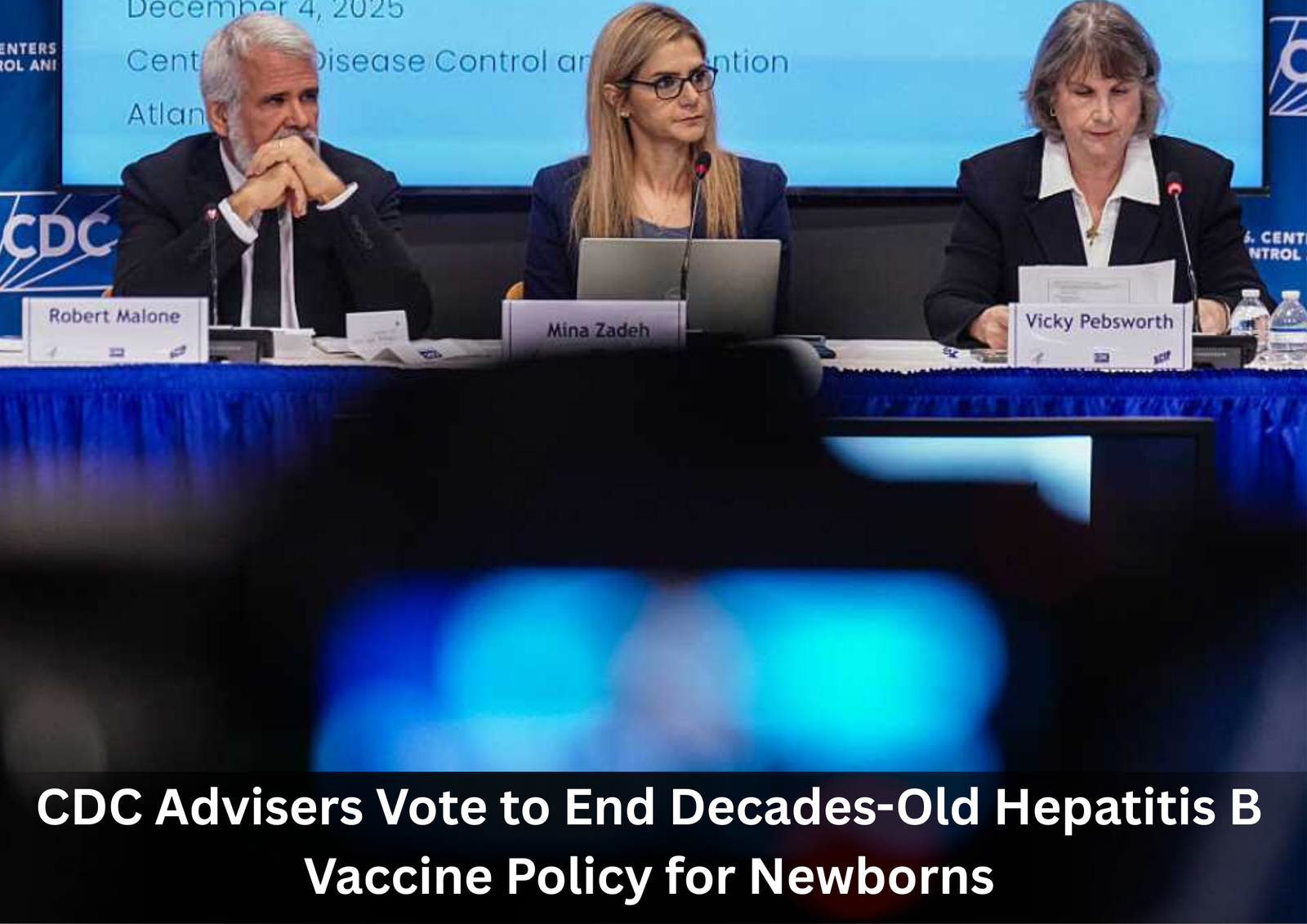
A federal vaccine advisory panel has voted to sustain the long-standing recommendation that every newborn in the United States receive a hepatitis B shot within the first 24 hours of life, reaffirming a policy that has shaped infant immunization practices for more than three decades.
The Advisory Committee on Immunization Practices (ACIP), which guides national vaccine policy for the Centers for Disease Control and Prevention (CDC), delivered a unanimous 8–3 vote after a two-day review of scientific evidence, safety data, and public testimony. Members concluded that universal vaccination at birth remains one of the most effective strategies for preventing early-life hepatitis B infections-an illness that can lead to lifelong liver disease, cirrhosis, and cancer.
Why the Panel Maintains Universal Vaccination
Health officials stressed that the first 24 hours after birth represent a critical window. Although pregnant individuals are routinely screened for hepatitis B, screening is not infallible. Some infections go undetected, and in other cases mothers contract the virus late in pregnancy.
The birth-dose vaccine dramatically reduces the risk of transmission. Studies show it prevents infection in 70–90% of infants exposed during delivery. Since the policy was introduced in 1991, hepatitis B rates among American children have plummeted. Acute infections in those under 15 have dropped by more than 95%, and chronic infections – once a significant pediatric concern – have become exceedingly rare.
Global data reinforces the vaccine’s importance. Public health researchers estimate that hepatitis B vaccination prevents roughly one million deaths each year worldwide.
Debate Over Targeted Vaccination Rejected
Some public commenters urged the committee to reconsider universal vaccination and focus only on newborns whose mothers test positive for the virus. Supporters of this narrower approach argue that it would reduce unnecessary medical interventions.
But ACIP members said such a shift would create dangerous gaps. CDC analyses presented at the meeting suggest a targeted strategy would leave around 940 infected infants unidentified and unprotected every year-children who would face a high risk of chronic liver disease for the rest of their lives.
“We have a safe, effective measure that prevents lifelong harm,” Dr. Helen Chu, who previously served on the ACIP and specializes in infectious diseases at the University of Washington School of Medicine, explained.
Addressing Parental Concerns
During the public comment session, several parents shared stories in which they believed the vaccine harmed their children. Independent reviews of global safety data, however, have repeatedly found no pattern indicating serious risks from the hepatitis B birth dose. Numerous studies have concluded that the vaccine is among the safest in routine pediatric care.
ACIP members acknowledged the emotional weight of parental testimony but emphasized that policy must follow evidence, especially when decades of real-world use show overwhelming benefit.
What Happens Next
The committee’s recommendation now heads to the CDC director and the U.S. Department of Health and Human Services for final approval-the last administrative step before updated guidance is formally published. Such approvals are typically procedural.
Pediatricians are also encouraged to ensure babies complete the full three-dose series, with additional shots at 1–2 months and again between 6 and 18 months.
Public health leaders say the latest vote underscores a simple message: protecting newborns early offers the strongest defense against a virus that often causes no symptoms for years but carries lifelong consequences once established.