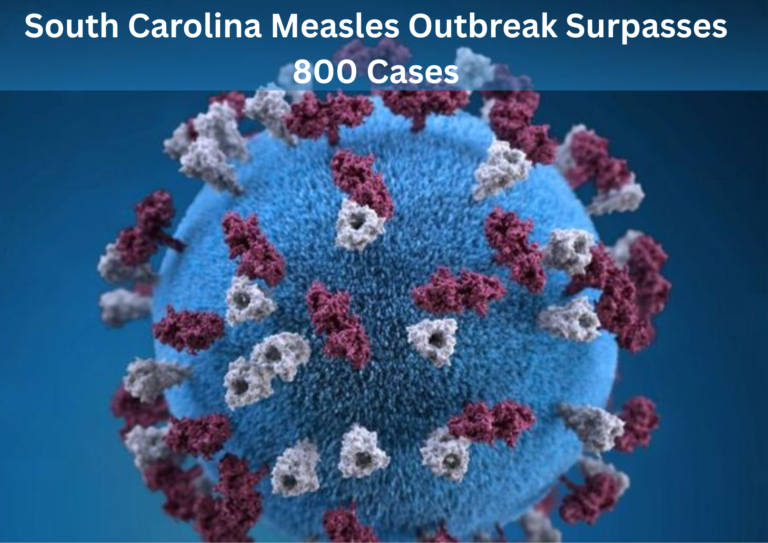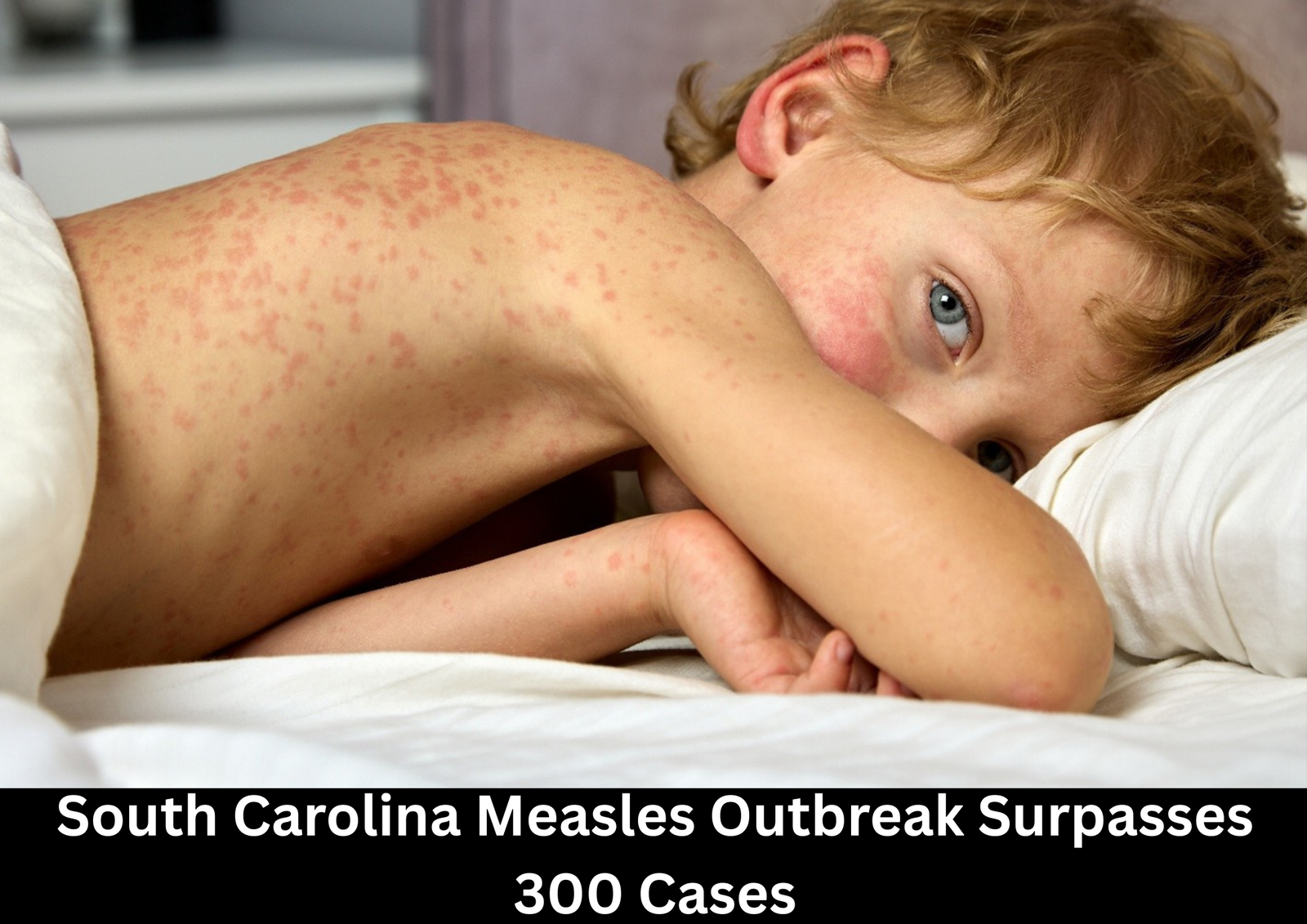
A fast-growing measles outbreak in South Carolina has surpassed the 300-case mark and continues to expand at a pace that state health officials describe as “highly concerning,” particularly in Spartanburg County, where the majority of infections have been recorded.
Between January 6 and January 9, authorities documented 99 newly confirmed measles cases – one of the sharpest increases since the outbreak began in the fall of 2025. The latest jump brings the statewide total to 310 infections. Roughly 200 residents are currently under quarantine due to exposure, while nine people remain in isolation.
Cases Reported in Other States
Linked infections have now been confirmed outside South Carolina. Three children from Buncombe County, North Carolina, tested positive after recent travel to Spartanburg, while local laboratories in Washington State identified three additional cases in visitors who spent the holidays in Snohomish County. Officials there have released a list of public locations where the individuals may have exposed others while contagious.
Meanwhile, a separate outbreak centered along the Arizona-Utah border has reached nearly 400 cumulative cases, creating one of the largest measles clusters in the United States in more than a decade. That outbreak is not connected to the events unfolding in South Carolina. Health departments in Ohio have also reported three unvaccinated children diagnosed with measles after travel to another active U.S. outbreak site.
Vaccination Gaps Fuel Spread
State health data suggests that insufficient vaccination remains the outbreak’s primary driver. Approximately 99% of recorded cases involve individuals who are unvaccinated, partially vaccinated, or lacking vaccination documentation. Only two fully vaccinated people have fallen seriously ill so far.
Spartanburg County’s MMR vaccination rate for the 2024–2025 academic year hovered near 90%, falling short of the 95% coverage that epidemiologists consider necessary to prevent community spread. Officials caution that pockets with significantly lower immunization rates are likely contributing to sustained transmission.
Public Health Response Intensifies
The South Carolina Department of Public Health has issued alerts to healthcare providers statewide, urging them to screen patients for measles symptoms and verify vaccination records. Multiple elementary schools in the Spartanburg area – including Jesse S. Bobo, Sugar Ridge, and Boiling Springs – have been identified as exposure locations. Officials now report community circulation, meaning some infections no longer have an identifiable source.
Employers have been encouraged to approve quarantine leave for exposed workers, and residents have been asked to review their vaccination history, particularly parents of school-aged children.
About Measles and Risks
Measles ranks among the most contagious airborne viruses known – up to 90% of unvaccinated individuals exposed can become infected. Symptoms typically appear one to two weeks after exposure and include fever, cough, runny nose, red eyes, and a spreading rash. Complications range from ear infections and diarrhea to pneumonia, brain swelling, and in rare cases, death. Two doses of the MMR vaccine are estimated to provide 97% lifelong protection.
National Concern Over Trend
The United States recorded over 2,100 measles cases in 2025 – the highest yearly total in more than three decades – and public health researchers warn that the early surge in South Carolina may signal another difficult year. Though measles was declared eliminated in the U.S. in 2000, sustained outbreaks risk undermining that status if domestic transmission becomes widespread.
Storm Goretti Slams Northern Europe With Destructive Winds and Widespread Travel Chaos – read the full shocking details in this blog, don’t miss it and stay informed.