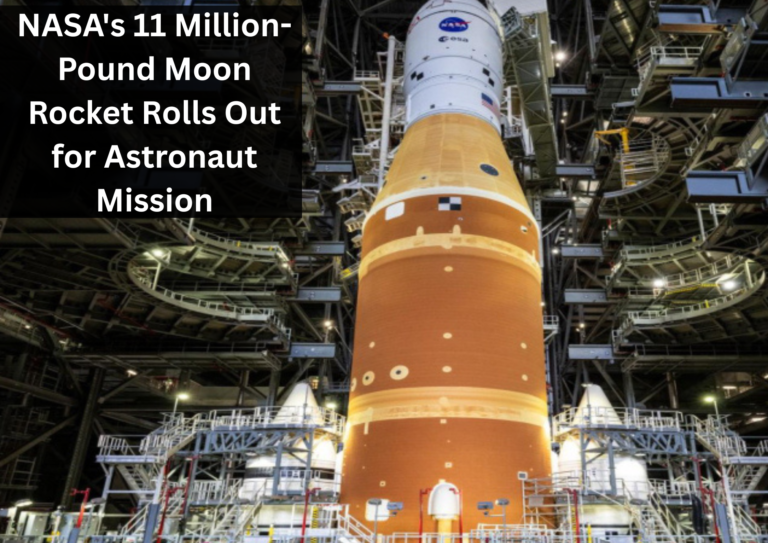
In recent years, space exploration has entered a new era marked by rapid innovation, increased private-sector participation, and ambitious missions beyond Earth’s orbit. At the center of this progress lies a critical technological foundation: propulsion. As agencies and companies aim for the Moon, Mars, and beyond, understanding how spacecraft move through space has become more relevant than ever. This article offers space propulsion systems explained in a clear, informative way, highlighting the technologies shaping today’s and tomorrow’s missions.
Why Space Propulsion Matters More Than Ever
Space propulsion determines how far, how fast, and how efficiently a spacecraft can travel. Unlike aviation on Earth, spacecraft operate in a near-vacuum where traditional engines relying on air intake are useless. Instead, propulsion systems must carry their own reaction mass and energy source, making efficiency, reliability, and precision crucial.
Modern missions demand propulsion systems capable of long-duration travel, orbital maneuvering, landing, and even deep-space exploration. As mission complexity increases, propulsion technology has evolved beyond simple chemical rockets into a diverse ecosystem of advanced systems.
Chemical Propulsion: The Foundation of Spaceflight
Chemical propulsion remains the most widely used method for launching spacecraft from Earth. These systems work by burning fuel and oxidizer to produce high-speed exhaust gases, generating thrust according to Newton’s third law of motion.
There are two main categories of chemical propulsion:
- Liquid propulsion systems, which allow precise control and restart capability
- Solid propulsion systems, known for simplicity and high thrust but limited flexibility
Chemical engines provide the immense power needed to escape Earth’s gravity, making them indispensable for launch vehicles. However, their relatively low fuel efficiency limits their usefulness for long-duration deep-space missions.
Electric Propulsion: Efficiency Over Power
As spacecraft move beyond Earth orbit, efficiency often becomes more important than raw thrust. This is where electric propulsion systems play a key role. These systems use electrical energy, typically generated by solar panels, to accelerate ions or plasma to extremely high speeds.
Common types of electric propulsion include:
- Ion thrusters, which offer very high fuel efficiency
- Hall-effect thrusters, widely used for satellite station-keeping
- Plasma propulsion systems, designed for long-duration missions
Although electric propulsion produces low thrust, it can operate continuously for months or even years, gradually accelerating spacecraft to high velocities. Many modern satellites and interplanetary probes rely on this technology.
Nuclear Propulsion: Expanding the Horizons
Nuclear propulsion has re-emerged as a topic of interest as missions target Mars and beyond. These systems use nuclear reactions to generate heat or electricity, enabling higher performance than chemical propulsion alone.
Two major concepts dominate this field:
- Nuclear thermal propulsion, which heats propellant using a nuclear reactor
- Nuclear electric propulsion, where a reactor generates electricity for ion or plasma engines
The advantage of nuclear propulsion lies in its potential to significantly reduce travel time and increase payload capacity. While still under development and subject to strict safety regulations, nuclear systems are viewed as a promising solution for deep-space exploration.
Hybrid and Emerging Propulsion Technologies
Beyond established methods, researchers are exploring innovative propulsion concepts that could redefine space travel. These emerging technologies aim to overcome current limitations in speed, efficiency, and mission flexibility.
Examples include:
- Solar sail propulsion, using sunlight pressure for continuous acceleration
- Laser-driven propulsion, where external energy sources provide thrust
- Fusion-based propulsion concepts, still theoretical but potentially revolutionary
Although many of these ideas remain experimental, continued research and testing could make them viable options in the coming decades.
Propulsion for Satellites and Space Infrastructure
Space propulsion is not limited to interplanetary travel. Earth-orbiting satellites rely heavily on propulsion systems for positioning, collision avoidance, and lifespan extension. Efficient propulsion allows satellites to maintain stable orbits, correct drift, and safely deorbit at the end of service life.
With the growing number of satellites supporting communication, navigation, weather forecasting, and Earth observation, propulsion technology plays a vital role in ensuring long-term orbital sustainability.
Challenges Facing Modern Propulsion Systems
Despite significant progress, propulsion engineering faces ongoing challenges. These include:
- Balancing thrust and efficiency
- Managing heat and material stress
- Ensuring long-term reliability in harsh space environments
- Reducing cost and complexity
Addressing these challenges requires interdisciplinary research, combining physics, materials science, data analysis, and advanced simulation techniques.
The Role of Simulation and Testing
Before any propulsion system reaches space, it undergoes extensive modeling and testing. Engineers use advanced simulations to predict performance, identify failure points, and optimize design parameters. Ground-based tests, followed by in-orbit demonstrations, help validate new technologies under real conditions.
These efforts reduce mission risk and accelerate the development cycle, allowing new propulsion systems to move from concept to deployment more efficiently.
What the Future Holds for Space Propulsion
As exploration goals expand, propulsion systems will continue to evolve. Future spacecraft may combine multiple propulsion types, using chemical engines for launch, electric propulsion for cruise, and advanced systems for deep-space maneuvering.
Increased international collaboration, commercial investment, and academic research are accelerating innovation in this field. The next generation of propulsion systems is expected to be more adaptable, efficient, and sustainable than ever before.
Final Thoughts
With space missions becoming more ambitious and diverse, understanding propulsion technology is increasingly important for both professionals and enthusiasts. From traditional rockets to advanced electric and nuclear concepts, space propulsion systems explained reveals a field at the heart of humanity’s journey beyond Earth.
As research continues and new technologies mature, propulsion will remain the driving force behind exploration, enabling spacecraft to travel farther, operate longer, and unlock new frontiers in space science and discovery.
For deeper insights into satellite communication technology research and its real-world impact, don’t miss this detailed blog-read it fully to stay informed and ahead.