A Fresh Look at an Ancient Impact
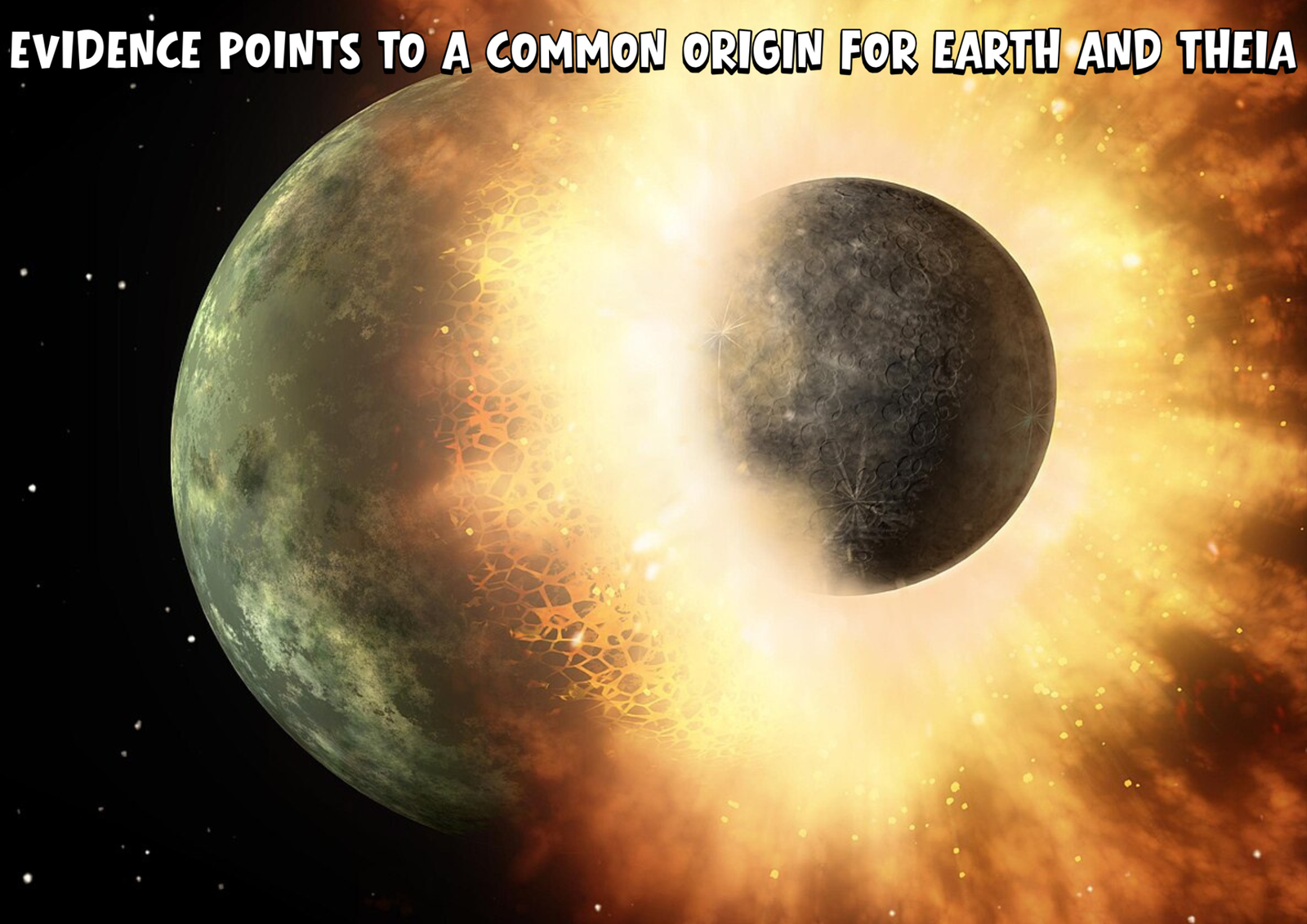
A new scientific analysis of Moon samples is reshaping the long-accepted story of how our natural satellite came to be. According to recent research, the protoplanet Theia-whose collision with early Earth is believed to have formed the Moon-may not have originated from a remote corner of the solar system at all. Instead, scientists now argue that Theia likely formed right beside Earth during the solar system’s earliest stages. This perspective offers a more refined understanding of the violent environment in which our planet developed.
Revisiting the Giant Impact Model
For many years, the dominant explanation behind the Moon’s creation has been the Giant Impact Hypothesis. The idea suggests that roughly 4.5 billion years ago, a Mars-sized body slammed into the young Earth with tremendous force. This impact ejected superheated rock and gas into orbit, material that eventually cooled and clumped together into the Moon. While the model has remained compelling, it has also faced lingering questions-particularly around the near-identical makeup of Earth and the Moon.
Chemical Fingerprints Reveal a Closer Connection
The catalyst for the new theory comes from high-precision measurements of oxygen isotopes found in lunar rocks. Researchers discovered that these isotopes match Earth’s composition with remarkable consistency. If Theia had formed far from Earth, its chemical signature would almost certainly have been noticeably different. Instead, the evidence suggests the two worlds were built from strikingly similar material, pointing to a shared region of origin.
Theia as a Long-Term Orbital Neighbor
Scientists now propose that Theia may have formed in a stable region along Earth’s orbit, possibly near one of the Lagrange points-locations where gravitational forces can hold a planetary embryo in place. For millions of years, Theia could have traveled alongside early Earth like a quiet companion. Over time, shifts in gravitational forces from other developing planets likely nudged Theia out of balance, eventually leading to the colossal collision that reshaped both bodies.
What This Means for Understanding Planet Formation
The updated model helps resolve the puzzle of why the Earth and Moon share such similar isotopic profiles. It supports the idea that the early inner solar system produced several planetary embryos with nearly identical compositions. The research also suggests that Theia was itself a fully formed, layered world-with a metal core and rocky mantle-before it met its end in the massive impact. The event would have mixed the materials of both bodies thoroughly, explaining the remarkable chemical match seen today.
This new interpretation not only refines the story of the Moon’s birth but also adds valuable detail to our understanding of how rocky planets grow and collide. It highlights the dynamic and sometimes chaotic nature of early planetary development, offering a clearer picture of the forces that shaped the Earth-Moon system we see today.