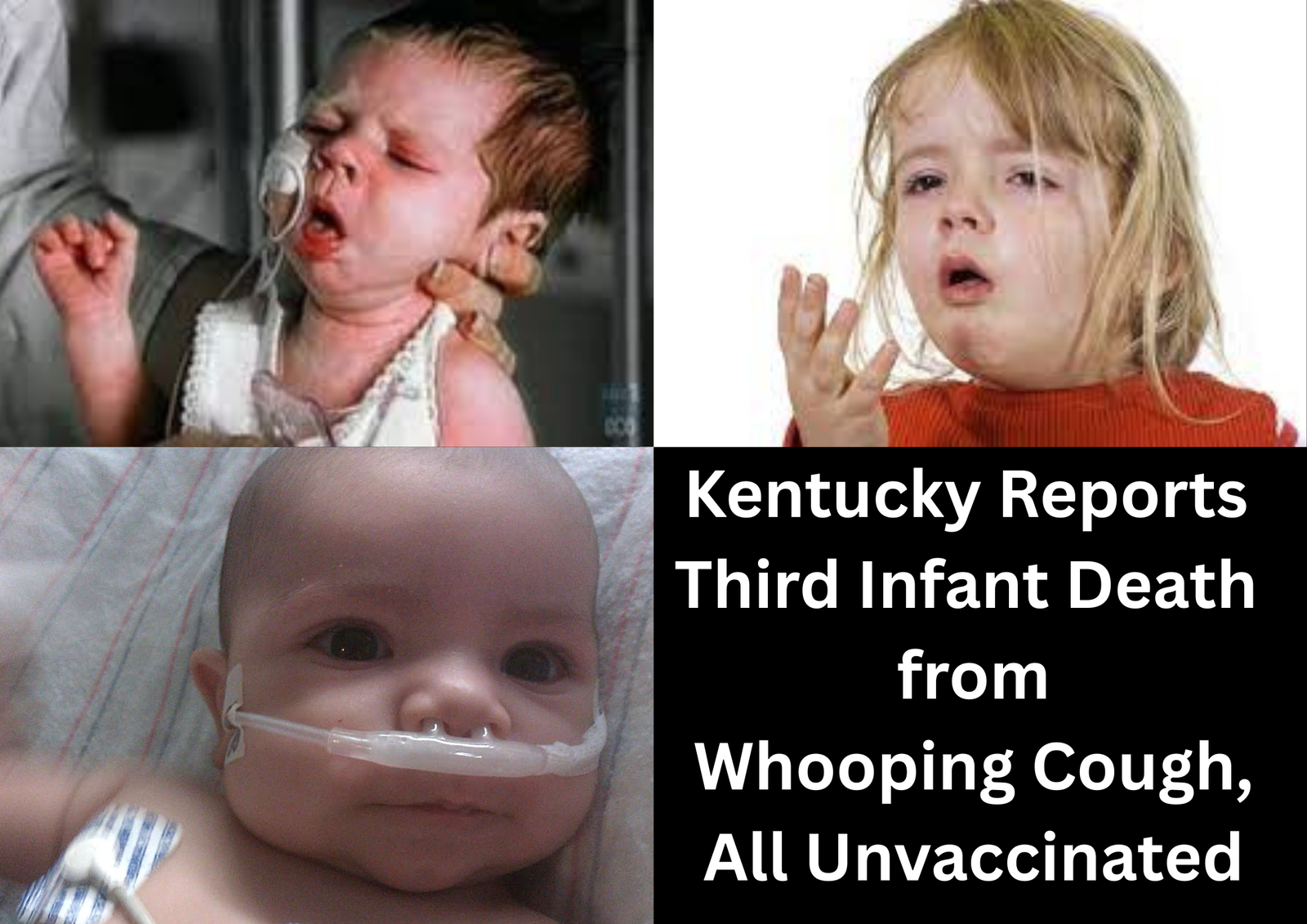
Kentucky health officials have confirmed the death of a third infant from whooping cough, deepening concerns over a fast-growing outbreak of the highly contagious disease.
The baby, younger than six months, was too young to have completed the recommended DTaP immunization schedule that protects against diphtheria, tetanus, and pertussis. Infants in this age group face the highest risk of severe complications, including pneumonia, seizures, and dangerous pauses in breathing.
This most recent tragedy follows two earlier infant deaths reported in the state in 2025. Together, the three cases underscore how vulnerable unvaccinated newborns remain when community vaccination levels drop.
State officials report that more than 566 confirmed whooping cough cases have been recorded across Kentucky this year, with many infections occurring among school-aged children. Public health leaders say declining childhood vaccination rates nationwide are contributing to the resurgence of diseases once kept well under control.
Dr. Steven Stack, Kentucky’s public health commissioner, stressed the importance of maintaining strong immunization coverage among older children and adults. He noted that vaccinated individuals help create a “protective cocoon” around infants who cannot yet rely on full immunization. He reiterated that both the DTaP and Tdap vaccines are safe, effective, and essential to preventing outbreaks.
Whooping cough is known for intense coughing fits followed by a sharp inhalation that creates the signature “whoop” sound. However, infants may not show this classic symptom and can deteriorate rapidly without warning.
Health officials are urging residents to review their vaccination records and ensure all eligible family members are protected. Pregnant individuals are advised to receive the Tdap vaccine during each pregnancy, which helps pass protective antibodies to newborns during their first vulnerable months.
Kentucky health authorities continue monitoring the outbreak closely and warn that without higher vaccination uptake, the state may see further preventable cases – and potentially more loss of life.