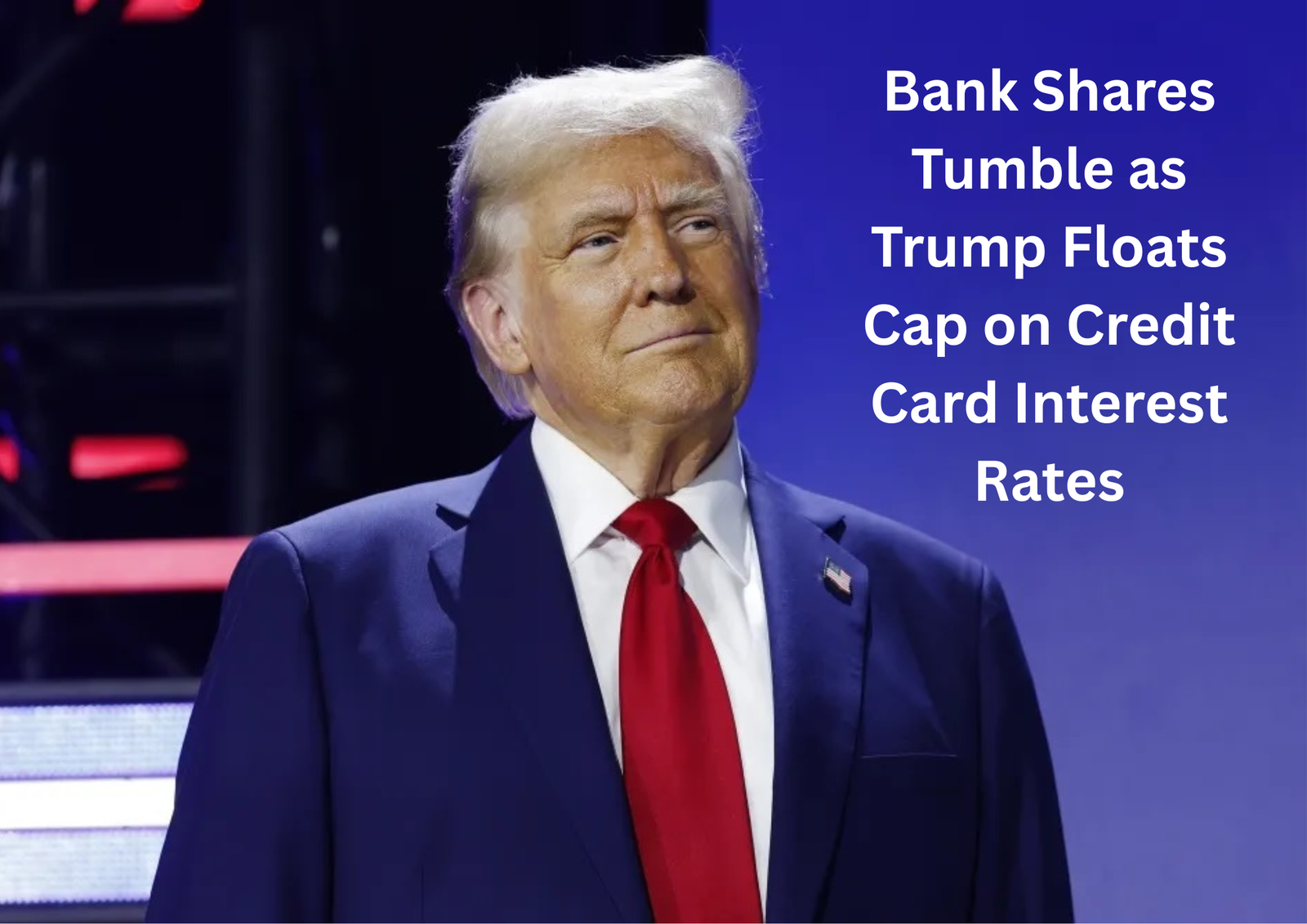
A fresh campaign proposal by the U.S. President Donald Trump has rattled major financial institutions and unsettled investors. Trump floated the idea of placing a cap on credit card interest rates – a move he framed as consumer relief – triggering an abrupt slump in financial stocks and prompting warnings from the credit industry.
Markets React Within Hours
Financial equities bore the brunt of the market response shortly after the announcement was made. The S&P 500 financials index logged a sharp 1.6% decline by the end of the trading session, as banks and credit card companies were hit by heavy selling. Among card-focused lenders, Synchrony Financial slid 3.9%, Discover dropped 3.3%, Capital One fell 2.7%, and American Express lost 2.3%. Major diversified banks with significant credit card portfolios were also affected, including Citigroup with a 2.0% decline and JPMorgan Chase at 1.6% lower.
Proposal Aims at Consumer Pain Points
Trump declined to specify a numerical cap but positioned the idea as part of a broader message that credit card interest fees have become burdensome for households. On the campaign trail, he suggested that the change would curb what he described as excessive profits in the banking sector and signaled that households would “notice” the impact on their statements should the plan move forward.
Industry Calls Plan Unworkable
Executives within the credit ecosystem quickly pushed back, arguing that capping rates would undermine the economic foundations of unsecured lending. Klarna CEO Sebastian Siemiatkowski cautioned that a cap would likely force banks to scale back widely used card rewards programs, shrink credit limits, and ultimately reduce lending to borrowers with weaker credit profiles. He warned that lenders cannot issue unsecured credit at a loss and would instead restrict access, potentially excluding millions of Americans from mainstream credit.
Regulatory Risk Becomes Election Flashpoint
The proposal has introduced a new layer of regulatory uncertainty in a sector already facing heightened scrutiny. Analysts cited by financial media noted that investor selling reflected fears that one of the most profitable segments of consumer lending may face political pressure. The issue now sits squarely in the 2026 election debate, with consumer advocates pushing for relief from high rates while banks argue that aggressive intervention would tighten credit availability, especially in subprime markets.
As campaigning intensifies and primary contests near, the banking sector is preparing for a prolonged policy fight that may reshape how credit is priced and who gets access to it.
Rounded Corners in macOS “Tahoe” Spark Growing Complaints Over Window Resizing – a surprising design shift that’s frustrating users. Make sure you read this blog for the full story!