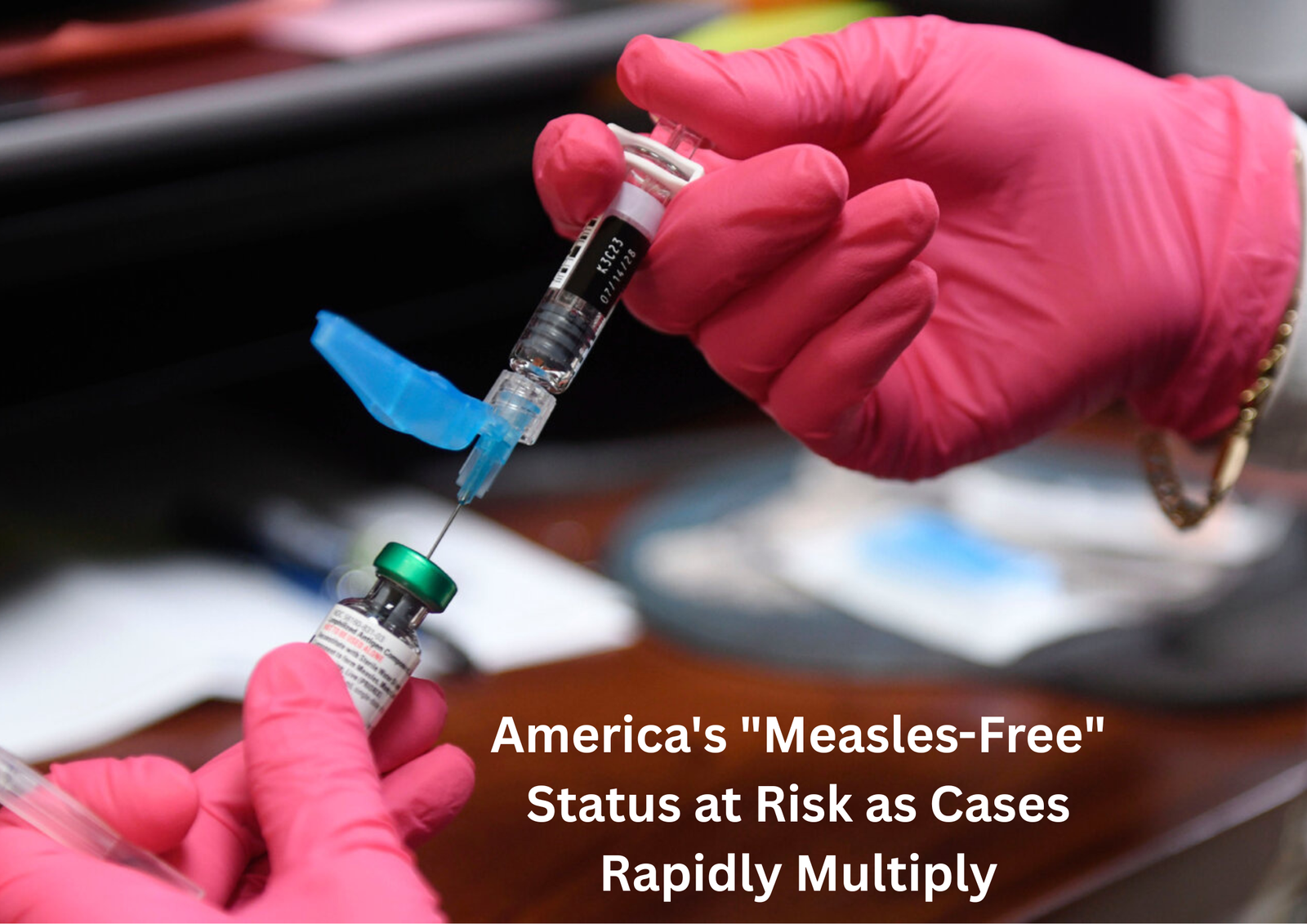
The United States is on the brink of losing its long-standing measles elimination status, a milestone achieved in 2000, as sustained outbreaks continue to spread across the country. Public health officials say the designation could be withdrawn later this year after a review by the Pan American Health Organization, following evidence that measles transmission has persisted domestically for more than twelve months.
The turning point dates back to January 20, 2026, which marked one year since a major outbreak began in West Texas and subsequently expanded into multiple states and neighboring Mexico. Preliminary data from the Centers for Disease Control and Prevention indicate that measles cases have now surpassed 2,400 nationwide since early 2025, raising concerns that the virus is no longer being contained through isolated, imported cases alone.
Federal officials have sought to minimize the implications of a potential status change. At a recent briefing, CDC Principal Deputy Director Dr. Ralph Abraham described the situation as a byproduct of global travel and cross-border movement, suggesting that a loss of elimination status would not necessarily mean measles is becoming endemic again. His remarks, however, have drawn criticism from infectious disease specialists who argue that the designation reflects far more than symbolic success.
Health experts point to the human cost behind the statistics. Measles-related deaths were reported last year, including the loss of young children, underscoring the disease’s severity in unvaccinated populations. Pediatricians and epidemiologists warn that framing the issue as routine undermines decades of progress achieved through vaccination campaigns.
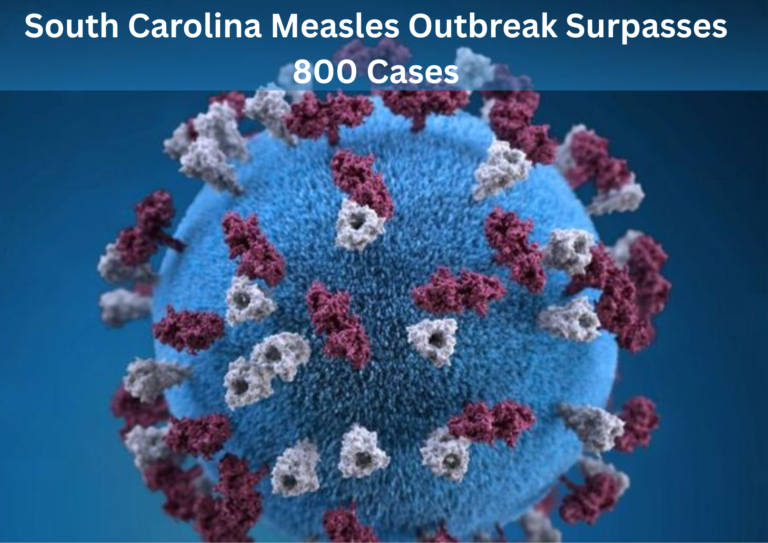
Outbreaks remain active in several states. South Carolina has reported more than 660 cases since its outbreak began late last year, with hundreds of individuals placed in quarantine and multiple hospitalizations recorded. Significant clusters have also been documented in Arizona, Utah, and parts of the Midwest and Pacific Northwest. While the original Texas outbreak officially ended in mid-2025, investigators believe it may be epidemiologically linked to newer cases.
Scientists are now analyzing viral genomes to determine whether the same strain has circulated continuously within U.S. borders. If confirmed, it would meet the criteria for revoking elimination status. Former CDC officials say the findings could become politically contentious, particularly if they contradict efforts to downplay the scale of domestic transmission.
Vaccination rates are a central concern. According to CDC data, exemptions for routine childhood immunizations reached record highs during the 2024–2025 school year, with roughly 138,000 kindergartners attending school without full protection. Several states have relaxed vaccine requirements in recent years, a trend public health leaders link directly to the resurgence of measles.
The federal response has also faced scrutiny. The Department of Health and Human Services, led by Secretary Robert F. Kennedy Jr., has emphasized personal choice in vaccination decisions, a stance critics say has contributed to public confusion. Meanwhile, local health departments report staffing shortages and funding delays as they attempt to manage outbreaks on the ground.
Despite these challenges, some communities are seeing renewed interest in immunization. Clinics in affected regions report parents seeking measles-mumps-rubella (MMR) vaccines after witnessing the impact of the disease firsthand. Public health leaders say such moments highlight both the preventable nature of measles and the urgency of restoring trust in vaccines.
Experts caution that measles may be a warning sign of broader risks ahead. Declining vaccination coverage could open the door to other preventable diseases, threatening infants, immunocompromised individuals, and even highly vaccinated communities. As one emergency physician noted, the current situation was avoidable-and reversing course will require sustained commitment, clear communication, and renewed investment in public health infrastructure.
The possible loss of measles elimination status would mark a sobering chapter for U.S. health policy, signaling that achievements once thought secure can quickly erode without vigilance.
Don’t miss the full analysis on “Trump-Backed ‘Board of Peace’ Expands Beyond Gaza, Prompting Global Debate Over International Authority”-read the complete blog to understand why this proposal is drawing worldwide attention.