
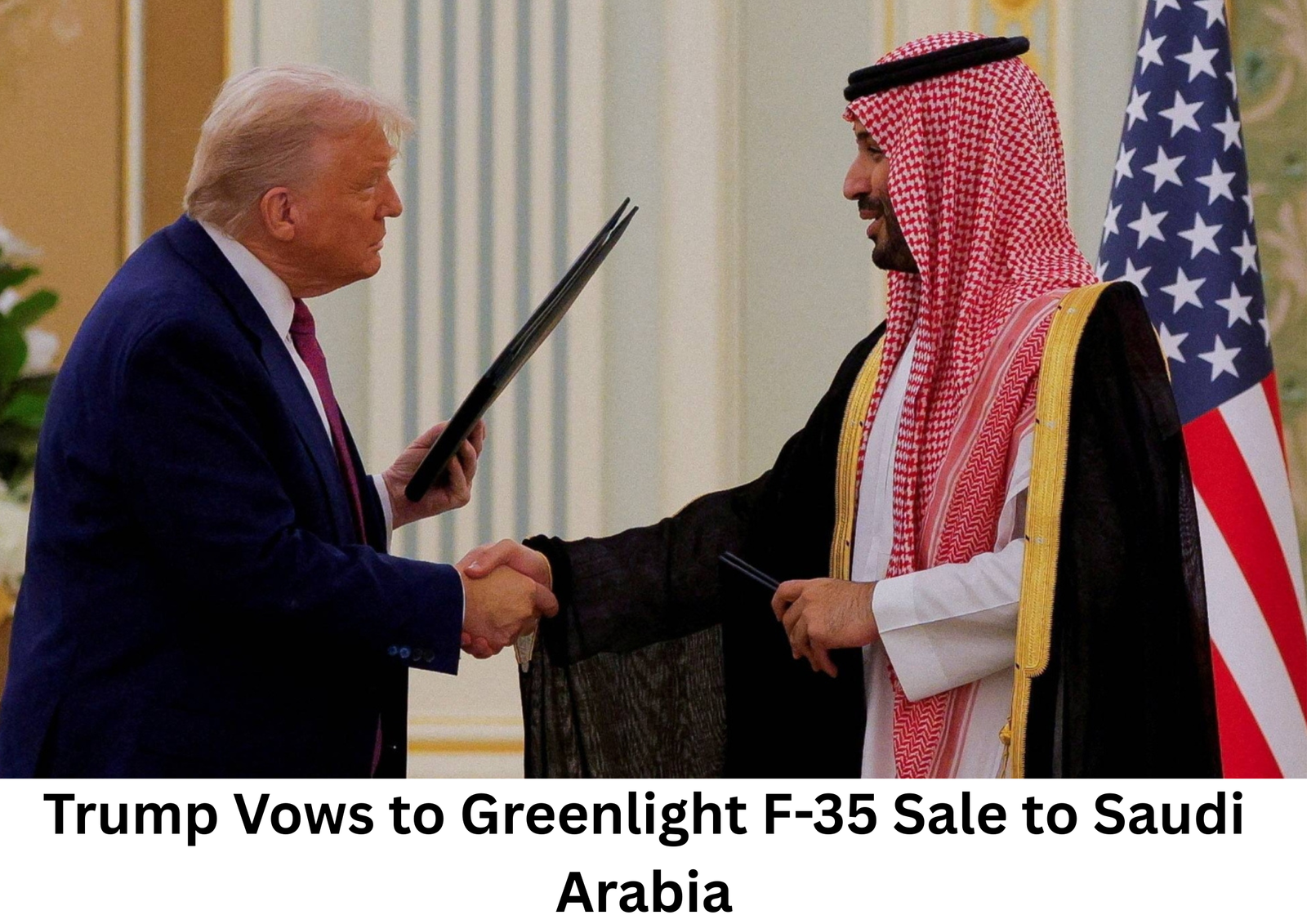
President Donald Trump announced that he intends to approve the sale of F-35 stealth fighter jets to Saudi Arabia if he returns to the White House, a move that would represent one of the most significant changes to U.S. arms-export policy in more than a decade.
Trump made the announcement on November 17 during a campaign event, telling supporters that the United States “made a deal, and should honor that deal,” referring to discussions held with Saudi officials during his previous term. He framed the aircraft sale as both an economic opportunity and a matter of U.S. credibility, adding that such agreements translate into “a lot of jobs and a lot of investment” for American manufacturing.
The pledge marks a sharp departure from the current administration’s stance. Washington has long restricted the transfer of the advanced F-35 platform to Riyadh over concerns about maintaining Israel’s qualitative military edge-an established U.S. policy meant to ensure that Israel retains superior defense capabilities over any potential regional adversaries. The existing blockade reflects bipartisan worries about sensitive American technology and the evolving security landscape in the Middle East.
Trump’s comments were part of a wider foreign policy message in which he again criticized U.S. support for Ukraine. He said he would push for an immediate ceasefire and negotiate a settlement between Kyiv and Moscow, arguing that continued funding prolongs a war he believes can be ended quickly through direct talks. He also reiterated plans to implement broad tariffs on foreign imports, positioning them as a tool to strengthen the U.S. economy.
Foreign policy experts say the proposed F-35 sale will almost certainly trigger a contentious debate in Washington. Lawmakers from both parties have signaled in the past that transferring the jet to Saudi Arabia could alter the regional balance of power and provoke new tensions with Israel, which remains the only U.S. partner in the Middle East currently approved for the aircraft.
Analysts also warn that the future of the deal could hinge on congressional oversight. Any arms sale of this scale must undergo review, and national security officials may raise questions about safeguarding the fighter jet’s classified systems.
Even so, Trump’s announcement sets the tone for what could become a defining foreign policy issue heading into the election year. With global conflicts and shifting alliances reshaping defense priorities, the debate over the F-35 sale may become a broader referendum on how the United States navigates its relationships in the Middle East-both old and emerging-and how a new administration might redefine American leadership on the world stage.