
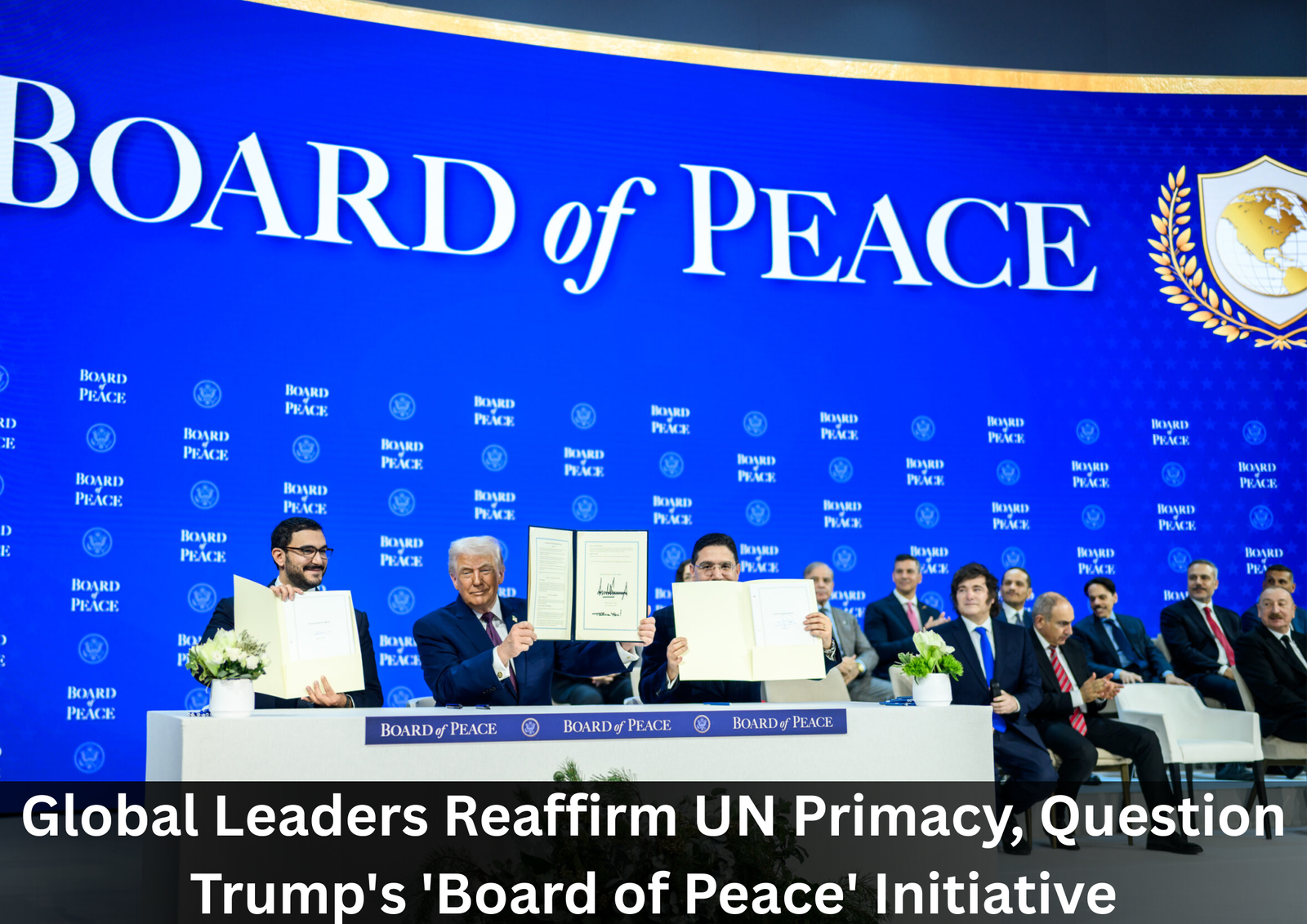
An ambitious diplomatic initiative unveiled by U.S. President Donald Trump has struggled to gain global traction, as major powers and long-standing allies reaffirm their commitment to the United Nations as the primary forum for maintaining international peace and security.
The proposal, known as the “Board of Peace,” was introduced earlier this month as a mechanism to oversee elements of a ceasefire in Gaza. However, resistance intensified after President Trump publicly suggested expanding the board’s mandate into a permanent, global conflict-resolution body-raising concerns that it could rival or bypass the United Nations Security Council.
Limited Participation, Major Absences
While several dozen countries were invited to join the board, participation has been uneven. Roughly two dozen nations have accepted, but all other permanent members of the UN Security Council-China, Russia, France, and the United Kingdom-have declined or withheld support. Influential economic powers such as Germany and Japan have also stayed away.
Several traditional U.S. allies, including Canada, Spain, New Zealand, and the United Kingdom, formally rejected participation, citing concerns over governance, legitimacy, and compatibility with existing international law.
Eight Muslim-majority nations-including Saudi Arabia, Turkey, Egypt, Qatar, and the UAE-did join the board but released a joint statement sharply limiting their involvement. Their support, they emphasized, applies only to Gaza-related efforts and the advancement of Palestinian statehood, not to any broader global role envisioned for the body.
Governance Concerns Spark Pushback
At the center of diplomatic unease is the board’s governance structure. Its founding charter names President Trump as chair with open-ended tenure and grants him veto power over decisions and membership-features that critics argue undermine multilateral credibility.
U.S. Secretary of State Marco Rubio sought to downplay those concerns, stating the board remains focused on the “next stages of the Gaza ceasefire” and insisting it is “not intended to replace the United Nations.” Nonetheless, Trump’s own public remarks suggesting the board could one day supplant the UN fueled skepticism among diplomats.
United Nations Responds Firmly
UN leadership has been unequivocal in rejecting any notion that the Board of Peace could replace the Security Council. Secretary-General António Guterres reiterated that only the UN has the legal authority to make binding decisions on international peace and security.
China’s ambassador to the UN echoed that stance during a Security Council session, warning against bypassing established institutions and calling instead for reforms that strengthen, rather than weaken, the existing global system.
Analysts See Strategic Miscalculation
Foreign policy analysts suggest the board’s expanded ambitions undermined what might have been limited international support. Observers note that several countries willing to cooperate on Gaza disengaged once the initiative appeared to evolve into a broader political platform centered on U.S. leadership rather than collective governance.
Human rights advocates have also raised concerns about the composition of participating states, questioning whether the board can credibly promote peace without stronger accountability standards.
Broader Diplomatic Context
The controversy surrounding the Board of Peace unfolded amid other diplomatic strains involving the United States, including sharp rhetoric toward European allies and a brief dispute over Greenland’s strategic future-comments that were later walked back after NATO consultations.
For many diplomats, the episode reflects a deeper tension between unilateral initiatives and the post-World War II international framework designed to manage conflict collectively. As nations weigh how best to address crises such as Gaza, most appear unwilling to abandon the United Nations as the cornerstone of global diplomacy.
Discover the full story behind “Polar Bears in Svalbard Show Unexpected Stability Amid Rapid Ice Decline”-don’t miss this insightful blog that reveals surprising findings worth your time.