

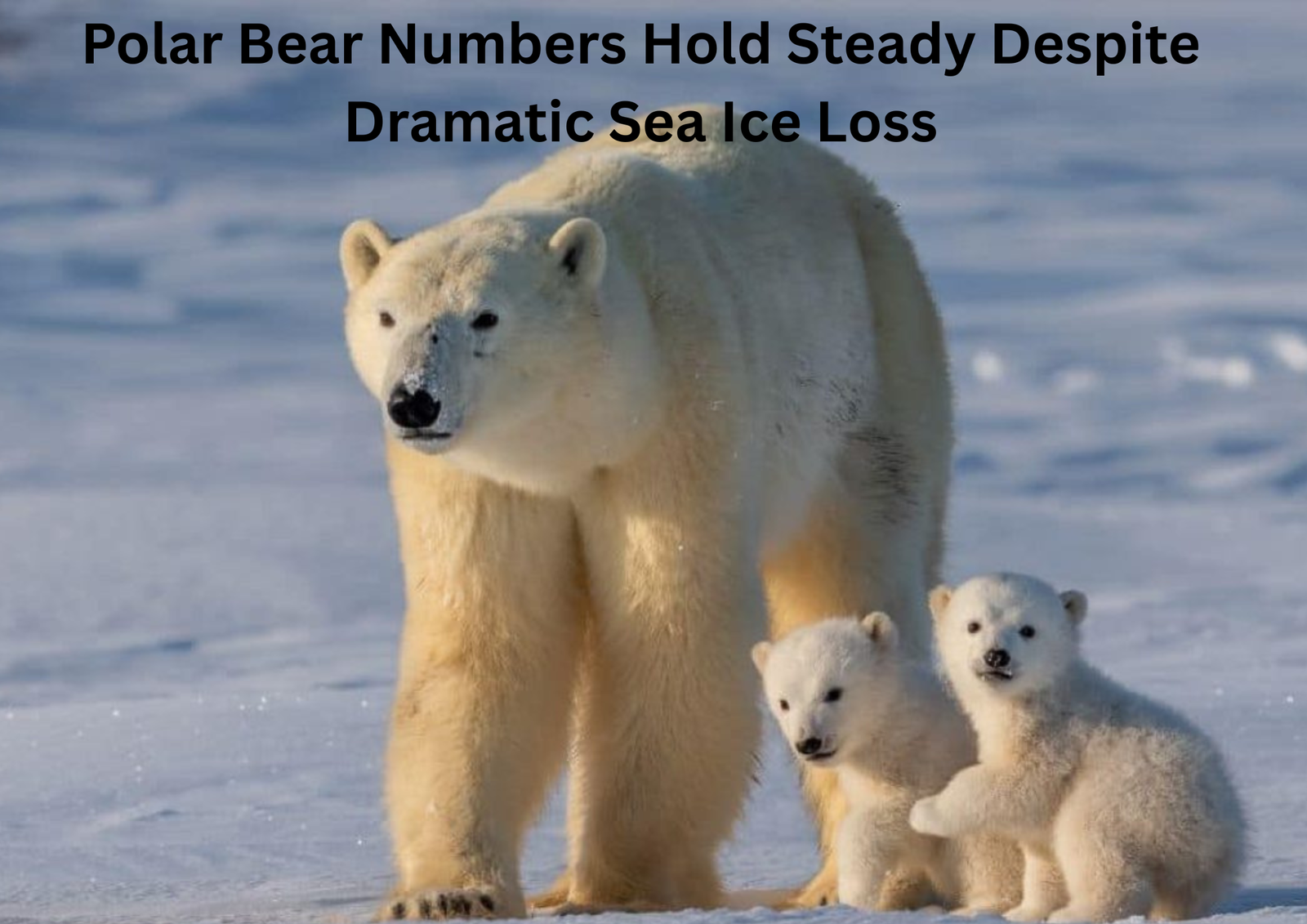
A recent scientific investigation has found that polar bears living in the Svalbard archipelago are maintaining strong physical health and stable population numbers, even as the region undergoes some of the Arctic’s fastest reductions in sea ice.
The findings, published in a peer-reviewed scientific journal, are based on decades of monitoring data collected by Arctic researchers. According to the study, the local polar bear population-part of the broader Barents Sea group-continues to reproduce successfully and shows no measurable decline in overall condition, despite experiencing significantly shorter sea-ice seasons than in previous decades.
Svalbard’s coastal waters now remain ice-free for several additional months each year compared to the late 20th century. Traditionally, polar bears depend heavily on sea ice as a platform for hunting seals. However, researchers observed that bears in this region have adjusted their behavior in response to environmental changes.
Instead of relying solely on drifting sea ice, the bears are increasingly hunting near shorelines, along glacier fronts, and on seasonal fast ice that forms closer to land. These glacier fronts-where ice meets the ocean-have emerged as particularly productive feeding areas, attracting seals and other marine life.
The study also noted that seal species commonly hunted by polar bears have not disappeared from the region. Rather, they have altered their own habits, often resting on land or near glacial ice, which continues to provide hunting opportunities for predators. In addition, some bears were observed supplementing their diet with alternative food sources, such as bird eggs, reindeer, and marine carcasses.
Scientists caution that these results should not be interpreted as evidence that polar bears are unaffected by climate change. Instead, they highlight how local geography and ecological features can temporarily buffer wildlife from broader environmental pressures.
Unlike other Arctic regions that lack extensive glacier fronts, Svalbard offers unique coastal conditions that may support polar bear survival in the short term. In contrast, populations in areas such as Canada’s Hudson Bay have shown declines in body condition and survival rates as sea ice continues to retreat.
Researchers emphasize that the long-term outlook remains uncertain. Continued warming and glacial retreat could eventually reduce the availability of these coastal refuges, potentially placing the population at risk in the future.
The study underscores the importance of region-specific research when assessing climate impacts on Arctic wildlife and demonstrates that environmental responses can vary widely across the polar ecosystem.
For deeper insight into how Israeli-Gaza Tensions Persist as Truce Talks Continue and Military Shifts Hostage Operations, read the full blog to understand the stakes, strategies, and unfolding regional impact.