
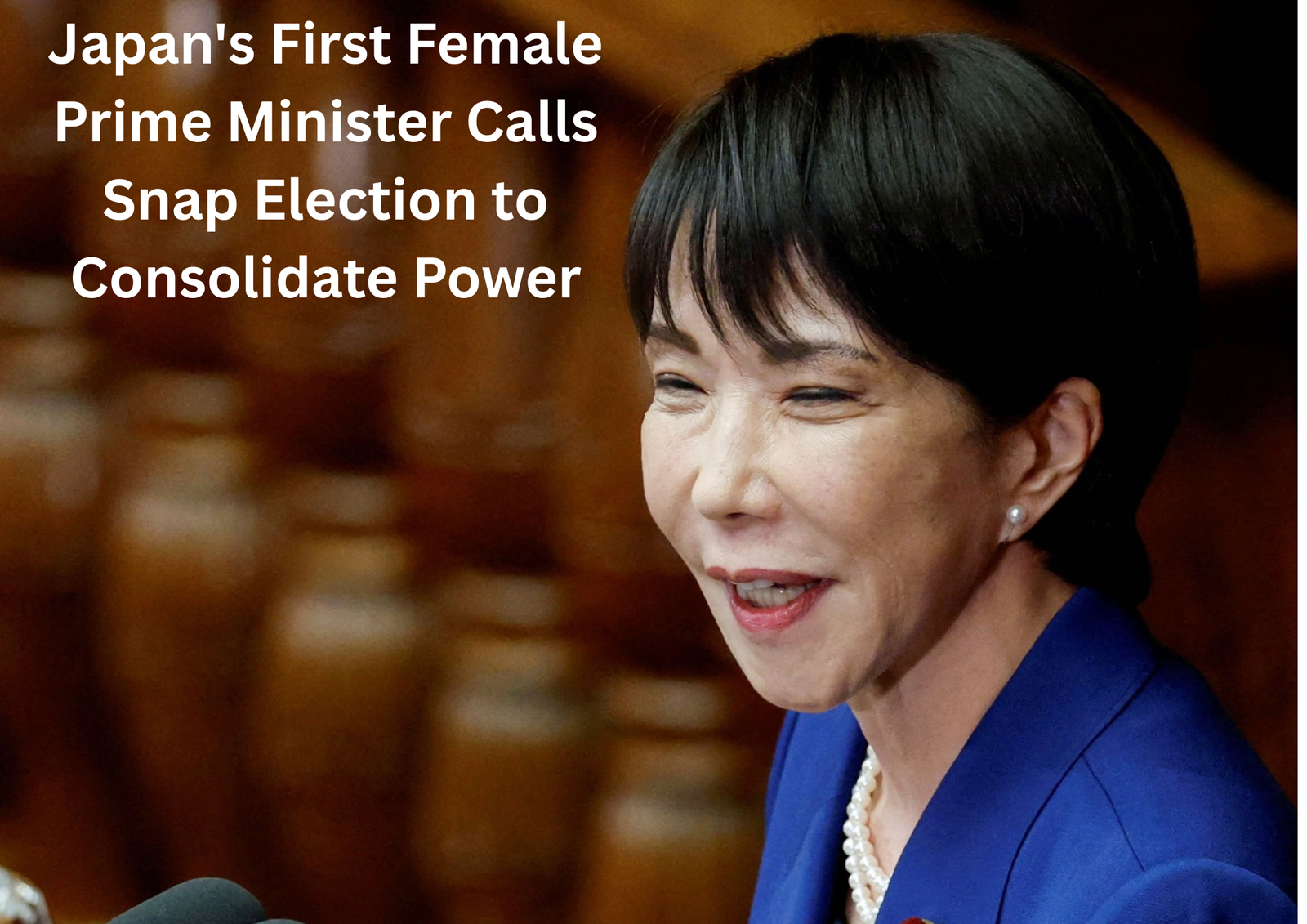
Japan is heading toward an early general election after Prime Minister Sanae Takaichi announced the dissolution of the lower house, setting a national vote for February 8, 2026. The move marks a defining moment for the country’s first female leader as she seeks a renewed mandate to advance her political and security agenda.
Takaichi’s decision comes amid shifting regional dynamics and rising geopolitical pressures in East Asia. Government officials in Tokyo view the election as an opportunity to reinforce Japan’s diplomatic and strategic position, particularly as concerns grow over China’s expanding influence in the region. A strong electoral outcome would give the prime minister greater authority to pursue her policy priorities both domestically and internationally.
Breaking with long-standing political norms, Takaichi has carved out a distinctive leadership style that has resonated with a broad segment of the public. Since taking office, she has drawn attention not only for her policy stances but also for her personal appeal, which has helped energize voters who traditionally felt disconnected from national politics.
Her popularity has translated into an unusually loyal following. Some supporters have gone as far as visiting her hometown, turning everyday locations and personal memorabilia into symbols of inspiration. These gestures reflect a level of enthusiasm rarely seen in Japanese political life, where leaders typically maintain a more reserved public image.
As campaigning begins, the upcoming election is shaping up to be more than a routine political contest. It represents a test of public confidence in a trailblazing leader and her vision for Japan’s future. A decisive victory would not only solidify Takaichi’s position at home but also strengthen her hand as Japan navigates an increasingly complex regional landscape.
The February vote is expected to draw close attention both within Japan and abroad, as the outcome may influence the country’s political direction for years to come.
Don’t miss this crucial analysis on “EU Lists Iran’s Revolutionary Guards as Terror Group, Tehran Signals Strong Countermeasures”-read the full blog to understand the global stakes and possible fallout.