
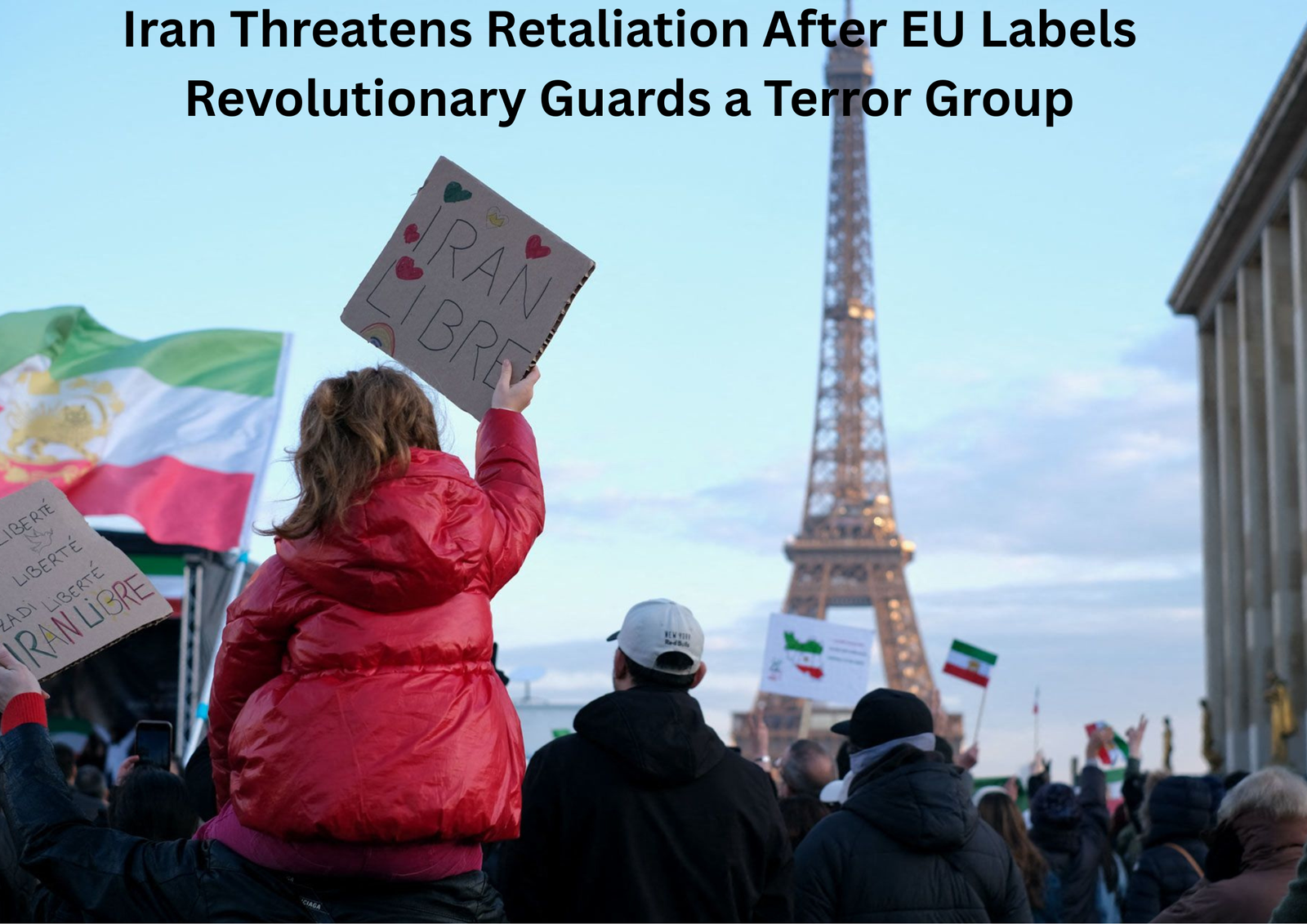
The European Union has officially classified Iran’s Islamic Revolutionary Guard Corps (IRGC) as a terrorist organization, marking a significant escalation in already strained relations between Brussels and Tehran. The designation, finalized on January 29, follows months of legal review and diplomatic debate within the bloc.
With the listing now in effect, the IRGC becomes subject to the EU’s counterterrorism framework, triggering asset freezes, travel restrictions, and broader financial sanctions across all member states. European officials say the decision was driven by security concerns and mounting pressure from several countries, including Germany, which had urged swift action ahead of the vote.
Iran reacted sharply to the announcement. The country’s foreign ministry condemned the move as unlawful and politically motivated, warning that it would not go unanswered. Iranian officials stated that retaliatory steps would be taken promptly, including the potential classification of European military forces as terrorist entities under Iranian law.
Tehran also accused the EU of undermining diplomatic norms and escalating tensions at a time when regional stability remains fragile. Iranian leaders argued that the designation could permanently damage diplomatic engagement with Europe and further complicate negotiations on sensitive international issues.
The EU’s decision comes amid a broader international backdrop of rising pressure on Iran. In the United States, President Donald Trump-now active in the 2026 presidential campaign-has renewed hardline rhetoric toward Tehran, particularly over its nuclear activities. Washington first labeled the IRGC a foreign terrorist organization in 2019, a move that drew global attention at the time.
While European officials emphasize that the EU process is legally independent from U.S. policy, the listing brings Brussels closer to Washington’s long-standing stance on the IRGC. Analysts say this alignment could have lasting consequences for diplomatic channels, economic relations, and regional security cooperation.
Experts warn that Iran’s promise of retaliation increases the risk of reciprocal diplomatic and economic measures, potentially affecting trade ties, security cooperation, and the presence of Iranian-linked entities in Europe. As both sides harden their positions, observers fear the decision could narrow remaining avenues for dialogue and raise the likelihood of further confrontation.
For now, the EU maintains that the designation is a security-driven measure, while Iran insists it represents a dangerous precedent-one that could reshape relations between Tehran and European capitals for years to come.
Don’t miss the full analysis on “Trump Cautions Britain Over China Engagement as Starmer Concludes Beijing Talks”-read the blog to understand the political stakes, global implications, and what this means going forward.