

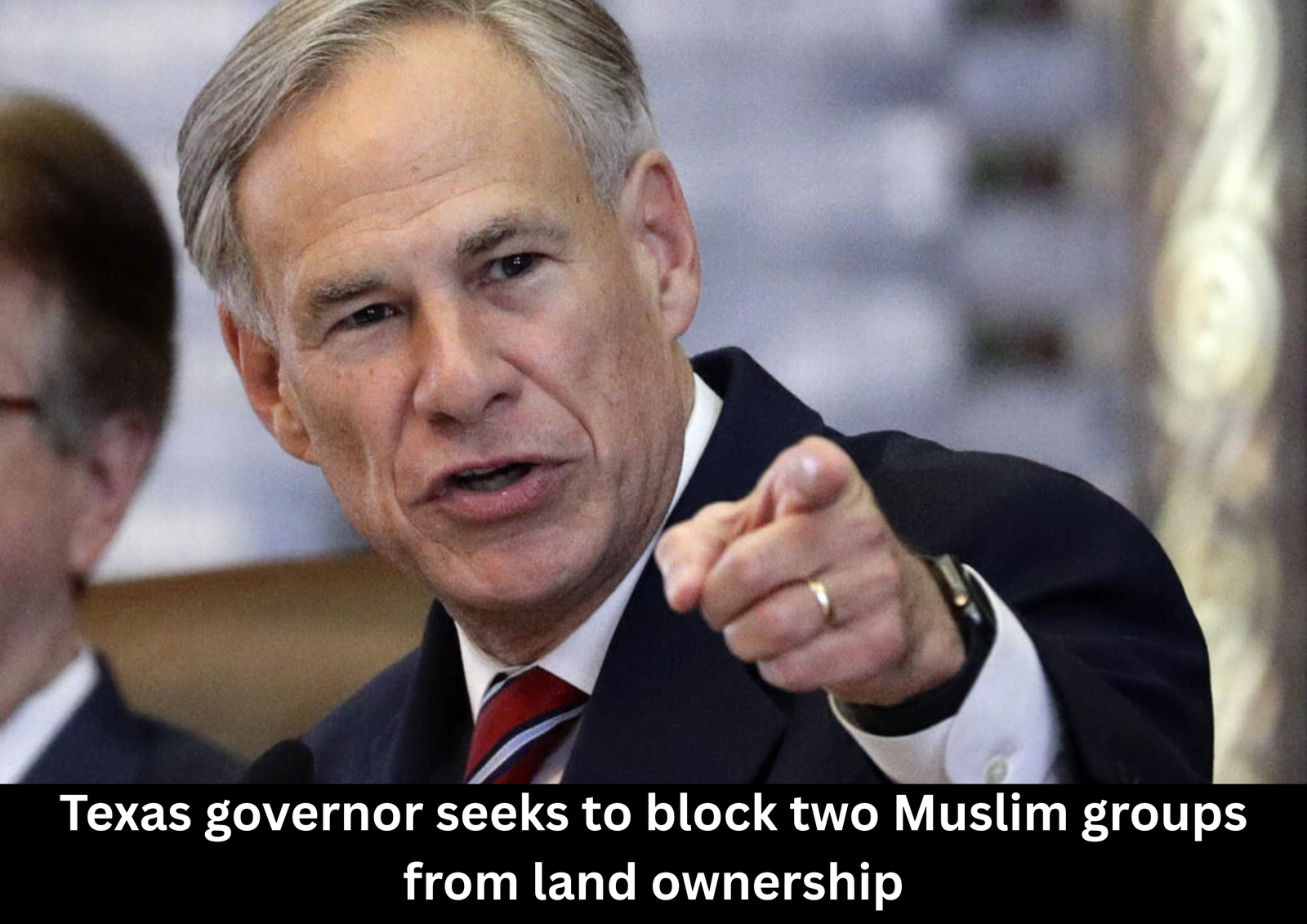
Texas Governor Greg Abbott has ignited a national and international firestorm after signing an executive order designating the Council on American-Islamic Relations (CAIR) as a terrorist organization. The unprecedented move-announced on November 18-also adds the Muslim Brotherhood to the state’s terrorism list and directs Texas agencies to block any affiliated entities from owning land in the state.
Within hours of the announcement, CAIR filed a federal lawsuit seeking to halt enforcement of the order, calling the designation unconstitutional, defamatory, and a direct threat to civil liberties.
Governor Cites Security Concerns
Governor Abbott defended the order as a proactive step to protect Texas from what he described as “terrorist-linked organizations operating under the guise of civil rights.” The executive order claims CAIR has historic connections to the Muslim Brotherhood and accuses the organization of previously supporting groups that the U.S. government classifies as foreign terrorist organizations.
State agencies, including the Texas Department of Public Safety, have been instructed to add CAIR and the Muslim Brotherhood to Texas’s official terrorism list and update property ownership restrictions accordingly.
CAIR Launches Immediate Legal Challenge
CAIR’s lawsuit, filed in the U.S. District Court for the Western District of Texas, names Governor Abbott and Attorney General as defendants. The complaint argues that the designation violates First Amendment protections by punishing the group for its political and religious activities. Lawyers for the organization argue the order functions as a “bill of attainder,” imposing punishment without a trial-an act expressly forbidden by the U.S. Constitution.
The lawsuit also asserts that only the federal government has the legal authority to designate terrorist organizations, setting up a potentially groundbreaking court battle over state power.
A Move Without Modern Precedent
Legal scholars note that no U.S. state has ever attempted to unilaterally classify an American civil rights organization as a terrorist entity. The move builds on a 2023 Texas law limiting land purchases by citizens and entities legislation that itself attracted national scrutiny.
The new order adds CAIR-linked and Muslim Brotherhood-linked entities to that list, raising questions about how the state intends to define affiliation and how enforcement would operate in practice.
Nationwide and International Reactions
CAIR’s national executive director, Nihad Awad, condemned the order as a “dangerous political maneuver” designed to intimidate Muslim communities and stoke public fear. International human rights groups have also expressed concern, warning that the order could fuel discrimination and erode civil liberties beyond Texas.
Foreign ministries from several U.S. allies have reportedly asked for clarification on the legal basis of the designation, underscoring the global attention the case has drawn.
What Comes Next
A federal judge is expected to weigh in soon on CAIR’s request for an emergency injunction, a ruling that could temporarily freeze the governor’s order. If allowed to proceed, the case could shape future debates about state power, religious freedom, and counterterrorism policy in America.
For now, Texas stands at the center of a high-stakes legal fight with potentially far-reaching implications for civil rights groups nationwide.

