

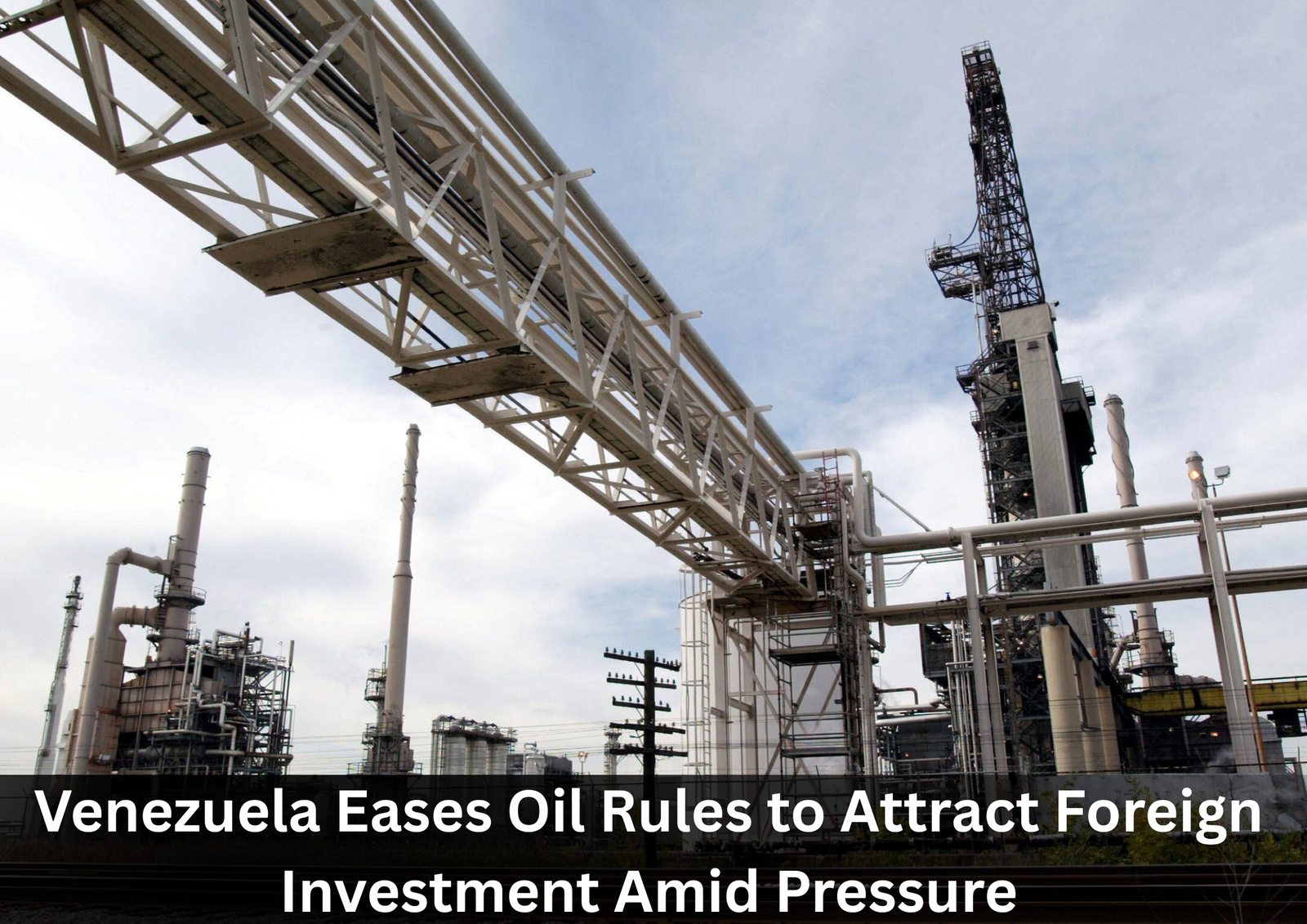
Venezuela’s National Assembly has approved a far-reaching revision of the country’s primary oil legislation, opening the door to significantly greater participation by foreign and private energy companies. The reform, passed on Thursday after an accelerated legislative process, represents a major departure from decades of state-centered control over the nation’s oil industry.
The new law, endorsed by interim President Delcy Rodríguez during a formal signing ceremony attended by energy sector representatives, reduces the dominance of state oil company Petróleos de Venezuela (PDVSA) in joint ventures. Under the revised framework, private partners will gain expanded authority over daily operations, marketing of oil output, and management of revenues tied to their contractual shares.
One of the most notable changes is the shift in legal oversight. Future disputes involving oil contracts will be settled through international arbitration rather than Venezuela’s domestic courts, a move intended to reassure foreign investors concerned about legal stability and enforcement.
The legislation also introduces changes to the fiscal structure governing oil production. While royalties are capped at 30 percent, new flexibility is granted to the executive branch to adjust tax conditions on a project-by-project basis. Several additional levies that previously burdened energy investments have been eliminated, although detailed regulations for the newly introduced hydrocarbon tax have yet to be finalized.
Institutionally, the reform consolidates authority within the executive branch. Oversight powers once held by the National Assembly-such as approval of oil contracts and asset transfers-have been reassigned to the Ministry of Oil. Lawmakers from opposition factions proposed amendments aimed at increasing transparency and limiting ministerial discretion, but those measures were ultimately rejected.
The timing of the overhaul coincides with heightened pressure from the United States. Earlier this month, U.S. forces detained former Venezuelan President Nicolás Maduro during an overseas operation, escalating tensions between the two countries. Washington has since signaled that further consequences could follow if Caracas failed to restructure its energy sector.
Shortly after the law’s passage, the U.S. government announced limited relief from certain energy-related sanctions. The Treasury Department issued a license permitting restricted transactions involving Venezuelan crude oil, marking a partial rollback of sanctions imposed several years ago. U.S. officials indicated that future oil sales would be subject to oversight mechanisms designed to control revenue flows.
The reform is also linked to broader international plans to revive Venezuela’s oil infrastructure, including a multibillion-dollar reconstruction initiative and new supply agreements with foreign partners. Analysts note that the changes effectively undo many of the nationalization policies enacted during the presidency of Hugo Chávez, which led to the withdrawal of several major international oil companies.
Supporters of the legislation argue it will improve competitiveness and attract much-needed capital to develop the country’s vast reserves. Critics, however, question the constitutionality of the reform and point to concerns over governance, transparency, and the legitimacy of the current legislature.
As Venezuela seeks to stabilize its economy and revive oil production, the long-term impact of the new law will depend on investor confidence, regulatory clarity, and evolving geopolitical dynamics.
Don’t miss “Senator Amy Klobuchar Enters Minnesota Governor’s Race, Reshaping State and National Politics”-read the full blog for key insights and implications shaping Minnesota and the national stage.