
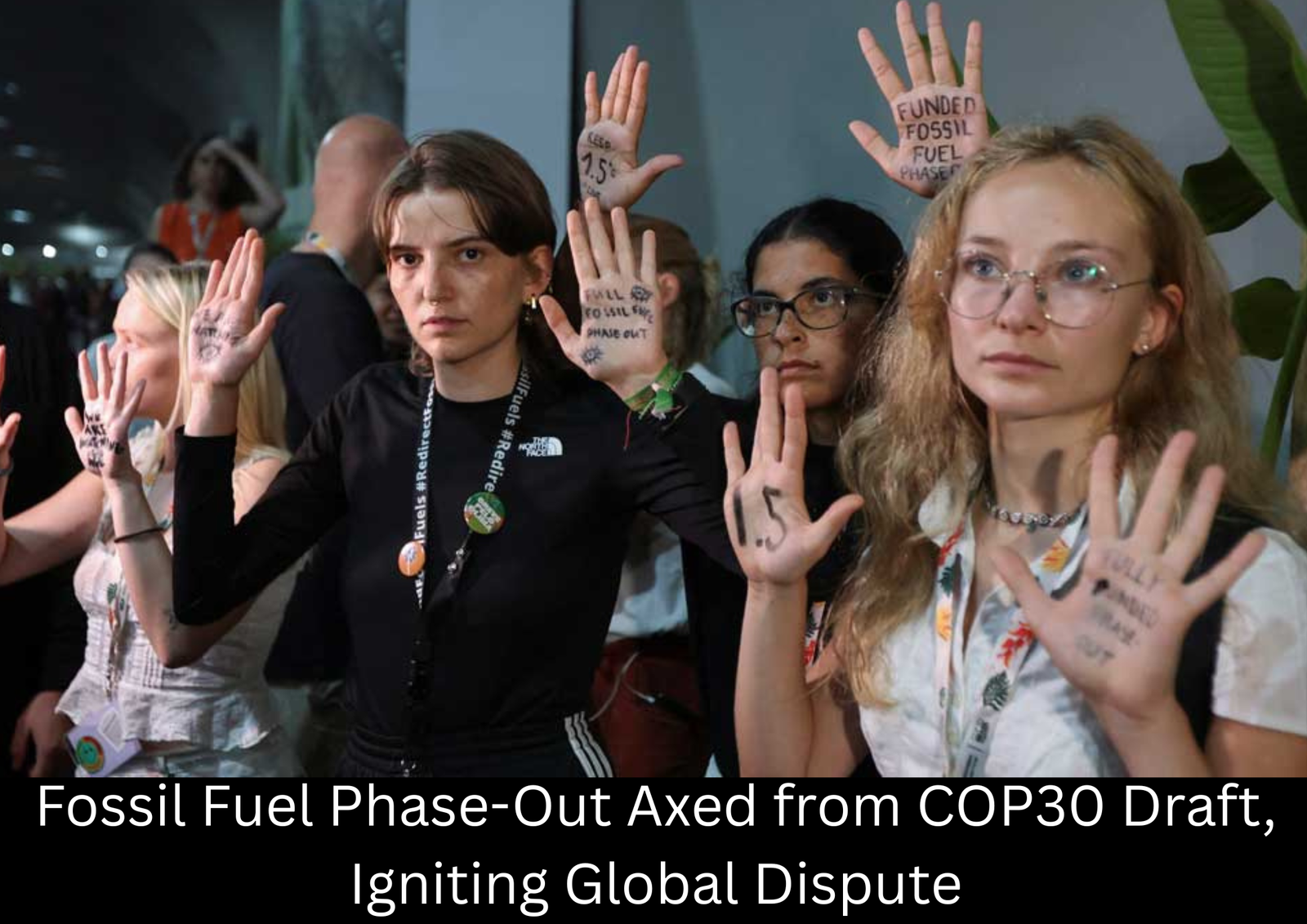
The COP30 climate summit entered a contentious new phase on Friday after negotiators released their first draft agreement – a document that immediately drew criticism for removing any reference to a coordinated global transition away from fossil fuels. The omission signaled a sharp departure from early expectations that this year’s summit would deliver the strongest-ever international commitment on phasing out coal, oil, and gas.
Instead of outlining a shared global plan, the draft urges countries to revise their climate strategies individually by strengthening their nationally determined contributions. While the text encourages governments to anchor their new commitments in scientific evidence and include measurable targets, it stops short of calling for a joint pledge on fossil fuel reduction, disappointing climate advocates and several national delegations.
The European Union issued one of the strongest reactions. Senior EU officials warned that the bloc is prepared to withhold its approval of any final agreement that fails to include clearer commitments. EU negotiators are demanding language that requires global emissions to peak by 2025 – a target fiercely disputed by several major economies. The bloc has framed this as the minimum threshold for a credible global climate deal.
Observers say the absence of fossil fuel language reflects deep fractures between countries that want rapid decarbonization and those that remain heavily dependent on oil and gas revenues. These divisions have intensified as nations grapple with climate-related disasters, including floods, heatwaves, and storms that have set records across multiple continents.
Financing remains another major sticking point. Developing countries argue that more ambitious climate commitments will be impossible without substantial financial support for clean energy expansion and adaptation measures. Wealthier nations, however, have yet to agree on how much funding they are willing to contribute or how future financial mechanisms should be structured.
With only days left in the summit, negotiators brace for difficult talks as pressure mounts to strengthen the final agreement. Diplomats close to the process say the outcome will depend on whether countries can overcome long-standing disagreements on timelines, financing, and the role of fossil fuels.
If negotiators fail to revise the text meaningfully, the EU’s threat to block the deal could plunge COP30 into a deadlock – a scenario that would cast uncertainty over global climate cooperation at a moment when scientific warnings are growing sharper each year.