
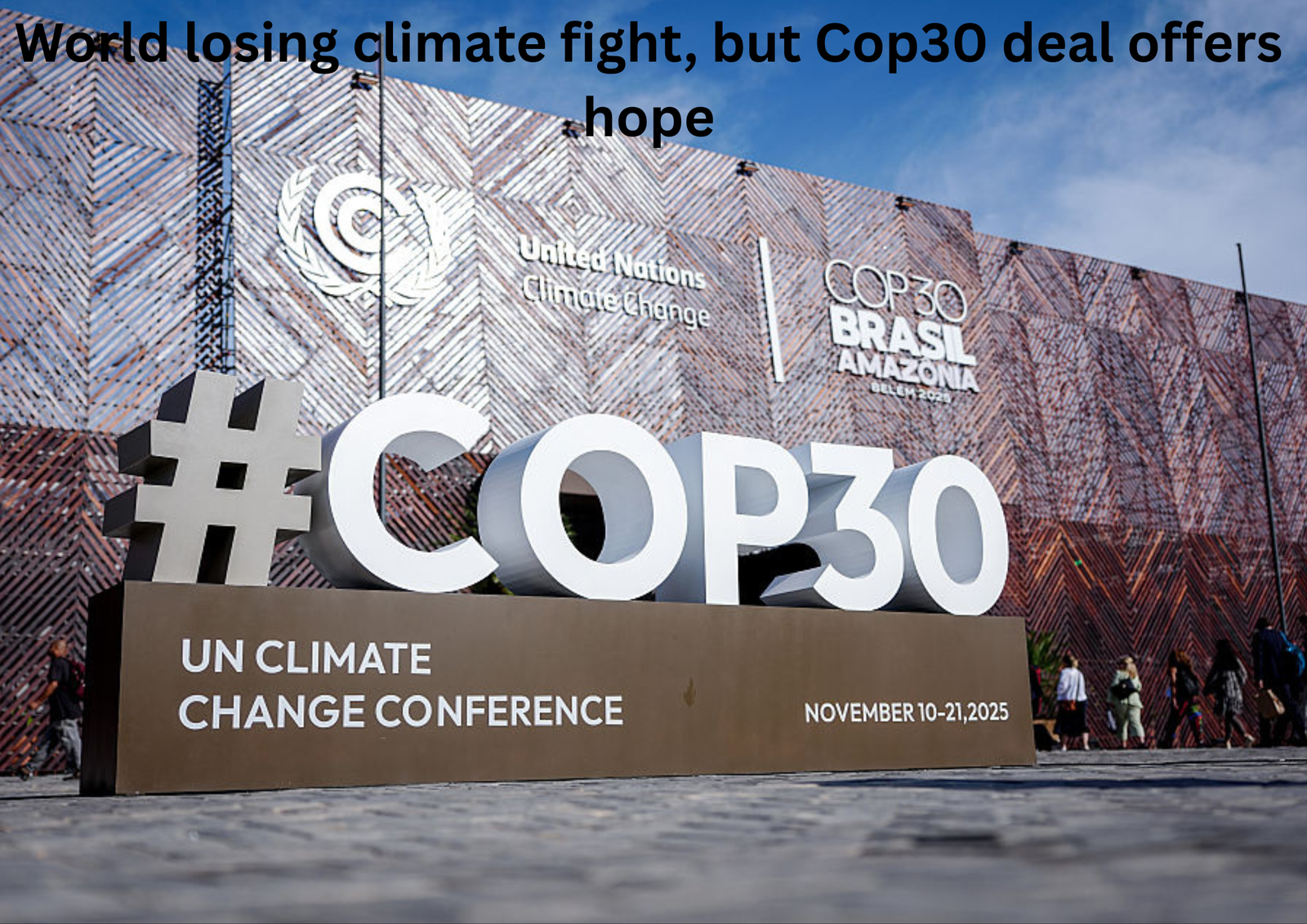
The COP30 climate summit in Belém concluded with a tense and fragile agreement that negotiators described as “barely enough to keep global climate cooperation alive.” After talks stretched nearly two full days beyond the official deadline, delegates finally settled on a compromise that aims to preserve momentum toward the Paris Agreement targets-even as the United Nations warned that the world is drifting dangerously off course.
A Divided Summit Spilling Into Overtime
The gathering, held deep in the Amazon region, was defined by sharp disagreements between wealthy industrialized countries and developing nations struggling with climate-driven impacts. Negotiators engaged in hours of nonstop debates before settling on a deal many called limited but essential to avoid a diplomatic breakdown.
The final hours saw intense exchanges over responsibility, climate finance, and timelines for phasing out fossil fuels. Observers noted that many of the same divisions that slowed progress at previous summits resurfaced in Belém, this time with even more urgency.
UN’s Stark Warning Sets the Tone
Just days before the summit ended, the UN released one of its bluntest assessments yet, warning that the world is “losing the climate battle.” According to updated scientific models, global warming is on track, far beyond what scientists consider safe and nearly double the Paris Agreement’s preferred 1.5°C threshold.
This grim backdrop amplified pressure on negotiators, but ultimately did not produce the sweeping breakthroughs many climate advocates hoped for.
What the Belém Pact Delivers
The agreement-now being referred to as the “Belém Pact”-features several key elements:
- A voluntary financial commitment from developed countries to raise climate funding beyond the long-promised 300 billion annually. The pledge, however, is not legally binding.
- The official launch of a global “loss and damage” fund to support countries struck by severe climate disasters. While operational, the funding structure remains unresolved.
- A renewed adaptation framework, attempting to help vulnerable nations prepare for rising seas, droughts, and extreme weather.
- A requirement for all countries to submit stronger national climate plans by 2025, a deadline seen as critical for keeping long-term goals within reach.
While these elements demonstrate continued cooperation, the pact lacks clear timelines for reducing fossil fuel use-a major disappointment for activists and several nations on the front lines of climate change.
Tensions Over Finance and Fossil Fuels
Developing countries repeatedly stressed that trillions-not billions-would be needed to cope with future climate impacts and transition to clean energy systems. Wealthy nations pushed back, declining to commit to any specific long-term figure.
The issue of fossil fuel phase-out also caused intense discussion. Some countries advocated for a clear global commitment to end coal, oil, and gas use, while others argued such language could threaten their economic stability. The final document avoids explicit mention of a phase-out, opting instead for general language about transitioning toward cleaner energy.
Reaction: Relief, Frustration, and Renewed Pressure
UN climate officials welcomed the pact as a necessary step that prevents backsliding. But many civil society groups said the agreement fails to reflect the urgency of the climate emergency.
Representatives from small island nations were among the most vocal critics, stating that hesitation from major emitters leaves their homelands facing an uncertain and potentially uninhabitable future.
Looking Ahead to COP31
The fragile deal from Belém shifts the burden onto next year’s summit, where nations must finalize a new global climate finance target and present upgraded national climate strategies. Scientists say those plans must be dramatically more ambitious to keep global warming anywhere near the 1.5°C mark.
For now, the world remains on a dangerous trajectory-one the Belém Pact slows, but does not reverse.