
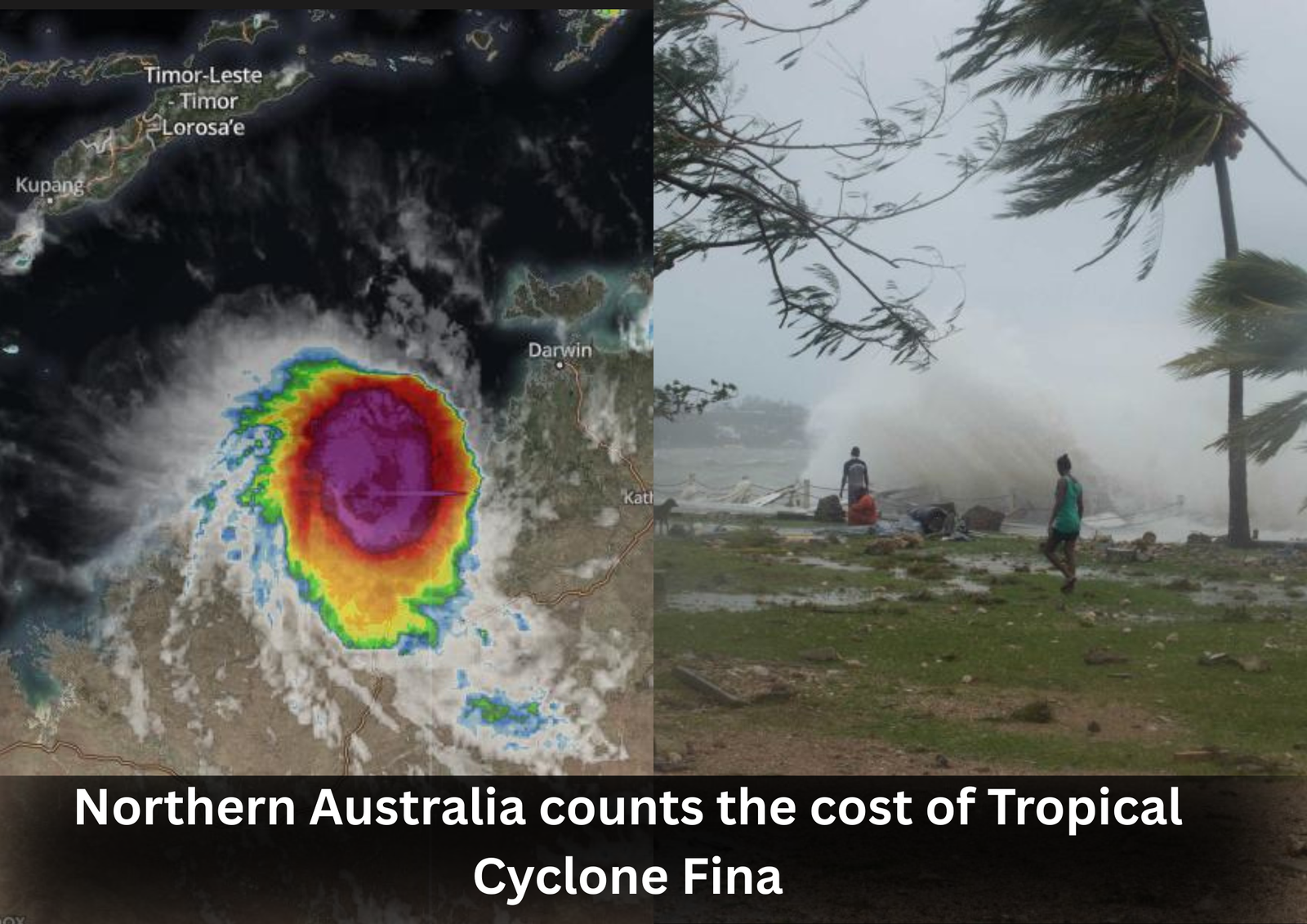
Northern Australia is grappling with widespread disruption after Tropical Cyclone Fina swept across the region, unleashing powerful winds and intense rainfall that knocked out power, damaged property, and temporarily shut down Darwin International Airport. Emergency crews have launched extensive cleanup efforts as communities assess the full extent of the storm’s impact.
Cyclone Fina’s Landfall and Initial Impact
Cyclone Fina struck the Northern Territory on Saturday evening as a Category 4 system, making landfall near the Daly River mouth, roughly 195 kilometers southwest of Darwin. Weather authorities recorded wind gusts of up to 140 kilometers per hour, accompanied by relentless downpours that inundated several low-lying areas. Although the system weakened as it moved inland, it continued to generate heavy rainfall across remote communities.
Major Damage and Widespread Outages
Residents across the Top End reported significant destruction from the storm. Several buildings suffered structural damage, including an industrial facility that had part of its roof torn off. Fallen trees blocked numerous roads and brought down power lines, leaving tens of thousands of homes and businesses in the dark. Emergency assessments indicate that Belyuen, the Cox Peninsula, and surrounding areas experienced some of the most severe outages.
Flights Suspended as Darwin Airport Shuts Down
Darwin International Airport was forced to close for nearly half a day as the cyclone’s peak winds made flying unsafe. All scheduled flights from Saturday afternoon were halted until early Sunday morning, causing widespread delays for travelers and disrupting cargo operations. Airport authorities said the closure was necessary to ensure the safety of passengers, staff, and aircraft.
Emergency Warnings and Ongoing Risks
Ahead of landfall, officials issued strong warnings urging residents to stay indoors, secure property, and avoid unnecessary movement. During the storm, emergency services received hundreds of calls for help, ranging from fallen trees to flooded homes. As the remnants of Fina continue to move inland, flood watches remain active for several rivers across the Top End. Authorities caution residents not to drive through floodwaters and to remain alert as rainfall persists.
Looking Ahead
With Cyclone Fina now downgraded to a tropical low, its weakened form is expected to track west-southwest across the Northern Territory. Recovery efforts are now focused on restoring power, clearing debris, and supporting affected communities. Meteorologists warn that while the immediate threat has passed, saturated soils and swollen rivers could continue to create hazards over the coming days.