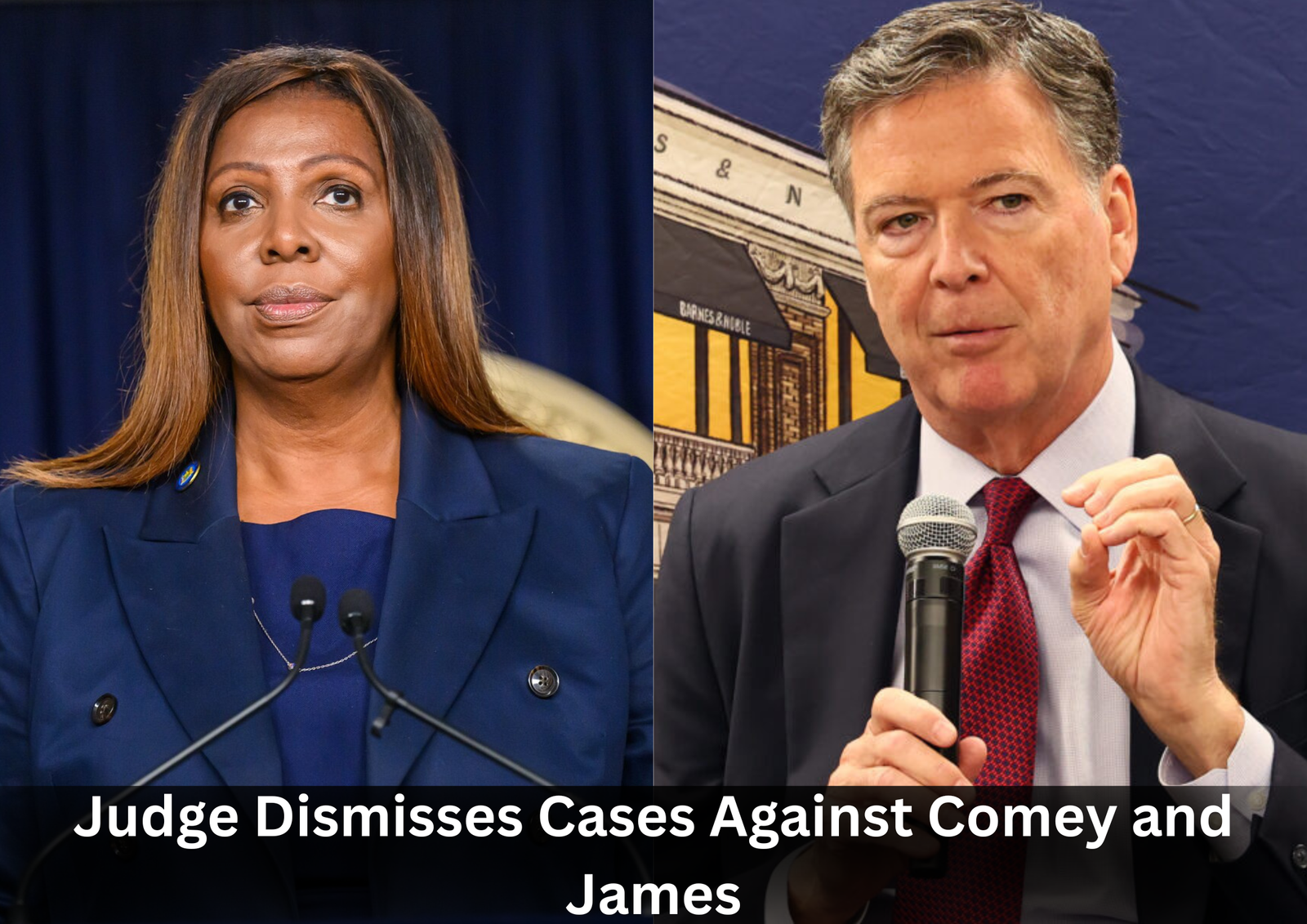
A federal judge has dismissed criminal cases involving former FBI Director James Comey and New York Attorney General Letitia James, ruling that the special prosecutor overseeing the matters was appointed unconstitutionally. The decision, issued Monday by U.S. District Judge Cameron Curri, immediately halted both prosecutions and set the stage for a major legal showdown over the structure of federal investigations.
Judge Curri found that Special Prosecutor Jack Smith, who led the cases, was serving as a “principal officer” under the Constitution – a classification that requires presidential nomination and Senate confirmation. Smith was instead appointed under internal Justice Department regulations, a process the court concluded did not satisfy constitutional standards.
Because of that, the judge determined that Smith lacked lawful authority to represent the United States in either case. “The power to prosecute crimes is a core executive function,” she wrote, adding that such authority must be exercised only by officials appointed through constitutionally valid channels.
The case involving Comey focused on accusations related to his handling of classified material after leaving the FBI. Details of the allegations against Letitia James were not publicly outlined in the ruling, though the charges had drawn significant national attention before the dismissal.
The Justice Department argued that special counsels have historically been treated as “inferior officers” who operate under the Attorney General’s supervision, making Senate confirmation unnecessary. The court rejected that view, stating that Smith’s independence and authority resembled that of senior executive officials who must undergo the constitutional appointment process.
Although the cases were dismissed, the ruling does not prevent federal prosecutors from bringing the charges again in the future. Judge Curri noted that the government is free to refile the cases using a lawfully appointed prosecutor.
The decision is expected to be appealed to the U.S. Court of Appeals for the Second Circuit and may ultimately reach the Supreme Court. Legal experts say the ruling could have sweeping implications, potentially influencing other cases handled by special counsels and reshaping how the Justice Department structures major investigations.
As the appeals process begins, the ruling has already sparked intense debate among constitutional scholars, political leaders, and legal analysts, many of whom see the case as a major test of executive power and prosecutorial authority in the United States.