
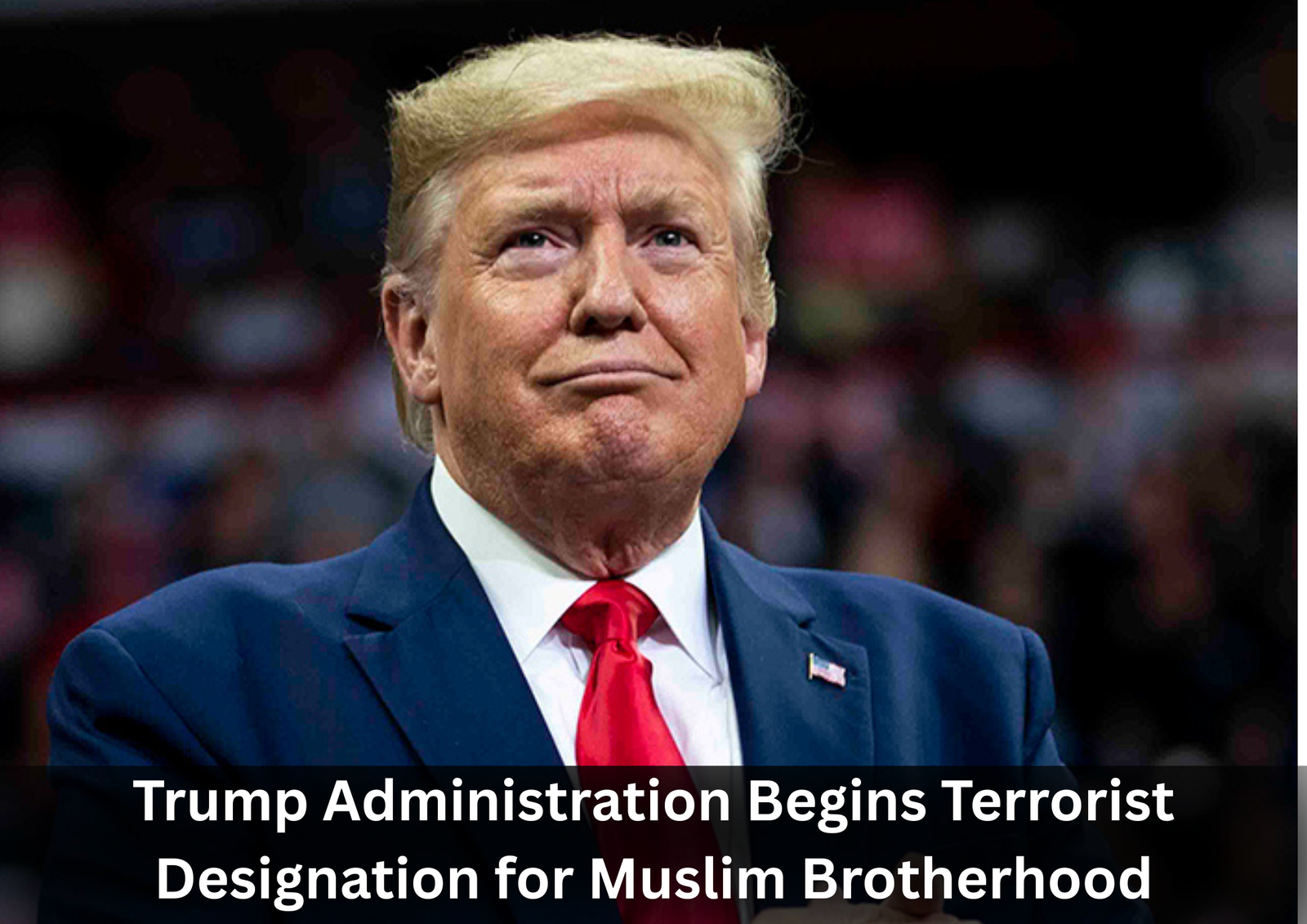
President Donald Trump has signed a new executive order directing U.S. national security agencies to begin a formal review of certain regional chapters of the Muslim Brotherhood for potential designation as Foreign Terrorist Organizations (FTOs). The announcement was released through an official White House fact sheet on Monday.
According to the administration, the initiative focuses solely on specific branches believed to be tied to violent activities or to groups that threaten U.S. interests. The White House emphasized that the action does not target the Muslim Brotherhood as a single global movement, but instead aims at “individual affiliates involved in terrorism or destabilizing operations.”
Under the directive, federal agencies – including the State and Treasury Departments – will compile intelligence, evaluate regional activities, and determine whether these entities meet the legal criteria required under U.S. law for terrorism designation. Officials noted that this process is detailed and likely to unfold over several months.
If the selected branches are formally designated, the consequences would be significant. Sanctions could freeze assets within U.S. jurisdiction, while individuals associated with those groups may face immigration restrictions or travel bans. Federal law would also prohibit providing funds or any form of support to the designated entities.
The decision has drawn mixed international reactions. Governments such as Egypt, Saudi Arabia, and the United Arab Emirates – which already classify the Muslim Brotherhood as a terrorist organization – are expected to support Washington’s move. However, some U.S. allies, including Turkey and Qatar, have expressed concern, noting that they maintain political ties with certain Brotherhood-linked parties.
Domestically, the action fulfills a pledge President Trump made during his 2024 campaign, reviving an initiative previously explored but never completed during his first term. Supporters argue the step strengthens national security, while critics warn it could complicate diplomatic relationships across the Middle East.
As agencies begin their review, experts anticipate months of legal and diplomatic negotiation before any final determinations are made.