
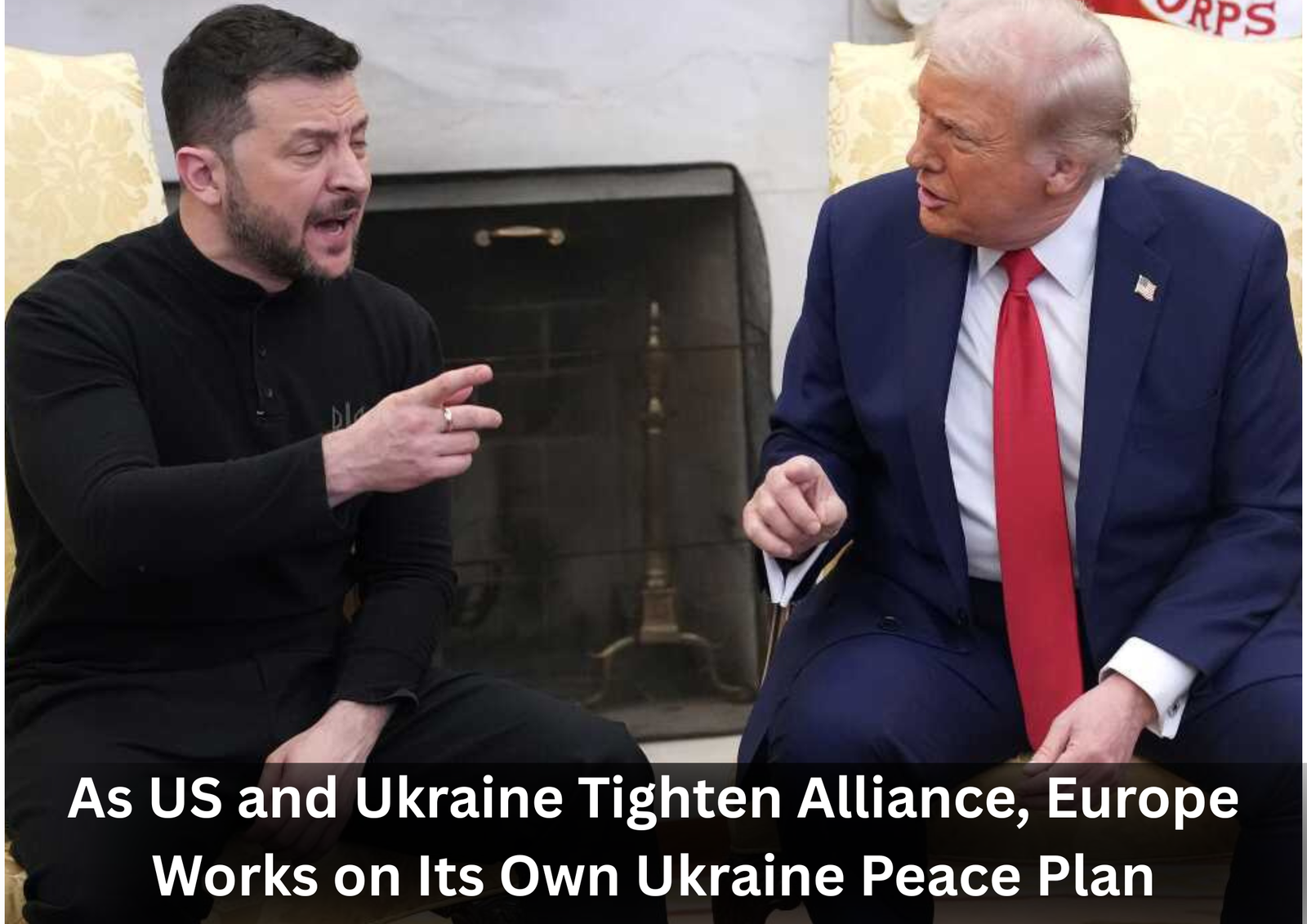
Efforts to chart a path toward ending the war in Ukraine have intensified, with the United States and Ukraine working closely on a refined peace framework while European leaders promote a separate initiative of their own. The parallel diplomatic tracks have created a complex moment in international negotiations, with multiple proposals emerging simultaneously.
According to officials familiar with the discussions, recent talks between Washington and Kyiv have been described as “productive,” with both sides reviewing updated ideas that could shape the basis for future ceasefire arrangements. While the details remain confidential, US diplomats say the goal is to craft an approach that balances immediate de-escalation with long-term security guarantees for Ukraine.
Across Europe, leaders from France, Germany, and several EU institutions are pushing forward with a renewed peace effort inspired by a draft agreement circulated in 2022. Their plan includes significant financial assistance to support Ukraine’s reconstruction and future stability. European officials privately express concern that the US proposal may diverge from their own efforts, potentially complicating negotiations or affecting Ukraine’s leverage in talks with Moscow.
The Trump administration has reportedly shared a more extensive outline of its peace proposal with Western partners, though the full content has not been made public. Sources say the document attempts to reframe previous negotiation attempts and could form the basis for a new round of international consultations. American officials have been in regular communication with both Ukrainian leaders and European governments in an attempt to build alignment.
For Ukraine, the red line remains unchanged. President Volodymyr Zelenskyy and senior government officials have been consistent in rejecting any settlement that involves ceding territory to Russia. Kyiv insists that any agreement must uphold the country’s sovereignty, preserve its internationally recognized borders, and include enforceable security measures.
The emergence of two separate peace efforts-one led by the United States and another shaped by European leaders-has added new layers of complexity to the diplomatic landscape. While some analysts view the competing proposals as a sign of rising urgency, others warn that conflicting strategies could risk slowing progress.
As negotiations continue, both American and European officials say they hope to find common ground. Whether these parallel initiatives can be merged into a single, coherent path toward peace remains an open question-one that could shape the next phase of the conflict and the future of European security.