
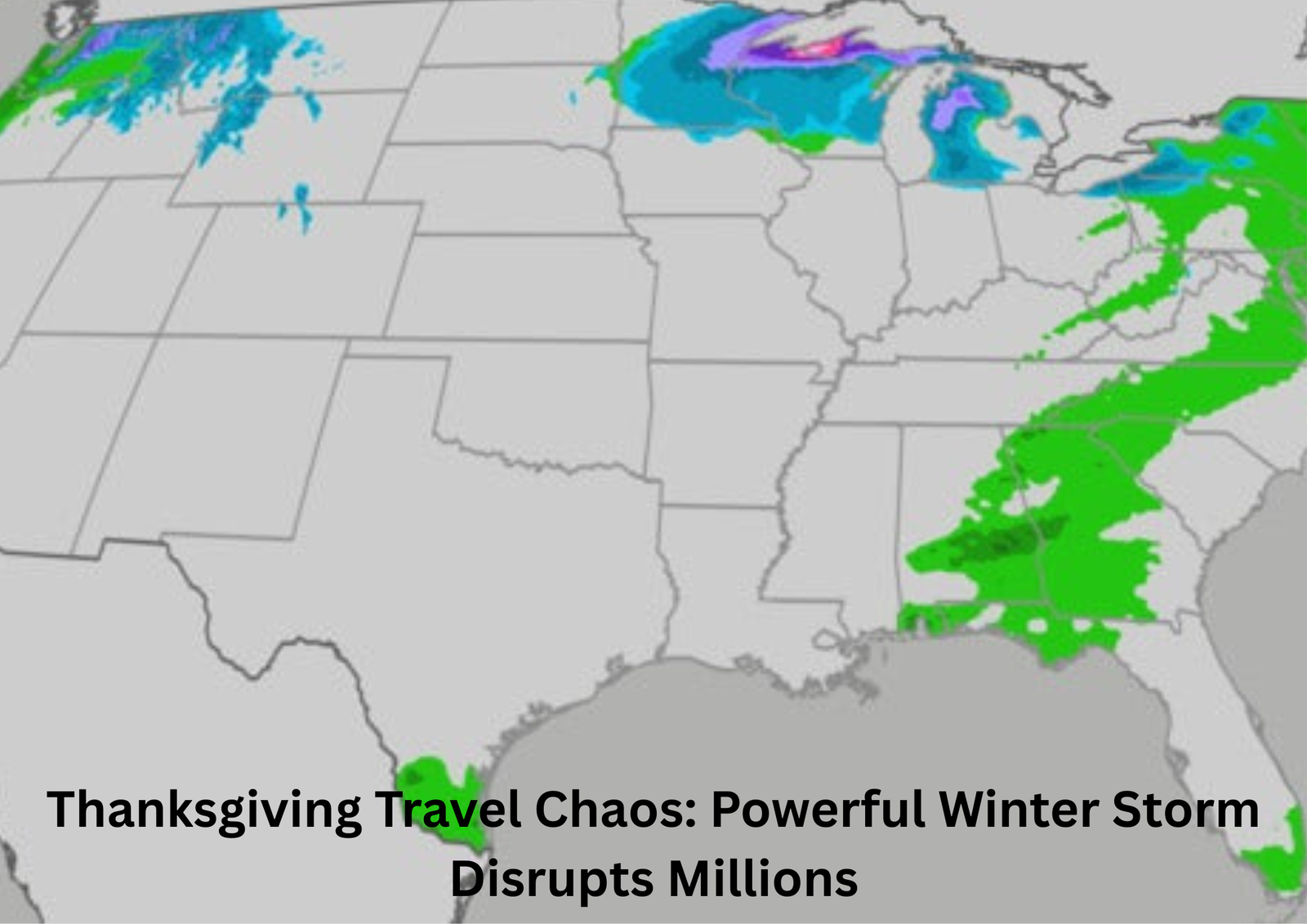
A massive winter storm barreled across the United States on Wednesday, delivering a disruptive mix of heavy snow, strong winds and cold rain just as millions prepared to travel for Thanksgiving. The sprawling system, driven by a sharp cold front and strengthening low-pressure center, stretched from the Rocky Mountains to the East Coast, creating one of the most challenging holiday travel days in recent years.
Airports in Chicago, Denver, Detroit and Washington, D.C., reported mounting delays and cancellations as fast-falling snow and turbulent winds made runway operations difficult. Transportation officials warned that the timing of the storm-hitting at the peak of holiday departures-would likely strain schedules well into the holiday weekend.
In the western and northern Plains, conditions deteriorated rapidly. Blizzard warnings were issued as parts of the Rockies and High Plains were slammed with whiteout conditions. Wind gusts strong enough to topple tree limbs and reduce visibility to near zero made highways nearly impassable. Weather forecasters said some areas in the central Plains and Upper Midwest could see over a foot of heavy, wet snow by the time the system moves out.
Behind the main storm, bitterly cold air pouring across the Great Lakes sparked intense lake-effect snow bands. Communities downwind of Lakes Michigan, Superior and Huron braced for snowfall rates reaching one to two inches per hour. In southeast Michigan, forecasters cautioned that the combination of 40 – 50 mph gusts and narrow but persistent snow bands could lead to localized power outages and hazardous travel for drivers, especially north of the I-94 and I-69 corridors.
Farther east, the Interstate 95 corridor faced a different set of problems. From Washington, D.C., to Boston, heavy rain and powerful wind gusts created dangerous conditions for commuters and airline passengers. The persistent onshore flow raised concerns about coastal flooding in low-lying areas, while water-logged roads and reduced visibility slowed traffic across several states.
Although the storm is expected to move away from the Northeast by Thanksgiving morning, its aftermath will continue to influence holiday plans. Lingering lake-effect snow, strong winds and pockets of difficult travel may persist through the day. Meteorologists urged travelers to monitor updated forecasts and allow extra time as the nation works through the storm’s widespread impacts.