
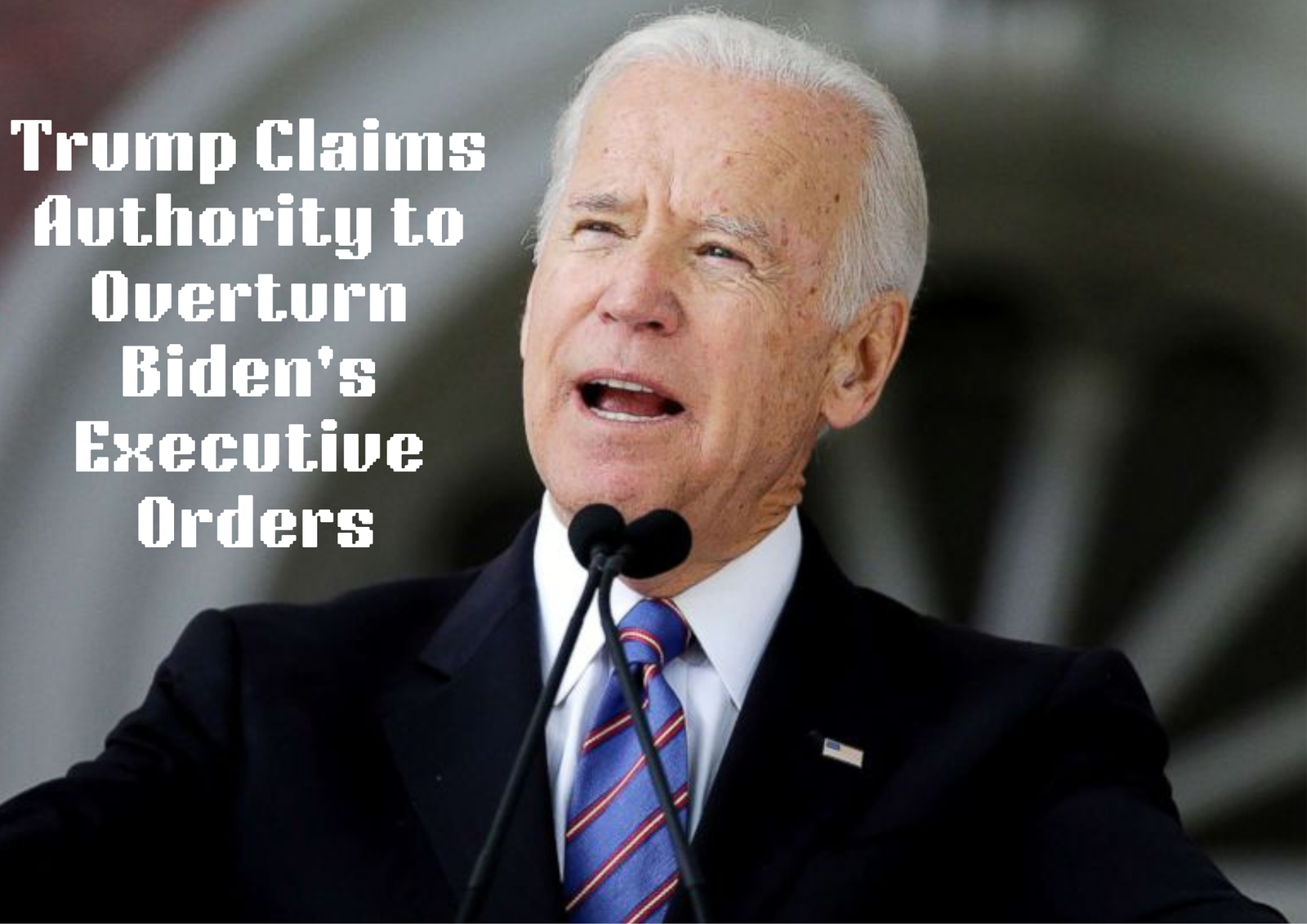
President Donald Trump ignited a fresh legal and political clash on Friday after formally revoking a series of executive actions signed by Joe Biden during the final stretch of his presidency. Announcing the move from his Mar-a-Lago residence on November 28, Trump declared that the targeted directives-roughly a dozen in total-were “unlawful” because they were authenticated using an autopen rather than Biden’s own signature.
The autopen, a device capable of reproducing a person’s handwritten signature, has been used by several modern presidents for routine paperwork, condolence letters, and ceremonial messages. What makes this situation unusual is that Biden employed the device to authorize high-level environmental and climate-related measures shortly before leaving office in January 2025. Those actions, now withdrawn under Trump’s new order, were among the last policy steps of his administration.
Trump sharply criticized the practice, calling the machine-generated signatures a “sham” and insisting that presidential directives must bear the direct signature of the sitting president. His allies argue that the U.S. Constitution implicitly requires a president to personally authenticate binding executive decisions, referencing provisions tied to document approval and executive authority. They say the issue is not the device itself but the level of policy impact tied to these particular orders.
Democrats and former Biden officials counter that the autopen has long been considered legally acceptable when the president authorizes its use. They note that presidents from both parties-including George W. Bush, Barack Obama, and even Trump during his first term-have used the device on multiple occasions. While past use typically involved non-controversial documents, they maintain that there is no constitutional ban on applying the method to executive orders if the president explicitly approves it.
Legal experts point out that the Supreme Court has never directly ruled on the constitutional limits of autopen use for executive actions, leaving the debate unresolved. Some scholars say Trump’s revocation may spark lawsuits that finally force federal courts to clarify the boundaries of presidential signature authority.
The White House emphasized that the newly issued order affects only the specific batch of autopen-signed actions and does not touch the broader range of Biden’s policies. Still, the decision has amplified Washington’s political tensions, with Republicans framing the reversal as necessary oversight and Democrats dismissing it as political theater aimed at undoing environmental protections.
As the legal questions deepen, the clash has opened up a rare debate over how presidential power is documented and authenticated-an issue that until now has largely remained behind the scenes of modern governance.