
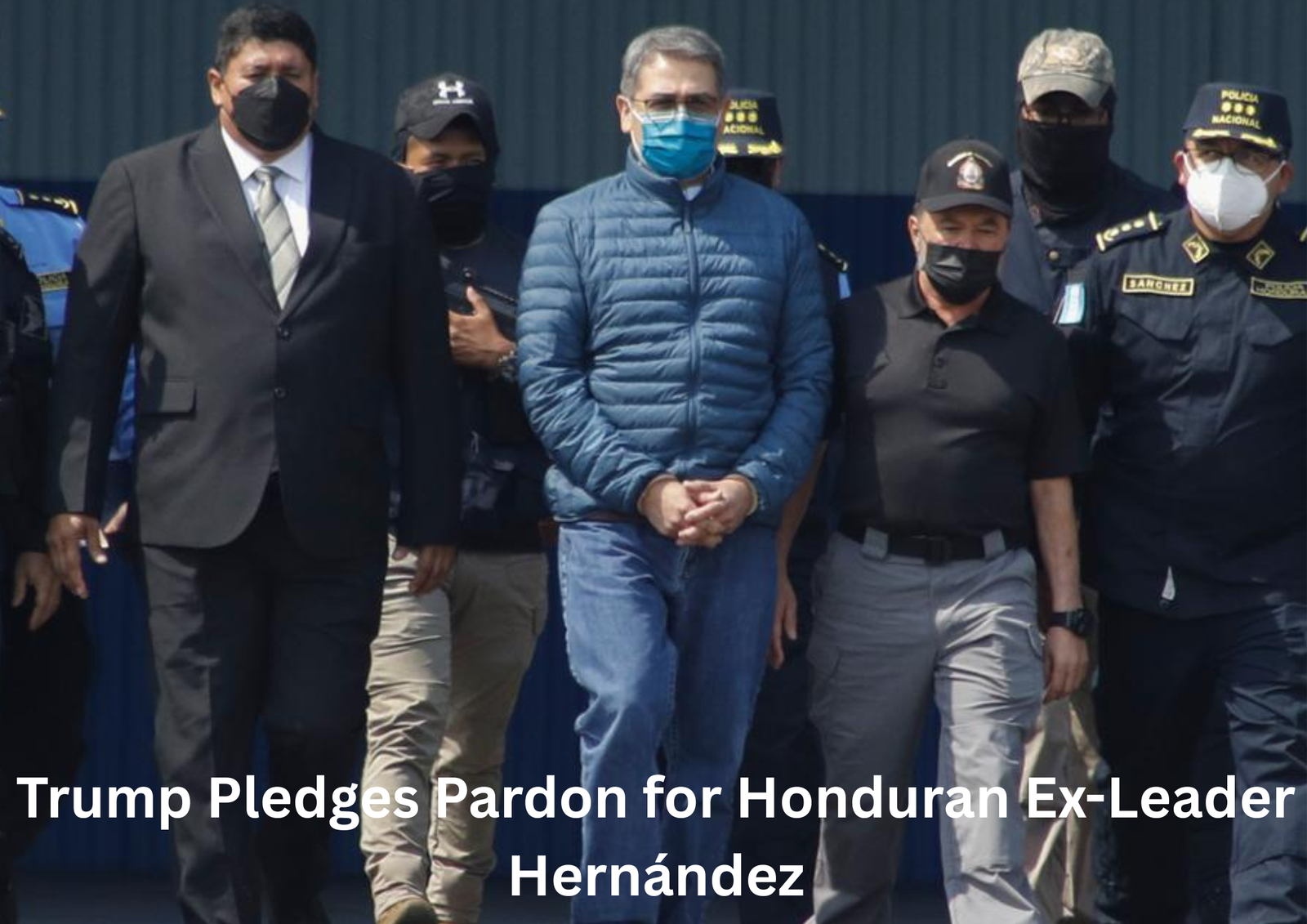
U.S. President Donald Trump ignited a political firestorm on Friday after publicly declaring that he intends to pardon former Honduran president Juan Orlando Hernández, who is currently serving a 45-year U.S. federal sentence for drug trafficking and weapons offenses. Trump made the statement during a packed rally in North Carolina, calling Hernández “a strong ally” and promising a “full and total pardon.”
Hernández, widely known in Central America by his initials JOH, was convicted in a New York courtroom in 2024 on charges that he conspired with powerful cartels to move massive quantities of cocaine into the United States. Prosecutors argued that during his presidency from 2014 to 2022, he accepted millions in bribes from traffickers, including members of the Sinaloa Cartel, offering military protection and sensitive intelligence in return.
Despite the damning evidence, Trump portrayed Hernández as a leader who cooperated closely with the United States, particularly in efforts to slow the flow of migrants through Central America. During Trump’s time in office, Washington maintained a working partnership with Hernández’s administration, even as investigations into his alleged cartel ties were quietly advancing.
The former president’s pledge has drawn swift backlash from federal prosecutors, lawmakers, and legal experts. Officials involved in the original case emphasized that the conviction represented a significant milestone in holding foreign leaders accountable for aiding global narcotics networks. Critics say a pardon would undermine years of legal work and weaken U.S. credibility in anti-drug enforcement.
In Honduras, reaction has been sharply divided. Supporters of Hernández argue that he was targeted by political rivals and unfairly portrayed by U.S. authorities. Opponents, however, view the case as a rare example of justice prevailing in a region where high-level corruption often goes unpunished.
Legal questions also loom large. No U.S. president has attempted to issue a pardon after leaving office, and experts say the process could face immediate court challenges. As of now, Hernández remains behind bars while Trump’s announcement continues to ripple through diplomatic, legal, and political circles.
If carried out, the decision would likely become one of the most controversial acts associated with Trump’s post-presidential political movement, raising major questions about presidential power, international accountability, and the future of U.S. anti-narcotics policy.

