


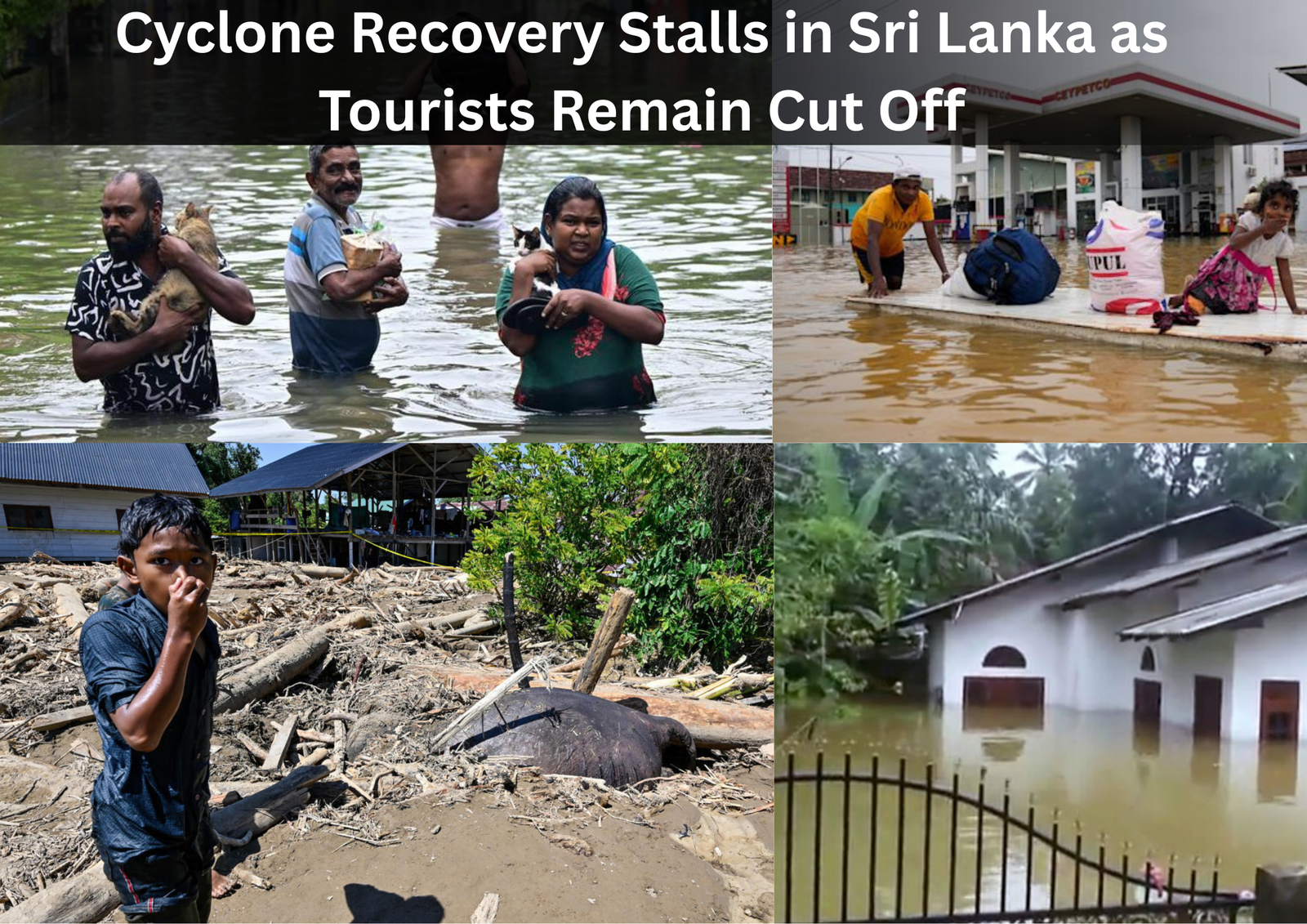
Sri Lanka is confronting one of its most severe natural disasters in years after a powerful cyclone tore across the island, leaving widespread destruction, hundreds of casualties, and entire communities cut off from help. The storm unleashed intense rainfall, triggering sudden floods and landslides that swept through towns and rural regions alike.
Authorities say the confirmed death toll has climbed into the hundreds, with emergency teams warning that the number may rise as search operations reach remote areas. More than 80,000 people have been forced to leave their homes, filling temporary shelters as rescuers struggle to navigate wrecked roads and washed-out bridges.
The government has deployed military units to assist overwhelmed local responders, but access remains the biggest challenge. Landslides have blocked key routes, and many villages are still without communication, leaving families desperate for updates on missing relatives.
Among the stranded are a group of British women who were trekking in the Knuckles Mountain Range when the storm hit. They became trapped after landslides sealed off the surrounding trails. Relatives say the group has limited food and water and is currently taking refuge in a remote lodge. Concerns are growing because one member of the group requires heart medication that may soon run out.
Officials say they are coordinating a rescue effort but worsening weather has prevented helicopters from entering the area. Ground teams are now attempting to reach the group on foot, though unstable slopes and debris make the journey dangerous.
A state of emergency has been declared in several provinces as authorities continue assessing the fallout. Early estimates suggest thousands of homes have been destroyed or severely damaged, while the collapse of farmland and coastal fishing zones raises fears of a prolonged food shortage.
Witnesses describe scenes of chaos as water levels rose suddenly, sweeping away vehicles, homes, and livestock. Many survivors have spoken of being separated from loved ones in the rush to escape rising waters. Mental health specialists warn that the emotional impact of the disaster will likely intensify in the weeks ahead as communities process both loss and uncertainty.
International aid agencies and foreign governments have begun offering assistance, with relief shipments and disaster specialists preparing to support recovery efforts. For now, Sri Lanka remains in a race against time, battling hazardous conditions to reach those still waiting for help.


