
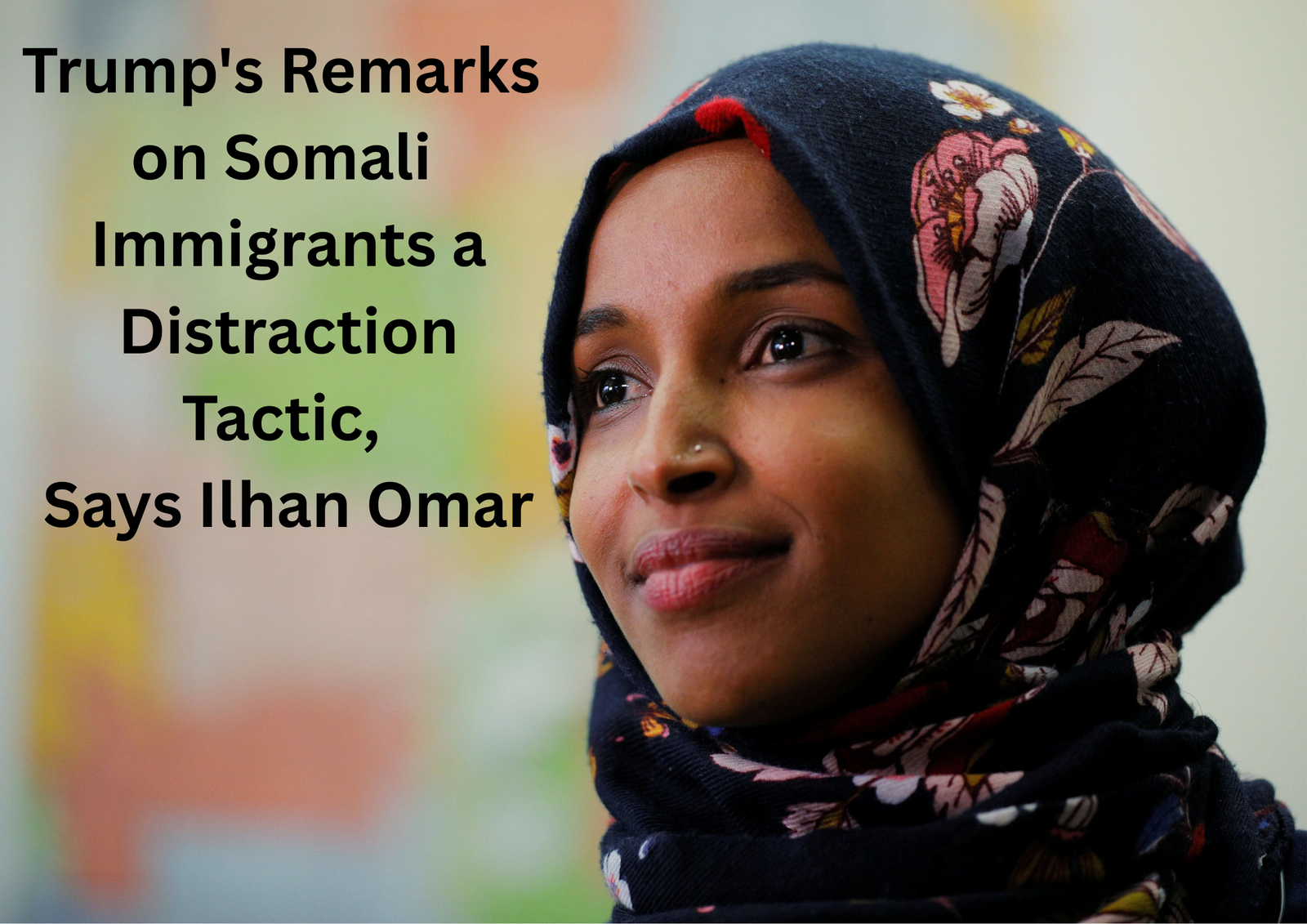
Representative Ilhan Omar accused President Donald Trump this week of using inflammatory comments about Somali immigrants to divert attention from mounting scrutiny surrounding him. Her remarks came after Trump delivered a string of criticisms targeting Somali communities during a recent closed-door cabinet meeting.
According to individuals familiar with the meeting, Trump questioned the integration of Somali refugees and made sweeping generalizations about their role in American society. His comments reportedly extended to other immigrant groups as well, contributing to what observers described as a tense and racially charged atmosphere.
Omar, who represents Minnesota’s Fifth Congressional District and is herself a Somali-American, said the rhetoric was a deliberate political tactic rather than a substantive policy position. She argued that Trump’s pattern of targeting specific communities often coincides with periods when he faces legal, political, or public pressure.
Minnesota has long been home to the largest Somali diaspora in the United States, with vibrant communities centered in Minneapolis and surrounding suburbs. State leaders moved quickly to respond to the controversy, with Governor Tim Walz condemning Trump’s statements as “divisive” and praising Somali-Americans for their contributions to the state’s economy and cultural landscape. Walz emphasized that Somali residents are entrepreneurs, educators, health-care workers, and community leaders who play a meaningful role in shaping the state’s identity.
The dispute adds to the already strained relationship between Trump and Omar, who has frequently been the subject of the president’s criticism. Analysts say the latest exchange underscores a familiar political dynamic, as debates over immigration and national identity continue to shape the country’s broader political climate.
Critics of Trump’s rhetoric expressed concern that language perceived as racially targeted can deepen social divides and undermine principles of inclusivity. Supporters of Omar argued that public officials must challenge narratives that isolate or stigmatize immigrant communities.
With tensions rising, the episode is expected to remain a focal point in ongoing political conversations, especially in Minnesota, where Somali-Americans represent a significant and influential community.