

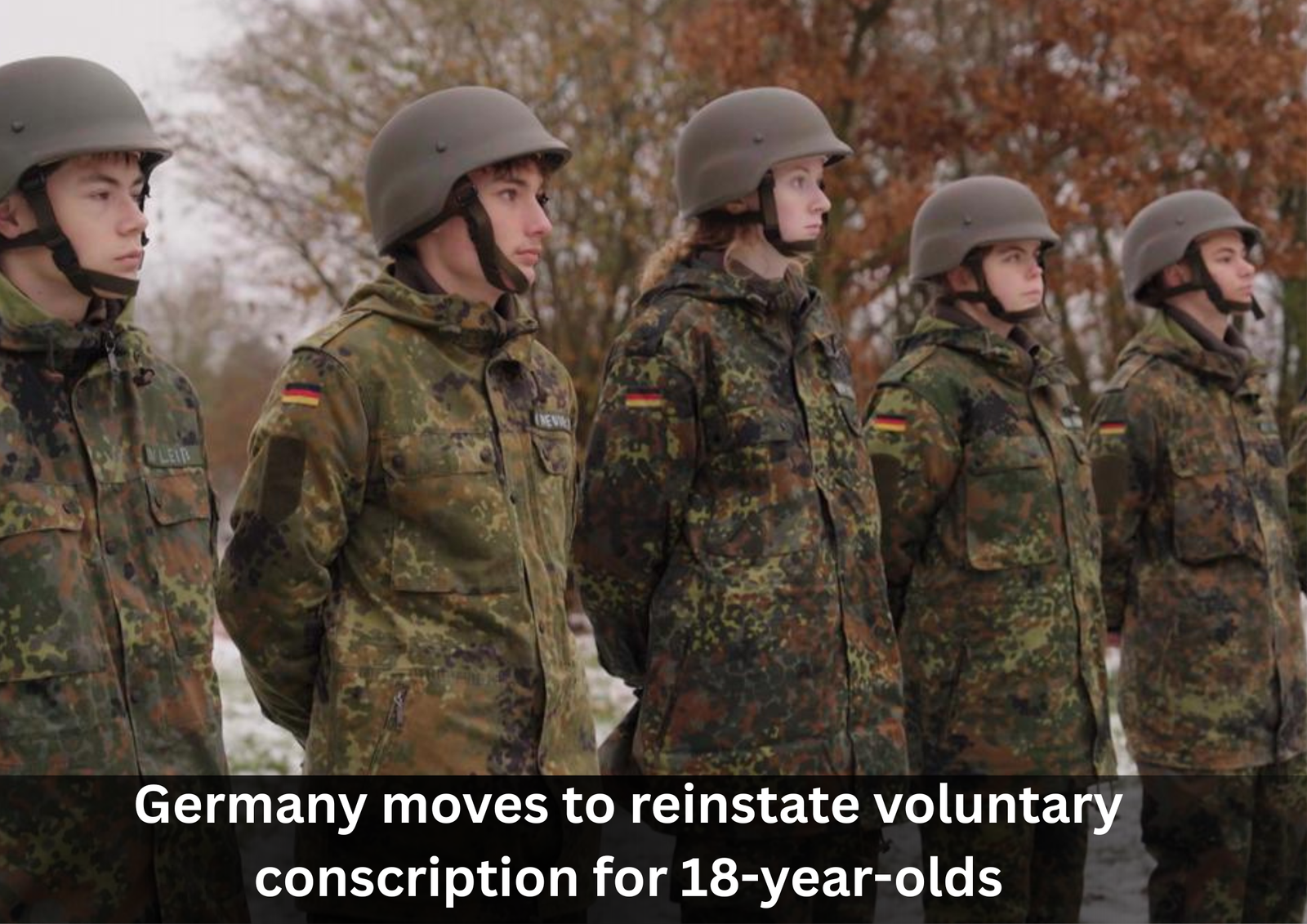
Germany has approved a sweeping defense reform that will reintroduce a form of compulsory national service for young men starting in mid-2026, marking the country’s most significant military policy shift in more than a decade.
The Bundestag passed the legislation on Friday after a heated debate that stretched late into the evening. The final vote – 323 in favor and 272 against – underscored deep divisions among political parties and within the wider public.
A New Model of Conscription
Under the updated system, all men turning 18 will be required to register and complete a detailed questionnaire assessing their health, skills, and willingness to serve. From this group, the Bundeswehr will select between 20,000 individuals each year for six months of basic training. Officials say volunteers will be prioritized, but the state retains authority to require service from those who did not volunteer if numbers fall short.
Women are not obligated to register, following constitutional restrictions, but may opt into service voluntarily.
The reform comes as Germany strives to address persistent staffing shortages in the Bundeswehr, which currently has about 182,000 active troops – a figure military planners say falls short of strategic needs.
Government Says Move Responds to Global Tensions
Defense Minister Boris Pistorius, the architect of the new model, described the vote as a “necessary step” for a country facing a more volatile security environment. He pointed to Russia’s continued war in Ukraine and Europe’s shifting geopolitical landscape as catalysts for the change.
Chancellor Friedrich Merz’s has framed the reform as part of Germany’s broader Zeitenwende – a historic turning point in national defense and security strategy.
Criticism From Both Left and Right
The reintroduction of mandatory service has drawn objections from across the political spectrum.
The Left Party warned that the policy risks steering Germany toward remilitarization, while the far-right AfD argued it does not go far enough, calling for a full return to traditional conscription.
Public sentiment mirrors the political divide. A recent nationwide survey found Germans nearly split on the policy: 50% in opposition and 46% in support.
Cost and Capacity Concerns Remain
Analysts note that implementing the new system could strain training facilities and administrative resources. The government estimates yearly costs will reach between €1.3 billion and €1.5 billion once the program is fully operational.
Military officials, however, insist the investment is essential to modernizing Germany’s defense infrastructure and ensuring adequate troop levels for future challenges.
A New Era for Germany’s Armed Forces
With the law now approved, preparations begin for the first wave of mandatory questionnaires that will be sent out next year. If smoothly implemented, the reform will end Germany’s era of an exclusively volunteer military and usher in a new generation of conscripts – a transformation supporters believe is vital for national security in an uncertain global climate.