

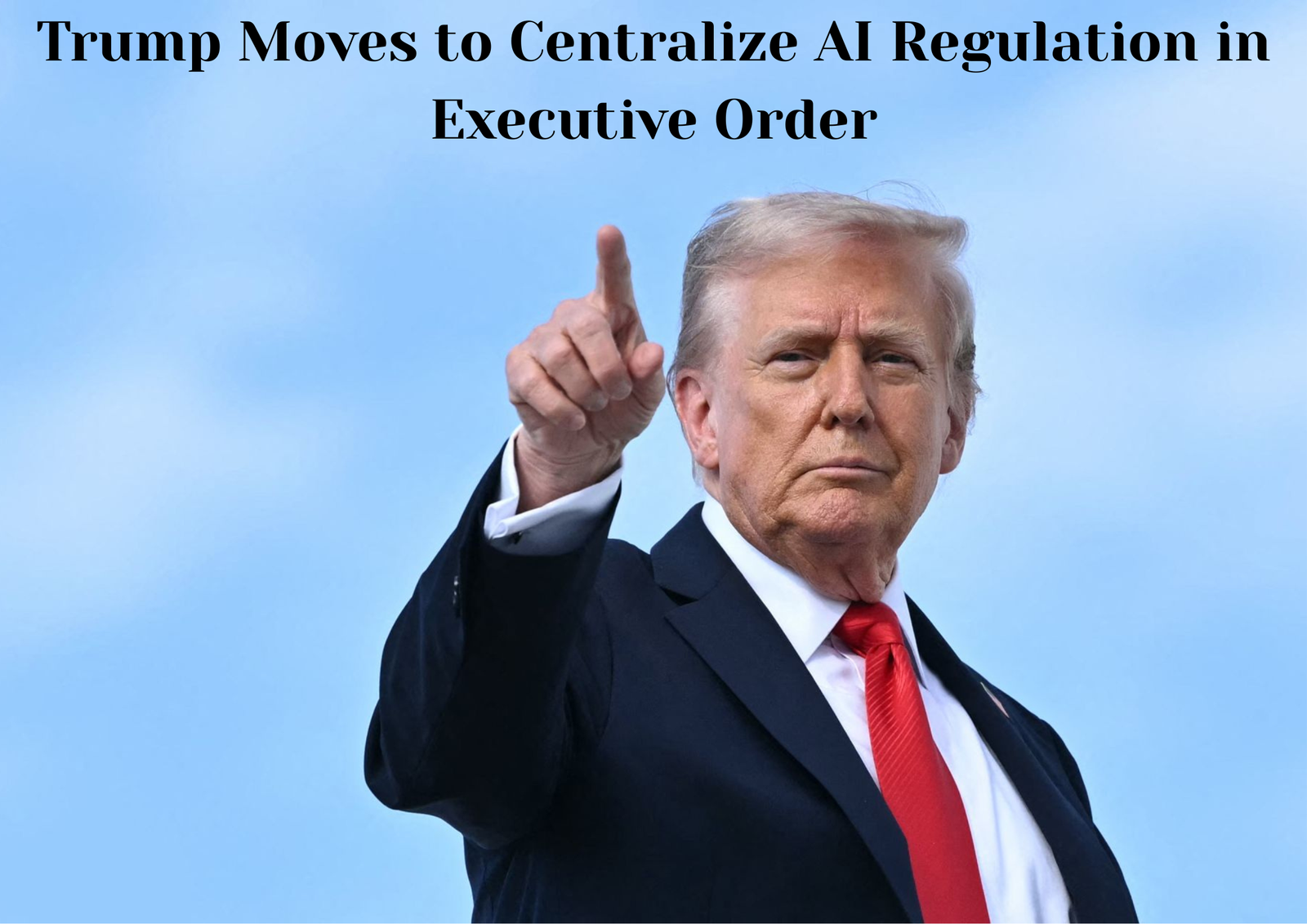
President Donald Trump has signed a new executive order aimed at reshaping how artificial intelligence is regulated across the United States, significantly narrowing the authority of individual states to enforce their own AI laws. The directive establishes a stronger federal role in overseeing AI policy and could set the stage for legal battles between Washington and state governments.
Under the order, federal agencies are instructed to prioritize national standards for artificial intelligence and review whether state-level rules interfere with federal authority, innovation, or interstate commerce. Agencies are also directed to assess whether they can override-or “preempt”-regulations passed by states that conflict with federal objectives.
To oversee this effort, the White House is forming a new interagency council to coordinate national AI policy. The body will be chaired by the Secretary of Commerce and will be tasked with identifying state laws that may pose barriers to competition or technological development.
Defense Bill Adds Pressure to AI Policy Shift
The executive order arrives as Congress moves closer to final passage of the National Defense Authorization Act, a sweeping annual defense package that includes far-reaching technology provisions. Key sections of the bill focus on tightening oversight of outbound U.S. investments into sensitive foreign technologies, including artificial intelligence.
The NDAA also calls for a comprehensive federal report on China’s access to U.S.-developed AI tools and directs the Pentagon to formulate a long-term strategy for incorporating generative AI into military operations. Together, these measures reflect growing concern in Washington over national security risks tied to advanced technology.
States Push Back on Federal Power Expansion
The administration’s move has sparked immediate criticism from state officials who argue that local governments need flexibility to protect residents from potential AI risks. The Attorney General condemned the order as a federal overreach, describing it as a “power grab” that could weaken consumer protections.
Several states are now evaluating possible legal challenges, signaling a growing confrontation over who should set the rules for artificial intelligence in the U.S.
Separate Senate Effort Targets Broad AI Regulation
While the executive order focuses on limiting state authority, it does not replace wider legislative efforts already underway in Congress. A bipartisan group of senators is reportedly finalizing a separate, comprehensive AI regulatory framework. That proposal is expected to introduce transparency requirements for AI systems, establish new liability standards, and create an independent federal regulator to oversee the most powerful AI technologies.
Unlike the president’s order, the Senate bill would apply nationwide through statute rather than through executive authority, potentially offering more permanent regulatory direction.
A Defining Moment for U.S. AI Governance
The convergence of executive action, defense legislation, and emerging congressional regulation marks a critical turning point in how the United States approaches artificial intelligence governance. As federal authority expands and states push back, the legal and political battle over AI control is expected to intensify in the months ahead.