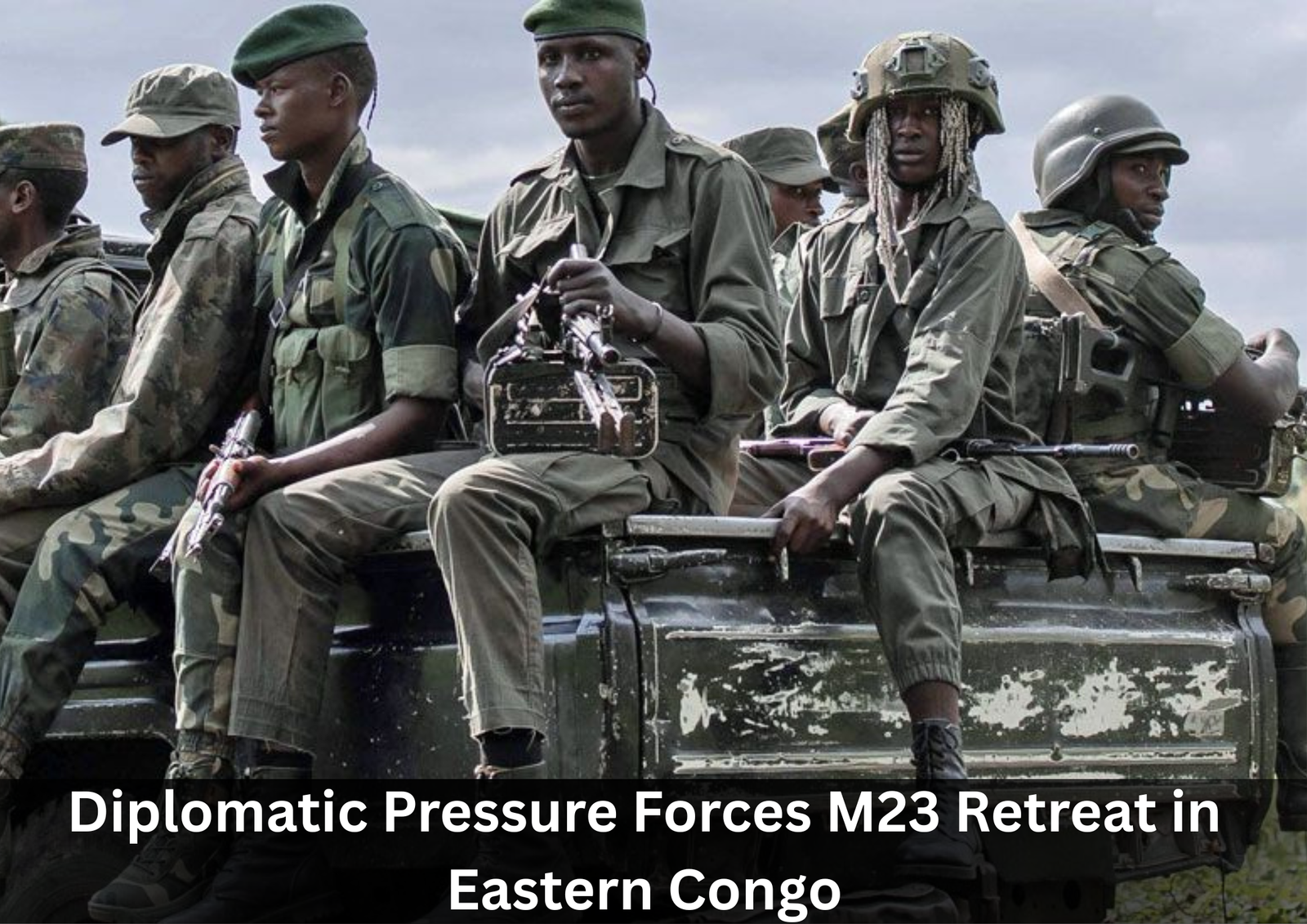
An armed rebel coalition operating in eastern Democratic Republic of Congo (DRC) has announced plans to withdraw from the strategically important city of Uvira, following mounting international pressure and renewed diplomatic efforts led by the United States.
The Rwanda-linked M23 movement, operating under the Alliance Fleuve Congo (AFC) umbrella, said the decision was intended to ease tensions and support ongoing peace negotiations. Rebel coordinator Corneille Nangaa described the move as a voluntary confidence-building step designed to give current mediation efforts a chance to succeed.
Uvira, located on the shores of Lake Tanganyika in South Kivu province, fell to M23 fighters earlier this month after a rapid advance that alarmed regional governments and international observers. The city had been one of the last major population centers under Congolese government control in the province, making its capture a significant escalation in the long-running conflict.
The withdrawal announcement follows sharp criticism from U.S. officials. Secretary of State Marco Rubio publicly condemned the seizure of Uvira, stating it undermined a peace agreement signed earlier this month between the governments of Congo and Rwanda. That accord, brokered in Washington, aimed to reduce cross-border tensions and halt support for armed groups operating in eastern Congo.
Although the rebel coalition is not a formal party to the Washington agreement, it is participating in a separate peace track mediated by Qatar. Talks held in Doha in November produced a framework intended to lead to a ceasefire and broader political dialogue. Rebel leaders say their decision to pull back from Uvira aligns with that process.
Despite the announcement, uncertainty remains on the ground. Independent observers and local residents reported continued rebel presence in parts of the city as of Tuesday, raising questions about the timing and scope of the withdrawal. No clear deadline has been provided, and the rebels have called for a neutral monitoring force to prevent Congolese troops or allied militias from re-entering the area.
The situation has also triggered a deepening humanitarian crisis. The United Nations estimates that fighting in eastern Congo has displaced roughly 200,000 people since early December. Tens of thousands have crossed into neighboring Burundi, which has deployed troops in support of Congolese forces near the border. Aid agencies warn that overcrowded camps and limited resources are placing civilians at serious risk.
Eastern Congo has endured decades of violence driven by ethnic tensions, regional rivalries, and competition over mineral-rich land. Analysts say the capture-and possible withdrawal-from Uvira may reflect a tactical maneuver rather than a lasting shift. Some experts note a pattern in which armed groups seize territory to strengthen their negotiating position, only to reassert control later.
Beyond security concerns, the conflict carries major geopolitical implications. The United States has expressed interest in stabilizing the region to encourage responsible investment in Congo’s vast mineral reserves, which include materials critical to electric vehicles, renewable energy technologies, and advanced electronics.
Whether the latest rebel move leads to lasting calm or merely a pause in fighting will likely depend on the credibility of monitoring mechanisms and the willingness of all parties to commit to negotiated solutions rather than military gains.