

The United States has carried out a broad military operation targeting Islamic State (ISIS) strongholds in central Syria, marking one of the most extensive actions against the group in recent years. The strikes were launched in response to a deadly ambush earlier this month that claimed the lives of three American nationals near the historic city of Palmyra.
According to U.S. defense officials, the operation involved coordinated air and ground assaults on dozens of ISIS-linked sites believed to be used for training, weapons storage, and operational planning. More than 100 precision-guided munitions were deployed against over 70 identified targets in what military leaders described as a focused effort to disrupt the group’s ability to regroup.
President Donald Trump confirmed the strikes publicly, stating that the United States would respond decisively to attacks on its personnel. Speaking both online and at a campaign rally, Trump emphasized that the mission was designed to send a clear message that assaults on Americans would not go unanswered.
Defense Secretary Pete Hegseth described the campaign as a direct retaliation rather than the start of a broader conflict. Senior defense officials stressed that the goal was to eliminate immediate threats and weaken ISIS networks operating in remote areas of Syria where the group has attempted to reestablish a presence.
The operation follows a December 13 attack on a joint American-Syrian convoy in Palmyra. That incident resulted in the deaths of two U.S. Army service members from the Iowa National Guard and a civilian interpreter, while several others were injured. Syrian authorities later stated that the attacker had ties to ISIS and had previously been under internal suspicion.
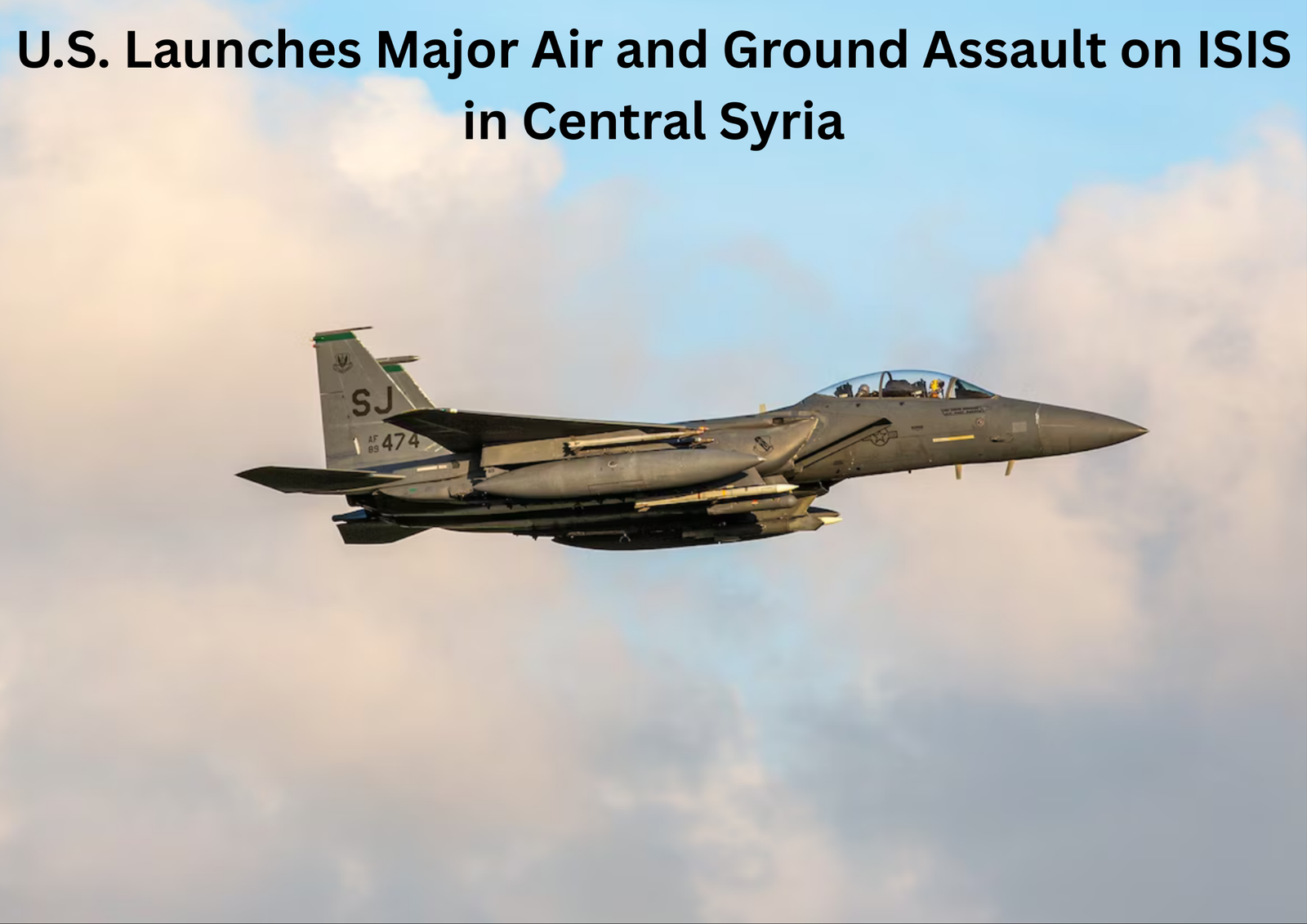
U.S. Central Command confirmed that the mission involved multiple military assets, including fighter aircraft, attack helicopters, and long-range rocket systems. Regional partners also provided limited support, reflecting ongoing cooperation aimed at containing extremist groups in the Middle East.
Syria’s interim government expressed approval of the U.S. action, reaffirming its stance against ISIS and its commitment to preventing the group from using Syrian territory as a base of operations. Coordination between Washington and Damascus has increased in recent months following diplomatic engagements focused on counterterrorism.
While ISIS lost territorial control in Syria several years ago, intelligence assessments indicate that remnants of the group remain active, carrying out isolated attacks and recruitment efforts. Approximately 1,000 U.S. troops continue to operate in Syria as part of efforts to prevent a resurgence.
Officials have not released estimates regarding casualties from the latest strikes. Military leaders indicated that operations may continue in the coming weeks as surveillance and assessments of ISIS activity remain ongoing.


