
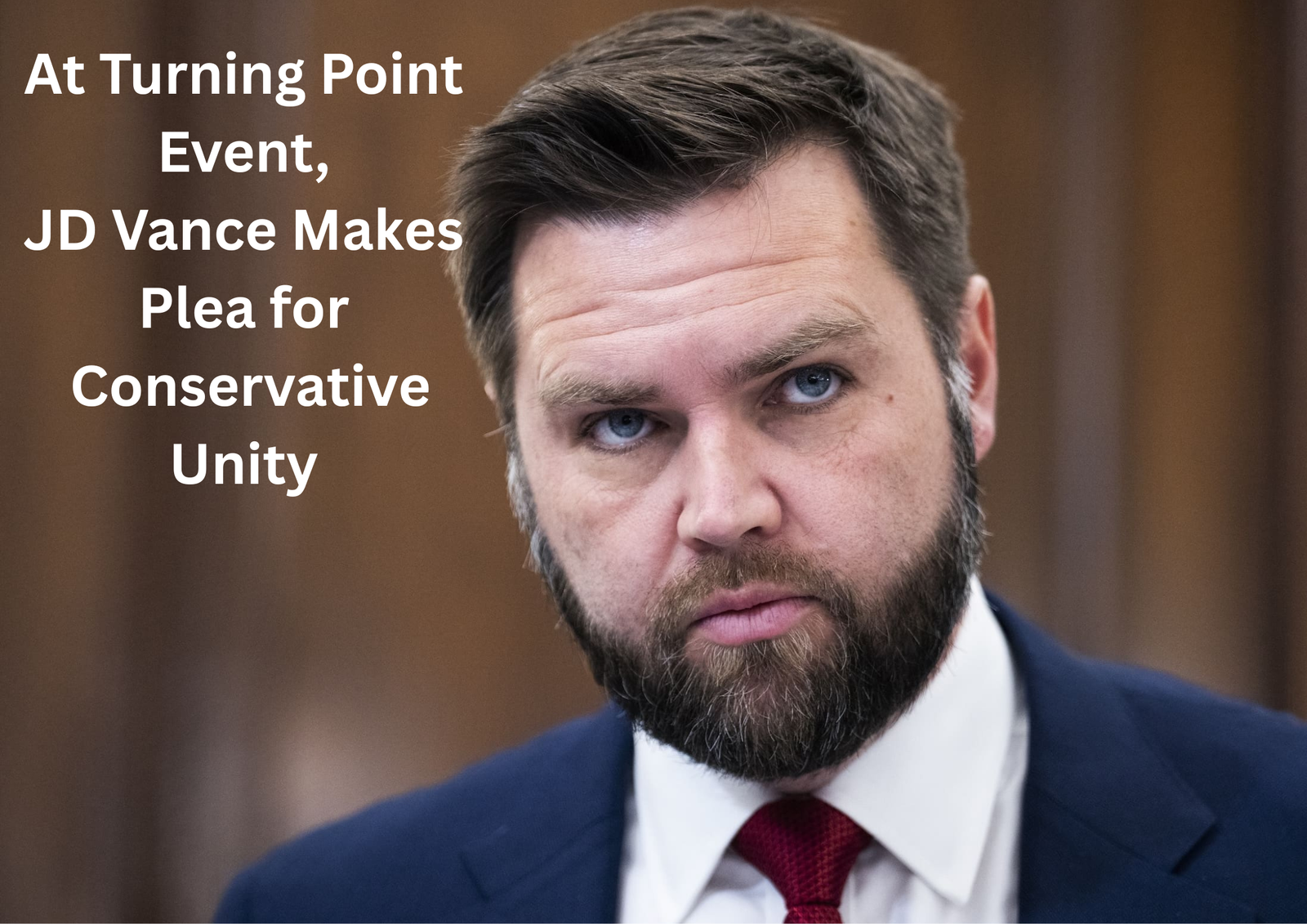
Vice President JD Vance used his closing address at Turning Point USA’s annual AmericaFest convention to call for unity within the conservative movement, pushing back against growing internal divisions that have dominated headlines throughout the four-day gathering.
Speaking to thousands of attendees, Vance warned against what he described as ideological “gatekeeping” among conservatives, arguing that internal conflicts risk weakening efforts ahead of future elections. Without naming individuals directly, he avoided condemning controversial figures whose presence and rhetoric had sparked intense debate during the conference.
The convention marked a significant moment for Turning Point USA, as it was the organization’s first major event since the death of its founder, Charlie Kirk, earlier this year. Kirk’s widow, Erika Kirk-now serving as the group’s chief executive-publicly endorsed Vance as a future presidential candidate earlier in the week, signaling strong support from influential conservative activists.
Tensions surfaced early in the conference after prominent commentators clashed publicly over the direction of the movement. Disputes escalated following criticism of media figures accused of amplifying extremist voices, leading to sharp exchanges among conservative leaders, commentators, and former political advisers.
Vance addressed the unrest indirectly, telling the audience that broad coalitions-not ideological purity-had historically driven conservative electoral success. He emphasized that political movements grow by welcoming diverse supporters rather than excluding them over disagreements. According to Vance, patriotism and commitment to national values should remain the central criteria for participation.
Throughout his remarks, the vice president repeatedly paid tribute to Charlie Kirk, urging supporters to honor his legacy through continued political engagement. He framed the late activist’s work as part of a larger struggle against what he characterized as radical political forces, while stopping short of discussing ongoing controversies in detail.
Policy priorities featured prominently in the speech. Vance reiterated support for stricter border enforcement, judicial reform, and the rollback of diversity-focused government initiatives. He also criticized prominent Democratic leaders, accusing them of pursuing policies that undermine economic stability and public safety.
The address concluded with a message blending faith and nationalism, portraying Christianity as a foundational influence on American history and values. Vance closed by urging supporters to remain focused on long-term goals rather than internal disputes.
Other speakers at the event included senior Republican lawmakers, conservative media personalities, and public figures from outside politics. Attendees expressed a range of reactions, with some praising Vance’s conciliatory tone while others remained concerned about unresolved ideological rifts within the movement.
Despite differing opinions, the convention highlighted ongoing debates about leadership, direction, and identity within modern American conservatism-issues likely to shape the political landscape in the years ahead.