
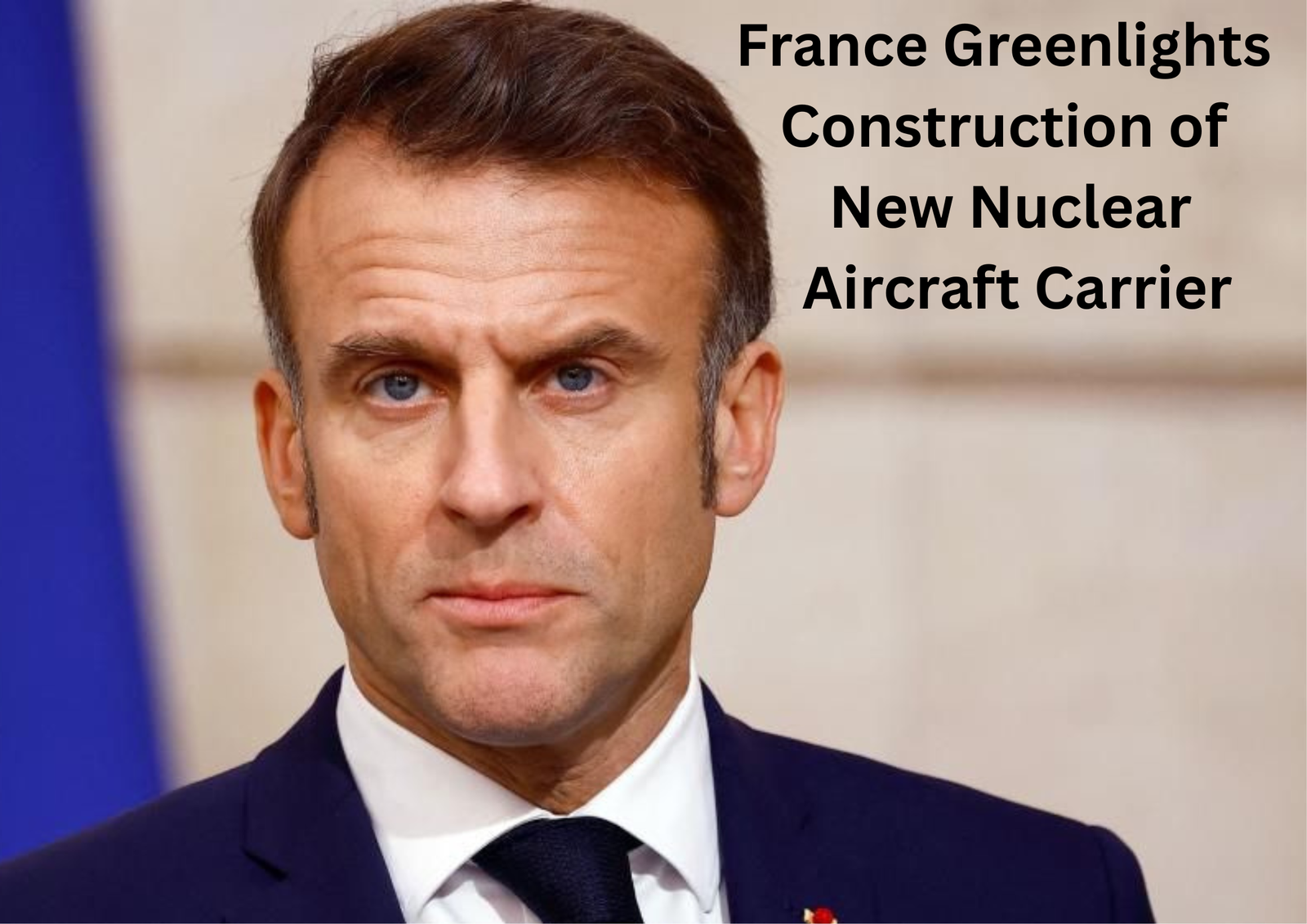
France has formally approved the construction of a next-generation nuclear-powered aircraft carrier, marking one of the most significant military investments in the country’s modern history. President Emmanuel Macron confirmed the decision during a visit to French military personnel stationed abroad, signaling a long-term commitment to maintaining France’s ability to project power far beyond its borders.
The new vessel, known as the Porte-Avions de Nouvelle Génération (PA-NG), is intended to replace France’s only current aircraft carrier, the Charles de Gaulle, which has been in service since the early 2000s. French defense planners expect the existing carrier to reach the end of its operational life toward the end of the next decade, making the transition to a successor a strategic priority.
According to officials, the PA-NG program has now moved beyond years of conceptual studies and design reviews and entered its execution phase. The future carrier is expected to become operational around 2038, ensuring continuity in France’s naval aviation capabilities.
Defense authorities describe the PA-NG as substantially larger and more capable than its predecessor. With a projected displacement of roughly 78,000 tonnes, it will be the largest warship ever built in Europe. The ship’s length is expected to exceed 300 meters, with a broad flight deck designed to support high-tempo air operations in demanding environments.
The aircraft carrier will host a mixed air wing of manned and unmanned aircraft. Initially, it will operate upgraded Rafale M fighter jets alongside early-warning aircraft and helicopters. Its design also anticipates the introduction of future combat aircraft currently under development as part of European defense initiatives, ensuring the ship remains relevant well into the mid-21st century.
A major technological leap for the PA-NG will be its aircraft launch and recovery systems. Unlike older steam-powered catapults, the new carrier will use electromagnetic launch technology, allowing for greater flexibility in launching both heavier next-generation fighters and lighter uncrewed systems. This approach is expected to improve efficiency, reduce wear on aircraft, and expand operational options.
Powering the vessel will be two newly developed nuclear reactors, delivering both propulsion and the substantial electrical output required by modern combat systems. The all-electric architecture reflects a broader shift in naval engineering, enabling advanced sensors, command systems, and energy-intensive technologies to operate simultaneously without compromising performance.
French officials have also highlighted the economic dimension of the project. Hundreds of domestic suppliers are expected to contribute to construction and systems integration, with the majority coming from small and medium-sized enterprises. The program is anticipated to support thousands of skilled jobs over several decades, particularly in shipbuilding, nuclear engineering, and defense manufacturing.
Initial funding has already been allocated for long-lead components, including reactor elements and structural materials that require extended production timelines. The total cost of the program is estimated to exceed €10 billion, spread over many years of development, construction, and testing.
Construction is expected to begin in the early 2030s at a major shipyard on France’s Atlantic coast, followed by outfitting and trials at a naval base in the Mediterranean. Sea trials are planned several years before the carrier officially enters service.
Beyond its technical specifications, the PA-NG reflects France’s broader strategic outlook. As one of the few nations operating a nuclear-powered aircraft carrier, France views the capability as essential for maintaining strategic autonomy, supporting allies, and responding to global crises. The decision underscores Paris’s intent to remain a leading naval power with the ability to deploy air forces worldwide.