
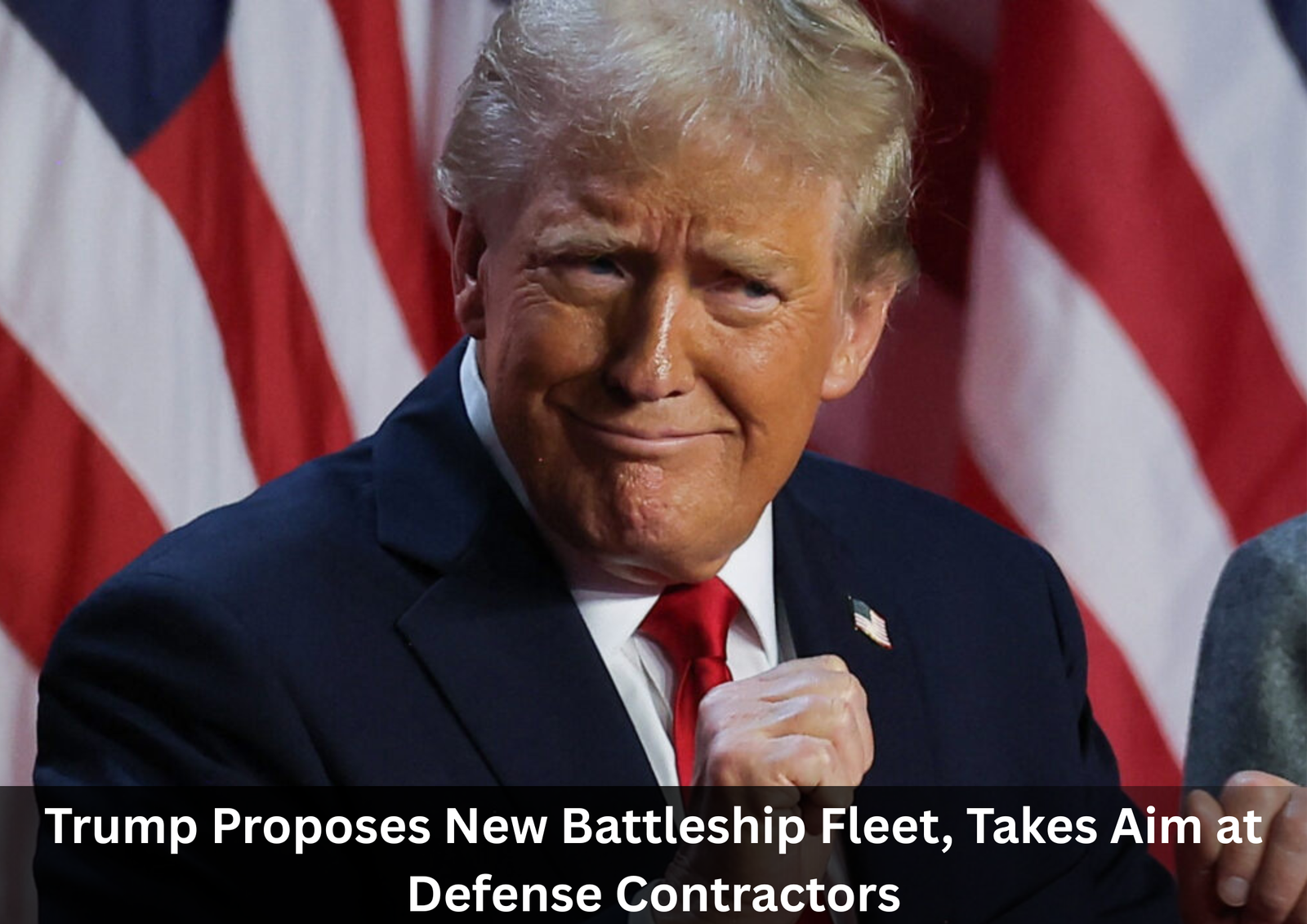
President Donald Trump announced plans on Monday for a new generation of U.S. Navy battleships, outlining an ambitious vision to expand American naval power while also pledging tougher scrutiny of defense contractors accused of driving up costs and delaying production.
Speaking at an event in Florida, Trump introduced what he called a new class of surface warships that would play a central role in a broader naval expansion. He described the proposed vessels as significantly larger and more advanced than existing ships, claiming they would represent a major leap in surface warfare capability. According to Trump, the initiative would begin with two ships, followed by a long-term goal of expanding the fleet by several dozen vessels.
Trump said the lead ship would carry a symbolic name reflecting strength and resilience, and emphasized that the vessels would integrate emerging technologies. He highlighted artificial intelligence systems, next-generation defensive weapons, and high-energy laser systems as potential features. The ships, he claimed, would displace more than 30,000 tons, placing them well above current destroyers in size.
During the announcement, Trump suggested he would take an unusually hands-on role in the project, including input on design elements. He has previously criticized the visual appearance of U.S. naval vessels and reiterated that aesthetics and performance should go hand in hand.
U.S. Navy leadership attending the event confirmed that the proposed ships would be designed to carry a combination of conventional weaponry and advanced missile systems, though officials stressed that detailed specifications would depend on future congressional approval and defense planning reviews.
While Trump downplayed the idea that the move was aimed specifically at China, he acknowledged growing global competition at sea and said the fleet expansion was intended to deter all potential adversaries. Defense analysts have long warned that the U.S. Navy’s surface fleet is aging and shrinking relative to other major powers.
In parallel with the fleet proposal, Trump delivered pointed criticism of major defense contractors. He argued that excessive executive compensation, shareholder payouts, and stock buyback programs may be contributing to chronic delays and cost overruns in major weapons programs. He cited ongoing issues with advanced fighter jet production as an example of what he described as systemic inefficiencies.
Trump said meetings with top defense firms were planned to examine whether stricter limits should be imposed on financial practices when contractors fail to meet budget and delivery targets. Recent reports have suggested the administration is considering new measures to tie corporate payouts to performance on government contracts.
Beyond the battleship proposal, Trump also reiterated support for expanding other segments of the Navy, including smaller surface combatants and frigates already under development.
The announcement has sparked debate among critics and supporters alike. Some observers argue the proposal reflects bold thinking about naval power, while others question whether the emphasis on branding and scale outweighs practical military needs. The event also included moments of off-topic commentary, a hallmark of Trump’s public appearances, as he briefly shifted to unrelated issues when pressed on foreign policy specifics.
Despite mixed reactions, the proposal signals renewed focus on naval expansion and defense reform, themes likely to remain prominent in ongoing national security discussions.