

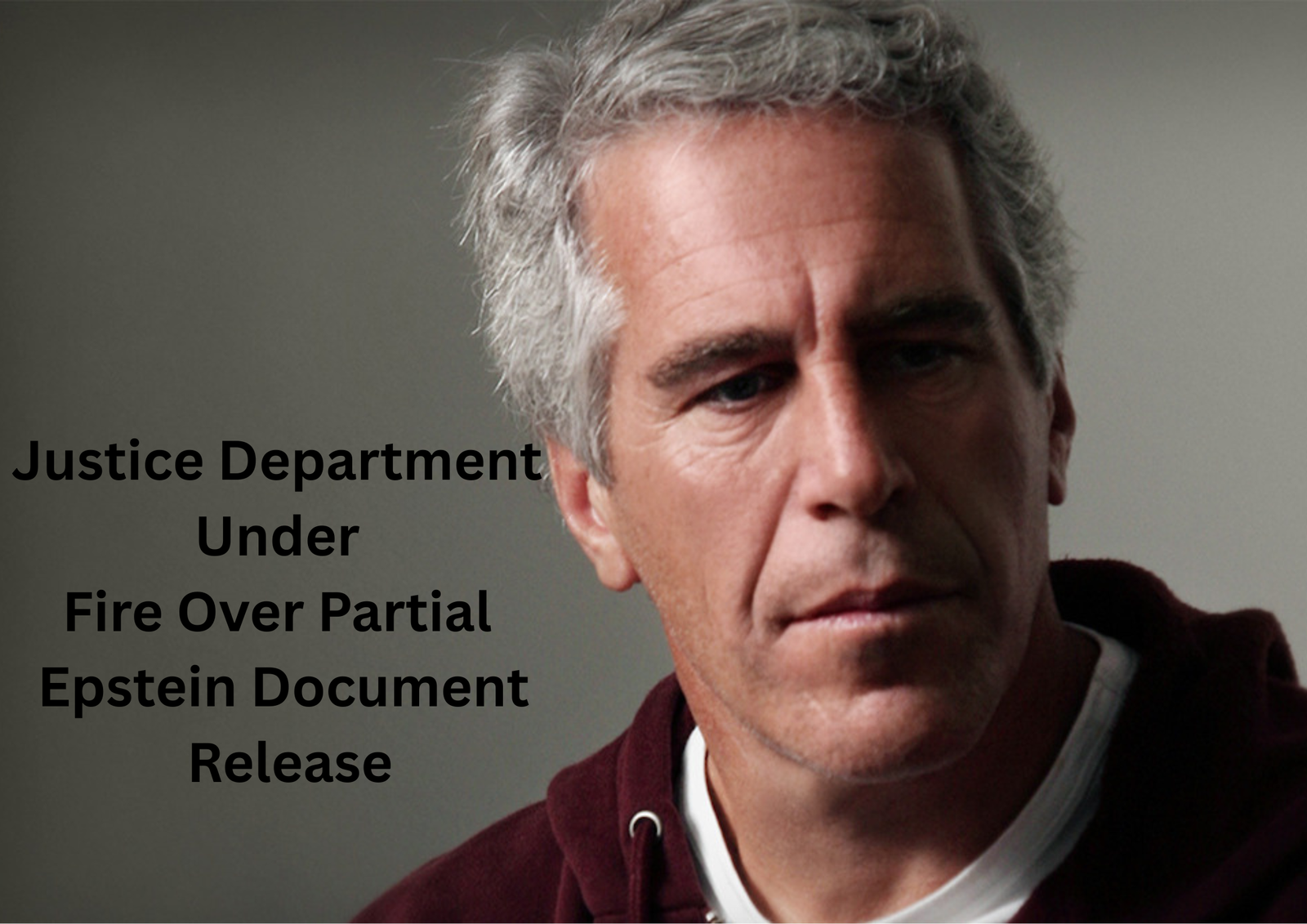
The U.S. Department of Justice is facing renewed criticism following the release of court-mandated documents linked to the late financier Jeffrey Epstein, as survivors, lawmakers, and advocacy groups raise concerns over extensive redactions, alleged legal missteps, and the handling of sensitive victim information.
The document release stems from a federal transparency law passed earlier this year, requiring the Justice Department to disclose materials connected to Epstein’s criminal investigations. While officials described the release as an initial phase of a broader disclosure process, critics argue the effort has fallen short of both legal and ethical expectations.
Concerns Over Redactions and Missing Records
The first batch of files, published last week, included investigative summaries, correspondence, and limited evidentiary material. However, large portions were obscured, with entire pages blacked out and key financial records absent. Legal observers noted that the lack of explanation for the redactions has fueled public distrust rather than clarity.
Survivor advocacy groups have questioned whether the disclosure complies with the law’s intent, which aimed to provide transparency while safeguarding victims. Several representatives stated that the released files represent only a small fraction of the total archive.
Allegations of Victim Privacy Breaches
More troubling for critics are claims that some identifying information was not adequately protected. Attorneys representing multiple survivors allege that names intended to remain confidential appeared unredacted in certain documents, prompting fears of harassment and emotional distress.
One survivor, who has consistently remained anonymous, said the experience was “deeply unsettling” and undermined confidence in federal safeguards. Following complaints, officials temporarily removed several documents from public access while conducting an internal review.
Justice Department Response
Justice Department officials acknowledged the concerns and stated that the release process is ongoing. Spokespersons emphasized that balancing public transparency with victim protection is complex and requires careful review. The department maintains that additional documents will be released in stages after further redaction checks.
Despite these assurances, survivor groups argue that meaningful consultation did not occur before publication and have called for stronger oversight.
Political Reactions and Broader Implications
The document release has also triggered political debate in Washington. Lawmakers from both parties have questioned whether the Justice Department met its statutory obligations, with some calling for congressional hearings to review the process.
The controversy has reignited broader discussions about accountability in high-profile criminal cases, particularly those involving powerful individuals and systemic failures.
Calls for Oversight and Transparency
Advocacy organizations are urging Congress to ensure that future releases are handled with greater care and clarity. They are also requesting that remaining records, including financial transactions and witness interviews, be disclosed in a manner consistent with both the law and survivor protections.
As the Justice Department prepares additional releases, public attention remains focused on whether transparency efforts can proceed without causing further harm to those affected by Epstein’s crimes.