
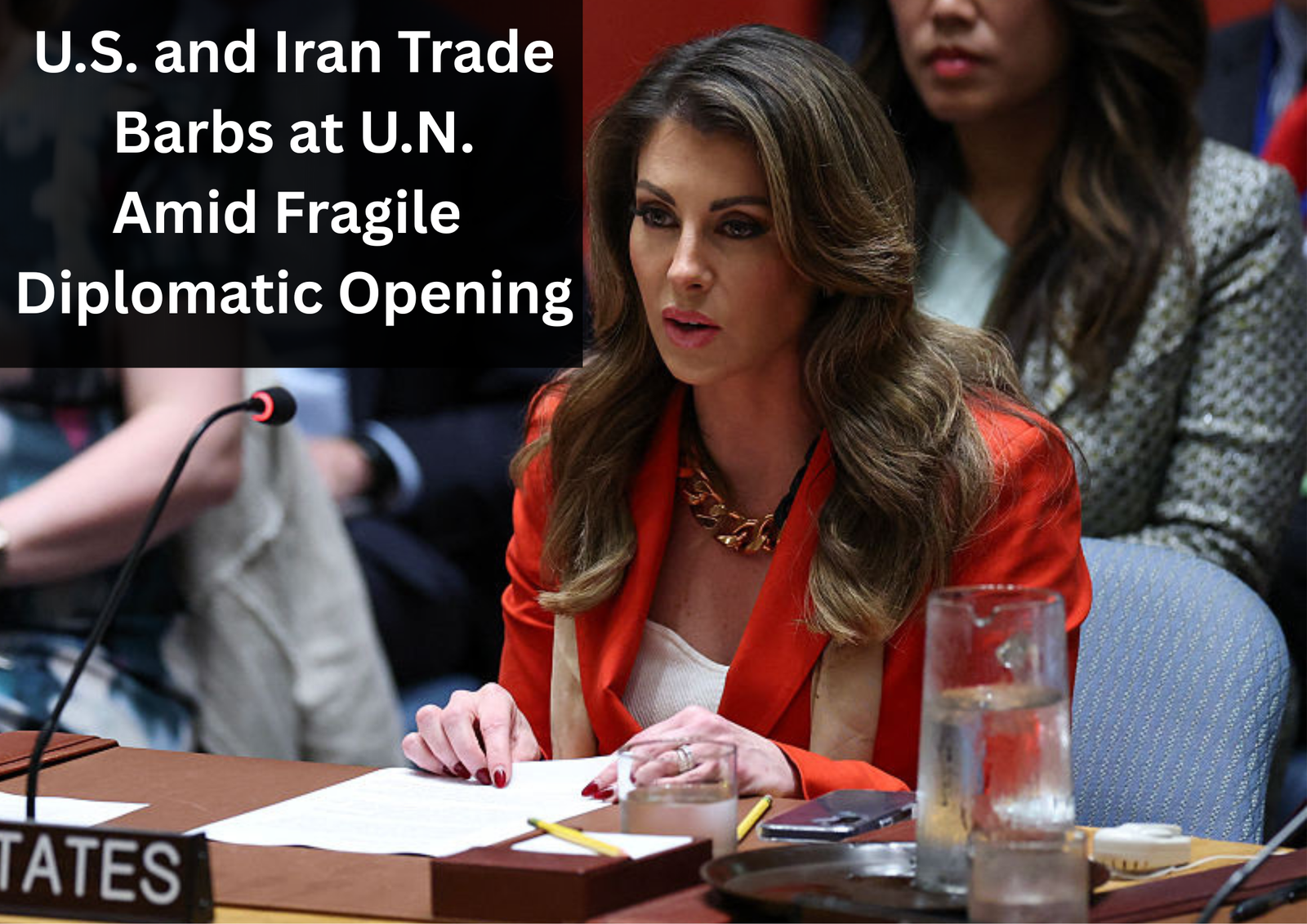
The United States and Iran engaged in a tense exchange at the United Nations Security Council this week, exposing deep divisions over Iran’s nuclear program while both sides maintained that diplomacy remains possible.
The meeting, held Tuesday, focused on nuclear non-proliferation and followed months of stalled efforts to revive negotiations surrounding Iran’s nuclear activities. Although no breakthroughs were announced, officials from both countries reiterated their stated willingness to pursue dialogue under sharply different conditions.
Representing Washington, U.S. Deputy Middle East Envoy Morgan Ortagus said the United States remains open to direct talks with Tehran, but only if Iran agrees to halt uranium enrichment within its borders. She described this demand as a non-negotiable principle and urged Iranian leaders to choose engagement over escalation.
Iran’s ambassador to the United Nations, Amir Saeid Iravani, firmly rejected the U.S. position, arguing that uranium enrichment is a lawful right under the Treaty on the Non-Proliferation of Nuclear Weapons. He accused Washington of imposing preconditions that undermine the possibility of fair negotiations and stated that Iran would not negotiate under pressure or threats.
The Security Council session also highlighted growing disagreement among global powers. Britain, France, and Germany defended their recent decision to trigger a mechanism that reinstated U.N. sanctions on Iran, citing what they described as repeated violations of nuclear commitments. Iranian and Russian representatives challenged the legitimacy of the move, arguing that the legal framework underpinning the 2015 nuclear agreement has expired.
U.N. officials expressed concern over the lack of progress. Rosemary DiCarlo, the organization’s top political affairs official, told the council that intensified diplomatic efforts throughout 2025 have failed to produce consensus on the future of Iran’s nuclear program. She emphasized that negotiations remain the most viable path to preventing further escalation.
European Union representatives echoed that sentiment, urging Iran to cooperate fully with international nuclear inspectors and warning that renewed sanctions should not mark the end of diplomacy.
The standoff comes amid broader regional tensions and follows the cancellation of planned U.S.-Iran talks earlier this year. Despite the sharp rhetoric exchanged at the United Nations, diplomats from multiple countries stressed that a negotiated solution remains essential to ensuring regional stability and preventing nuclear proliferation.
For now, the dispute remains unresolved, with both sides standing firm on opposing demands while the international community watches for signs of renewed dialogue.