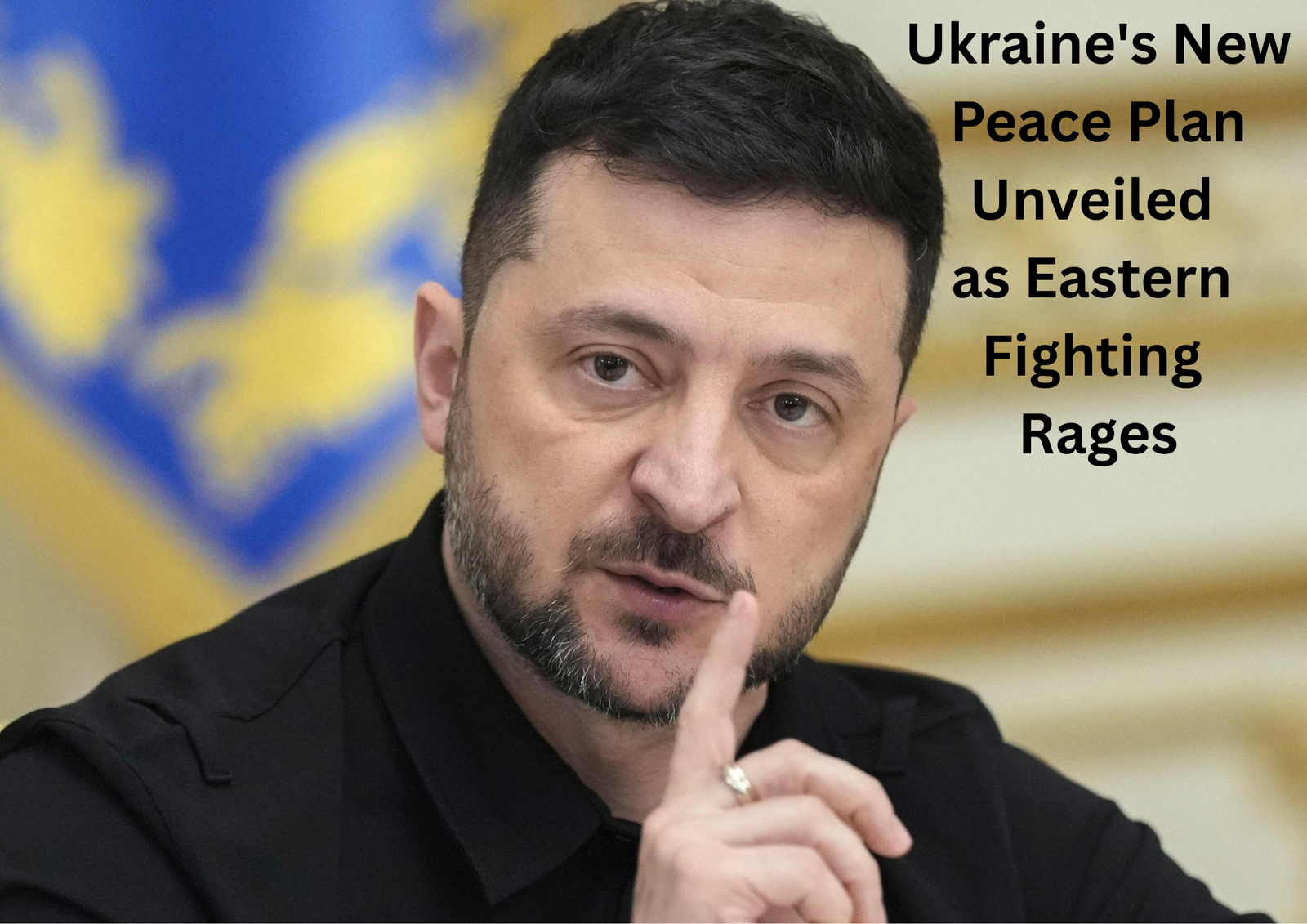
Ukraine has introduced a newly revised peace proposal aimed at ending the ongoing conflict with Russia, signaling a fresh diplomatic push while heavy fighting continues along the eastern front. The plan, consisting of 20 points, was developed with input from U.S. officials and is being positioned as an alternative to earlier proposals that Kyiv believed placed disproportionate demands on Ukraine.
Ukrainian President Volodymyr Zelensky confirmed that the updated framework was finalized following recent consultations with American counterparts. According to Ukrainian officials, the proposal reflects Kyiv’s red lines on sovereignty while attempting to create conditions for de-escalation through internationally monitored arrangements.
Demilitarized Zones at the Center of the Proposal
One of the most notable elements of the plan is the suggestion to establish demilitarized zones in specific contested areas. Ukrainian authorities have indicated that portions of the Donetsk and Luhansk regions could be designated as neutral zones, provided Russian forces also agree to withdraw and refrain from occupying the territory. These areas would operate under special security and economic arrangements designed to reduce the risk of renewed clashes.
A separate demilitarized zone has also been proposed around the Zaporizhzhia Nuclear Power Plant, which remains under Russian control. Kyiv argues that removing military activity from the area is critical to preventing a potential nuclear safety incident with regional and global consequences.
Security Guarantees and Political Conditions
The revised proposal includes calls for international security guarantees involving the United States, European nations, and NATO members. Ukrainian officials say these guarantees would serve as a deterrent against future military action following any peace settlement.
On the issue of NATO membership, Ukraine maintains its long-standing position that it should retain the right to pursue alliance membership in the future. The proposal avoids any constitutional commitments to neutrality, which Ukrainian leaders say would undermine national sovereignty. Any territorial or military concessions, according to the government, would require approval through a national referendum in line with constitutional requirements.
President Zelensky has also stated that national elections would only take place after a formal peace agreement is signed, citing security and legal concerns during wartime conditions.
Russia Reviews the Proposal
The Kremlin has acknowledged receipt of the revised plan but has not issued a formal response. Russian officials have stated that the proposal is under review, while reiterating Moscow’s existing demands regarding territorial control and Ukraine’s military alignment.
Analysts note that Russia’s current military position in eastern Ukraine may reduce its incentive to accept compromises. Russian forces reportedly control most of the Luhansk region and a significant portion of Donetsk, with continued advances reported in recent weeks.
Diplomacy Amid Ongoing Conflict
Despite renewed diplomatic efforts, military activity has not slowed. Ukrainian forces reported strikes on strategic infrastructure inside Russia, including an oil refinery believed to be linked to military fuel supplies. Both sides continue to report battlefield developments, underscoring the challenge of achieving a ceasefire while active combat persists.
Historical Context of Demilitarized Zones
International observers point out that demilitarized zones have produced mixed results globally. While some, such as the Korean Peninsula DMZ, have successfully prevented large-scale conflict for decades, others have struggled due to weak enforcement or lack of political consensus. The success of any similar arrangement in Ukraine would likely depend on long-term monitoring and sustained international involvement.
As discussions continue behind closed doors, the proposed plan highlights the growing role of diplomacy alongside military action. Whether it leads to meaningful negotiations remains uncertain, but it marks one of the most detailed peace initiatives put forward since the conflict began.