

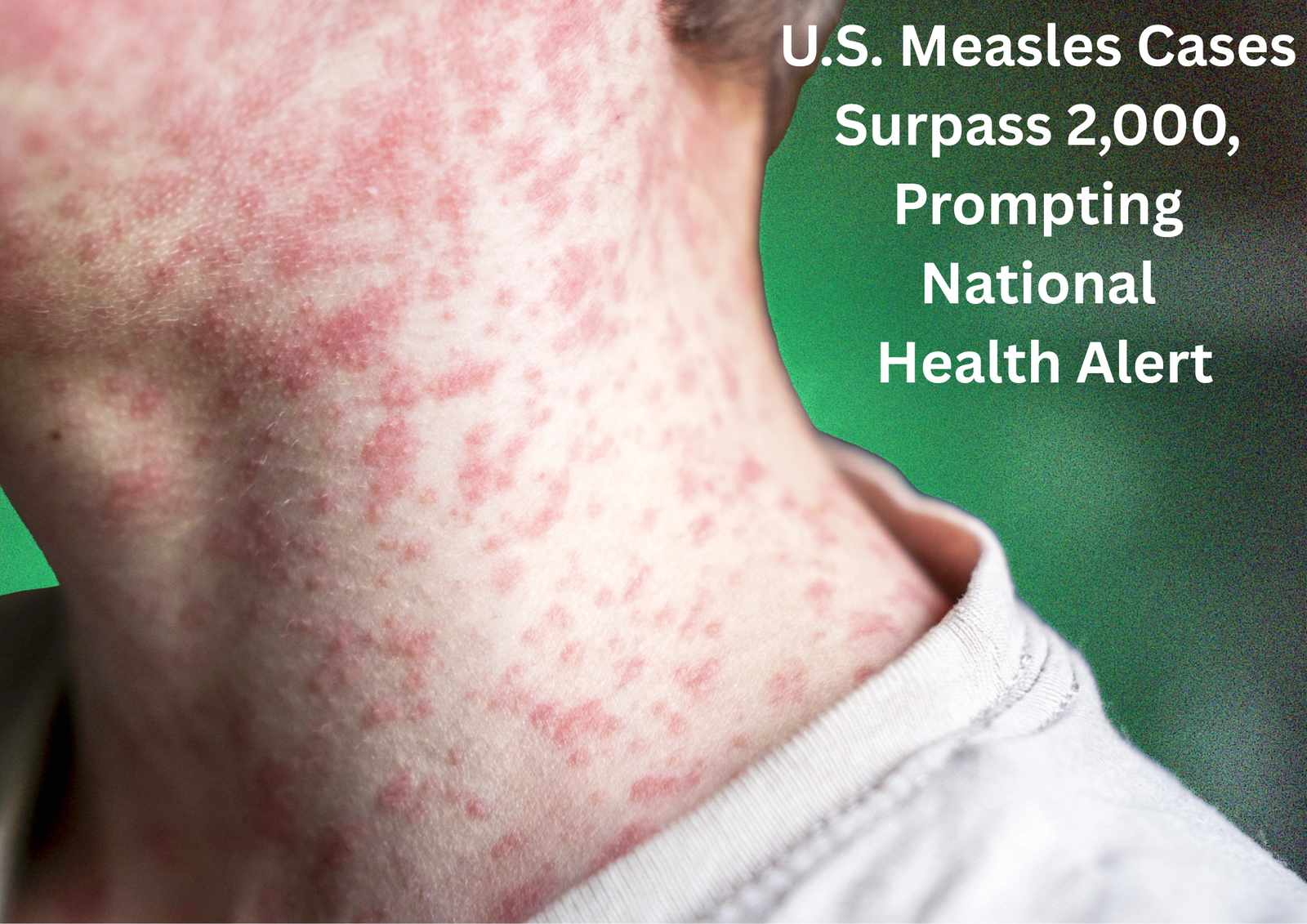
Health authorities across the United States are confronting a rapidly escalating measles outbreak that has now crossed more than 2,000 confirmed cases, sparking renewed concern over the country’s long-standing disease control achievements.
According to federal health monitoring data, the surge represents one of the most serious measles resurgences seen in decades. The United States had previously declared measles eliminated in 2000, a designation that signified the absence of sustained domestic transmission. While that status has not yet been formally revoked, public health officials warn that the current pattern of spread places it under significant threat.
A Growing and Uneven Outbreak
The increase in measles cases has not been evenly distributed. Several states are reporting clusters tied to unvaccinated populations, allowing the virus to spread rapidly once introduced. Texas has emerged as one of the most affected areas, with local health departments confirming new infections connected to a single extended family in Tarrant County.
Officials stated that none of the individuals involved in the Texas cluster had received the measles, mumps, and rubella (MMR) vaccine. The outbreak in this community has drawn attention to the broader role of vaccine hesitancy, as one family member publicly attributed her decision not to vaccinate to political and social messaging she encountered over the years.
Elsewhere, South Carolina has confirmed its first measles case in several years. The patient, an unvaccinated adult woman, had recently traveled outside the country, highlighting the ongoing risk of imported infections in areas with declining immunity. Health investigators noted that while she was exposed to a vaccinated family member, that individual did not fall ill, reinforcing evidence that vaccination remains highly effective at preventing infection.
Personal Impact Highlights Severity
The South Carolina patient described experiencing intense symptoms, including prolonged fever, severe body pain, and the characteristic measles rash. She later expressed regret over not being vaccinated earlier in life, stating that misinformation influenced her earlier health decisions.
State health authorities are continuing contact tracing efforts to determine whether additional exposures occurred and to prevent further spread within the community. So far, no secondary cases linked to this individual have been reported.
Why Measles Spreads So Easily
Medical experts emphasize that measles is among the most contagious viral diseases known. The virus can remain airborne in enclosed spaces for hours after an infected person leaves, making it particularly difficult to contain in schools, households, and public settings.
In communities where vaccination coverage drops, even a single case can quickly expand into a larger outbreak. Children, infants too young to be vaccinated, and individuals with weakened immune systems face the greatest risk of severe complications.
Potential outcomes of measles infection include pneumonia, brain inflammation, long-term neurological damage, and in rare cases, death. Public health professionals stress that these risks are preventable through routine immunization.
Declining Vaccination Rates Under Scrutiny
Health officials link the current outbreak primarily to declining childhood vaccination rates in recent years. Disruptions to routine healthcare visits, combined with the spread of vaccine misinformation online, have contributed to pockets of under-immunized populations across multiple states.
Experts warn that measles elimination relies not only on individual protection but also on community-wide immunity. When vaccination levels fall below critical thresholds, the virus gains opportunities to circulate again, reversing decades of progress.
Renewed Public Health Messaging
In response to the outbreak, federal and state health agencies are intensifying efforts to encourage vaccination. Officials are urging parents, caregivers, and adults to review their immunization records and consult healthcare providers if there is uncertainty about protection.
The MMR vaccine has been used for decades and is widely regarded as safe and effective. Two doses provide strong, long-lasting immunity for most individuals.
Public health leaders caution that the current situation serves as a reminder that disease elimination is not permanent without sustained prevention efforts. As case numbers continue to be monitored closely, authorities emphasize that timely vaccination remains the most reliable defense against further spread.
Health Authorities Flag Intensifying Flu Season as Aggressive H3N2 Variant Spreads Across the U.S.-read this detailed blog to understand the risks, impacts, and essential precautions everyone should know.
