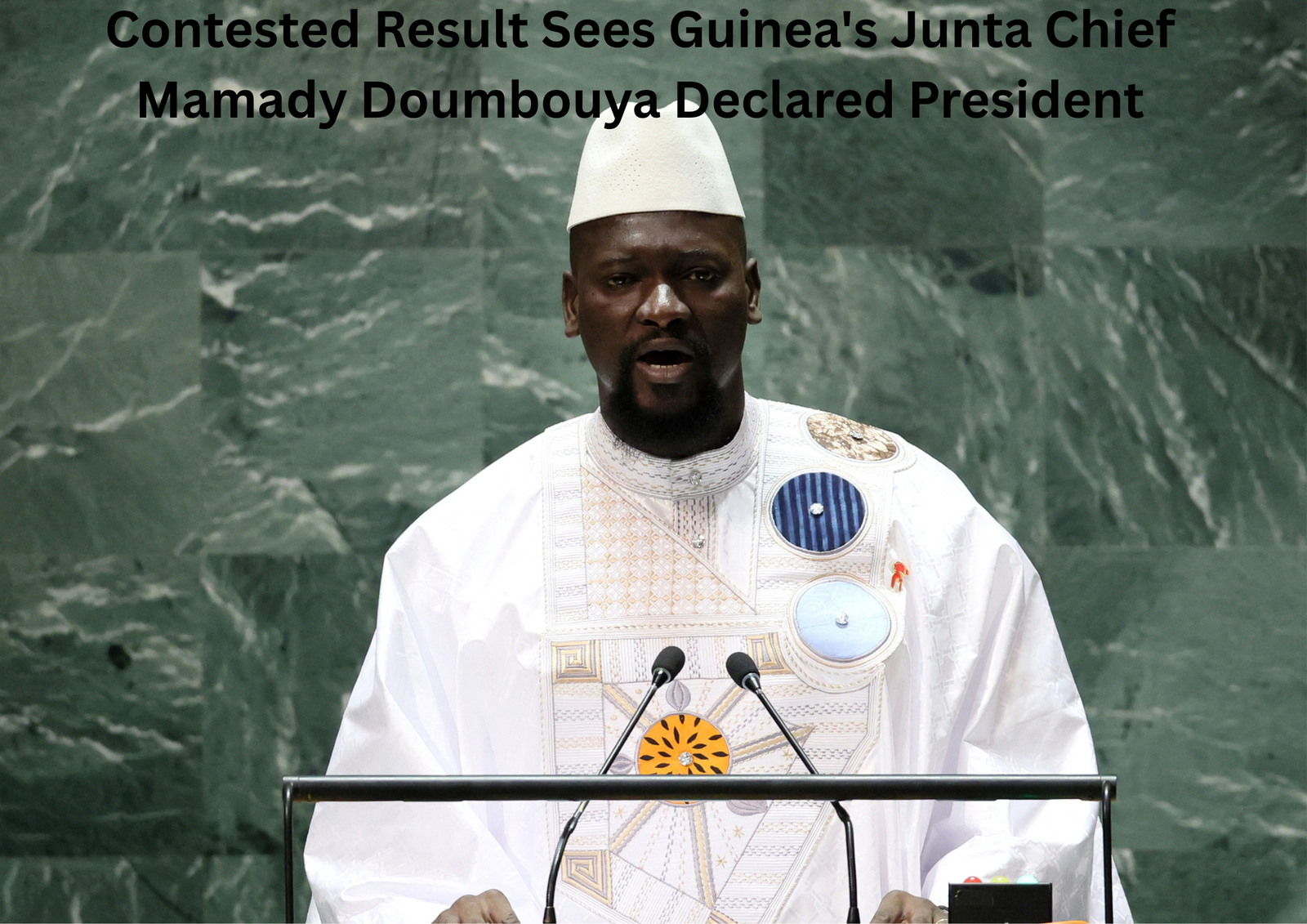
Guinea’s transitional leader, General Mamady Doumbouya, has been declared the winner of the country’s first presidential election since the 2021 military takeover, according to provisional results released by electoral authorities this week. The vote, held on December 28, has sparked controversy amid allegations of political repression, limited competition, and restricted civil liberties.
The General Directorate of Elections announced that Doumbouya secured more than 86 percent of the vote, a landslide result that eliminates the need for a second-round runoff. Officials reported voter participation at just over 80 percent of the nation’s approximately 6.7 million registered voters, though opposition figures have questioned the accuracy of turnout figures, particularly in the capital, Conakry, where polling stations reportedly saw low activity.
The Supreme Court is expected to review and validate the results within eight days, as outlined by Guinea’s electoral law. If confirmed, the outcome grants Doumbouya a seven-year presidential term under a revised constitution approved earlier this year.
The election represents a significant political shift for Doumbouya, who led the coup that removed longtime president Alpha Condé in September 2021. At the time, the military leader publicly pledged that neither he nor members of the transitional government would seek elected office. That commitment was later overturned following the adoption of a new constitution through a September referendum, which lifted restrictions preventing junta members from running and extended the presidential term from five to seven years.
While ten candidates appeared on the ballot, the country’s most prominent opposition parties were barred from participating. Former education minister Yero Baldé placed second with just over six percent of the vote, while other contenders received marginal support. Several opposition leaders and civil society groups have criticized the electoral process, alleging widespread irregularities, including intimidation, limited access for observers, and interference with vote counting.
International observers and human rights organizations have also raised concerns. The United Nations human rights chief recently warned that the campaign unfolded in a highly constrained environment, citing reports of harassment of opposition figures, restrictions on media operations, and limits on public demonstrations. In the days surrounding the vote, internet monitoring groups reported disruptions to major social media platforms, fueling accusations that authorities were attempting to curb dissent.
Guinea’s political developments are unfolding alongside major economic changes tied to its vast natural resources. The country holds the world’s largest bauxite reserves and is home to the Simandou iron ore project, one of the largest untapped deposits globally. The government formally launched the long-delayed Simandou project last month, presenting it as a cornerstone of national economic renewal.
Doumbouya’s administration has pursued a more assertive approach toward the mining sector, emphasizing increased state oversight and local benefits. This strategy has included the withdrawal of certain foreign mining licenses and the transfer of assets to state-controlled entities, a move that aligns Guinea with broader regional trends toward resource nationalism seen in parts of West Africa.
Despite maintaining popularity among younger citizens in a country where the median age is under 20, Doumbouya’s leadership remains polarizing. Critics argue that persistent challenges such as corruption, economic hardship, and human rights concerns continue to affect daily life. According to international development data, more than half of Guinea’s population lives below the poverty line.
As Guinea awaits the final validation of the election results, the country faces renewed scrutiny over its democratic trajectory and the balance between political stability, economic reform, and fundamental freedoms.
Train Crash on Route to Machu Picchu Leaves One Dead and Dozens Hurt reveals critical details and unanswered questions-read the full blog for complete context, eyewitness insights, and ongoing investigation updates.