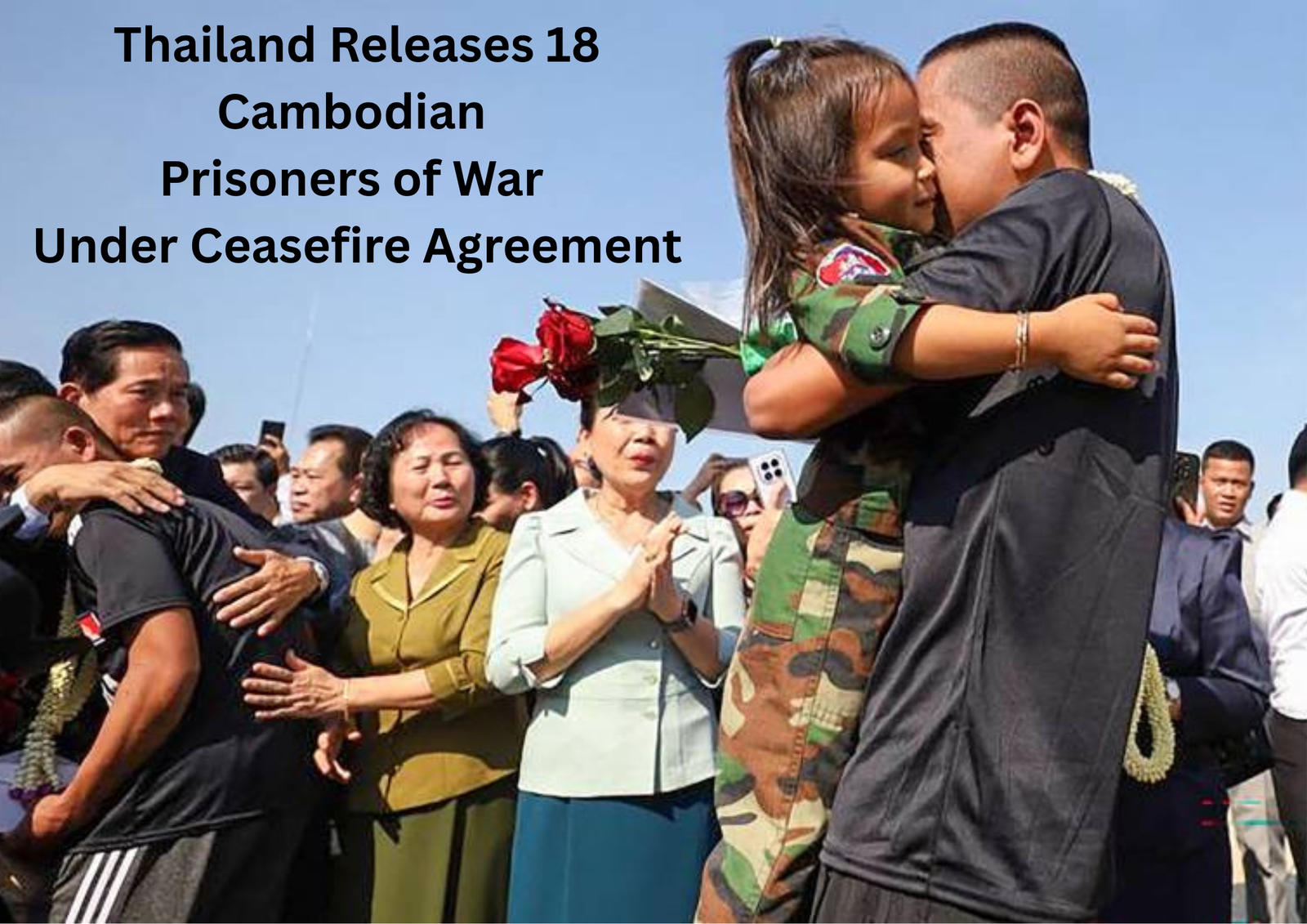
Thailand has released 18 Cambodian soldiers who had been detained during recent border hostilities, marking a significant step toward easing tensions after a ceasefire agreement between the two neighboring countries. The release took place on Tuesday and is being widely viewed as a gesture aimed at reinforcing diplomatic trust following weeks of uncertainty along the shared frontier.
The soldiers were captured during a series of clashes that erupted earlier this month in disputed border areas. While official details about the confrontations remain limited, both governments had previously acknowledged heightened military activity before agreeing to halt hostilities. The ceasefire, reached through diplomatic channels, has so far remained intact, according to officials familiar with the situation.
Thai authorities described the release as part of the practical implementation of the ceasefire framework. By returning detained personnel, Thailand signaled its intent to move beyond the recent conflict and focus on de-escalation. Cambodian officials, while not issuing an immediate detailed statement, have welcomed the development as a positive indication that dialogue is replacing confrontation.
Regional observers note that the handover of captured soldiers often serves as an early confidence-building measure in post-conflict situations. Such actions are designed to prevent misunderstandings, reduce the risk of renewed violence, and create space for broader diplomatic engagement. In this case, the release may pave the way for future discussions on border management and long-standing territorial concerns.
Despite the progress, many questions remain unanswered. Neither side has publicly disclosed the precise terms of the ceasefire agreement, nor have they clarified where or how the transfer of the soldiers was conducted. Analysts suggest that the lack of detail reflects a cautious approach, with both governments aiming to avoid public pressure while negotiations continue behind the scenes.
The Thailand–Cambodia border has historically been a sensitive area, with periodic disputes flaring up over demarcation and access to strategic locations. While most past incidents have been resolved diplomatically, occasional clashes have underscored the fragility of peace in the region. The latest ceasefire and subsequent prisoner release are therefore being closely watched by neighboring countries and regional organizations.
International reactions have been measured but supportive. Diplomats and regional experts see the move as a constructive signal that both nations are committed to preventing further escalation. Maintaining open communication channels, they argue, will be critical in ensuring that the ceasefire evolves into a more durable understanding.
For now, the release of the 18 Cambodian soldiers stands as a tangible outcome of the ceasefire process. Whether it leads to lasting stability will depend on continued restraint, transparency, and a willingness from both sides to address underlying issues through sustained dialogue rather than force.
Read this blog to understand why the death of Khaleda Zia deepens political uncertainty in Bangladesh before the national vote.