
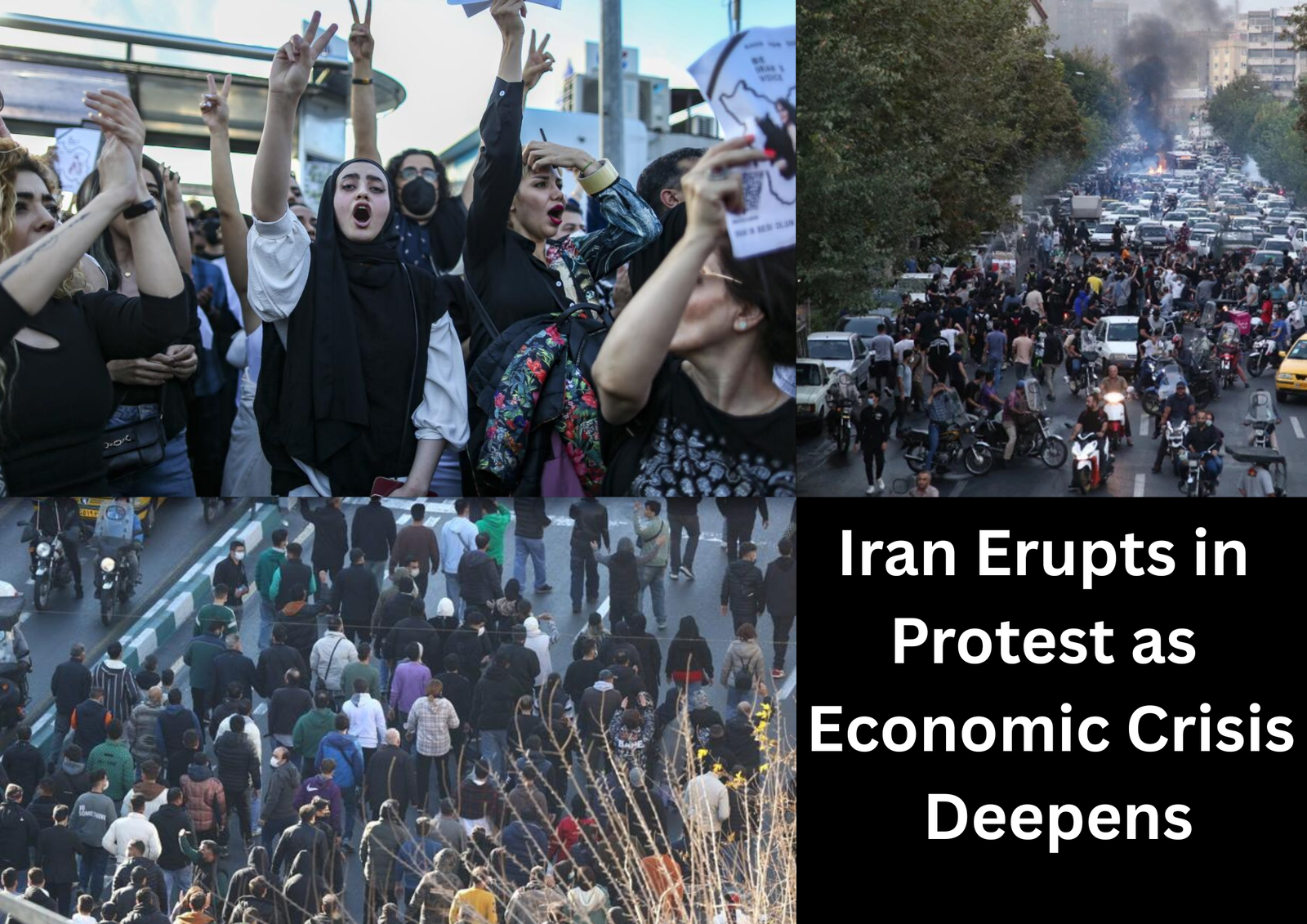
A growing wave of protests linked to deepening economic hardship has spread across several regions of Iran, highlighting rising public frustration over inflation, currency instability, and declining living standards. The unrest, which intensified midweek, has reportedly resulted in multiple fatalities and dozens of injuries, making it one of the most serious episodes of civil disorder in recent years.
Protests Expand Beyond Major Cities
What began as scattered demonstrations by shopkeepers and small business owners has quickly expanded into broader public protests. Students, laborers, and local residents have joined gatherings in both urban centers and provincial towns, signaling widespread dissatisfaction that cuts across social groups.
While Tehran remains a focal point, demonstrations have also emerged in western and central provinces. Observers note that although the protests have not yet reached the nationwide scale seen in earlier uprisings, their rapid spread reflects mounting economic anxiety among citizens.
Casualties and Clashes Reported
Local officials and media sources have confirmed several deaths following confrontations between protesters and security personnel. Incidents were reported in multiple cities where crowds allegedly clashed with police forces, damaged public property, and set vehicles ablaze.
Security agencies reported injuries among officers as well as protesters, with authorities attributing the violence to what they described as “public disorder instigated by agitators.” Human rights organizations, however, have stated that some of those killed were demonstrators, raising concerns over the use of force during crowd control operations.
Economic Crisis at the Core
At the heart of the unrest lies Iran’s worsening economic situation. The national currency has suffered a dramatic decline in value, eroding purchasing power and making essential goods increasingly unaffordable. Everyday expenses such as food, medicine, and fuel have surged, placing significant pressure on households.
Many middle-income families report that savings accumulated over decades have lost much of their value. For lower-income workers, rising prices have translated into immediate financial insecurity, prompting renewed calls for economic reform and government accountability.
Analysts say the currency crisis has amplified public frustration, particularly among younger Iranians who face limited employment opportunities and shrinking prospects for economic mobility.
Government Response and Arrests
Authorities have acknowledged the unrest and confirmed multiple arrests linked to protest activity. Officials in several provinces stated that individuals accused of vandalism or disrupting public order were detained, and additional security deployments were made to restore calm.
Government representatives have emphasized the importance of maintaining stability while also signaling a willingness to listen to citizens’ concerns. Some officials have publicly recognized the economic strain facing the population, though they argue that external pressures and long-standing sanctions have limited policy options.
Despite these statements, critics say the response has focused more on containment than addressing the underlying economic causes driving public anger.
International Reaction and Human Rights Concerns
The protests have drawn attention from international observers and foreign governments. Statements released by external human rights organizations and diplomatic bodies expressed concern over reports of violence, arrests, and restrictions on public assembly.
Calls have been made urging Iranian authorities to allow peaceful expression and ensure proportional responses by security forces. Analysts note that international scrutiny tends to intensify during periods of internal unrest, especially when economic conditions deteriorate rapidly.
Media Restrictions and Information Gaps
Coverage of the protests within Iran has remained limited, with state-affiliated outlets providing partial accounts of events. Independent reporting has been constrained, leading many Iranians to rely on social media and foreign-based news platforms for updates.
Media experts point out that restrictions on journalism during periods of unrest contribute to uncertainty and misinformation, complicating efforts to assess the full scale of demonstrations and casualties.
A Familiar Pattern of Unrest
The current demonstrations echo previous protest movements driven by economic grievances, including major unrest episodes over the past decade. Each wave has underscored persistent structural challenges within the economy and recurring public demands for reform.
While the long-term trajectory of the current protests remains uncertain, observers say the situation reflects deeper societal pressures that are unlikely to ease without meaningful economic stabilization.
Looking Ahead
As authorities attempt to restore order, the coming weeks may prove critical in determining whether protests subside or expand further. Much will depend on the government’s ability to address immediate economic concerns and rebuild public confidence amid ongoing financial strain.
For many Iranians, the demonstrations represent more than a reaction to short-term price increases-they reflect broader anxieties about economic security, opportunity, and the future direction of the country.
To understand the human impact behind the tragedy, read “Deadly New Year’s Fire at Swiss Alpine Resort Sparks National Mourning” for full details, eyewitness accounts, and lessons that should not be overlooked.