
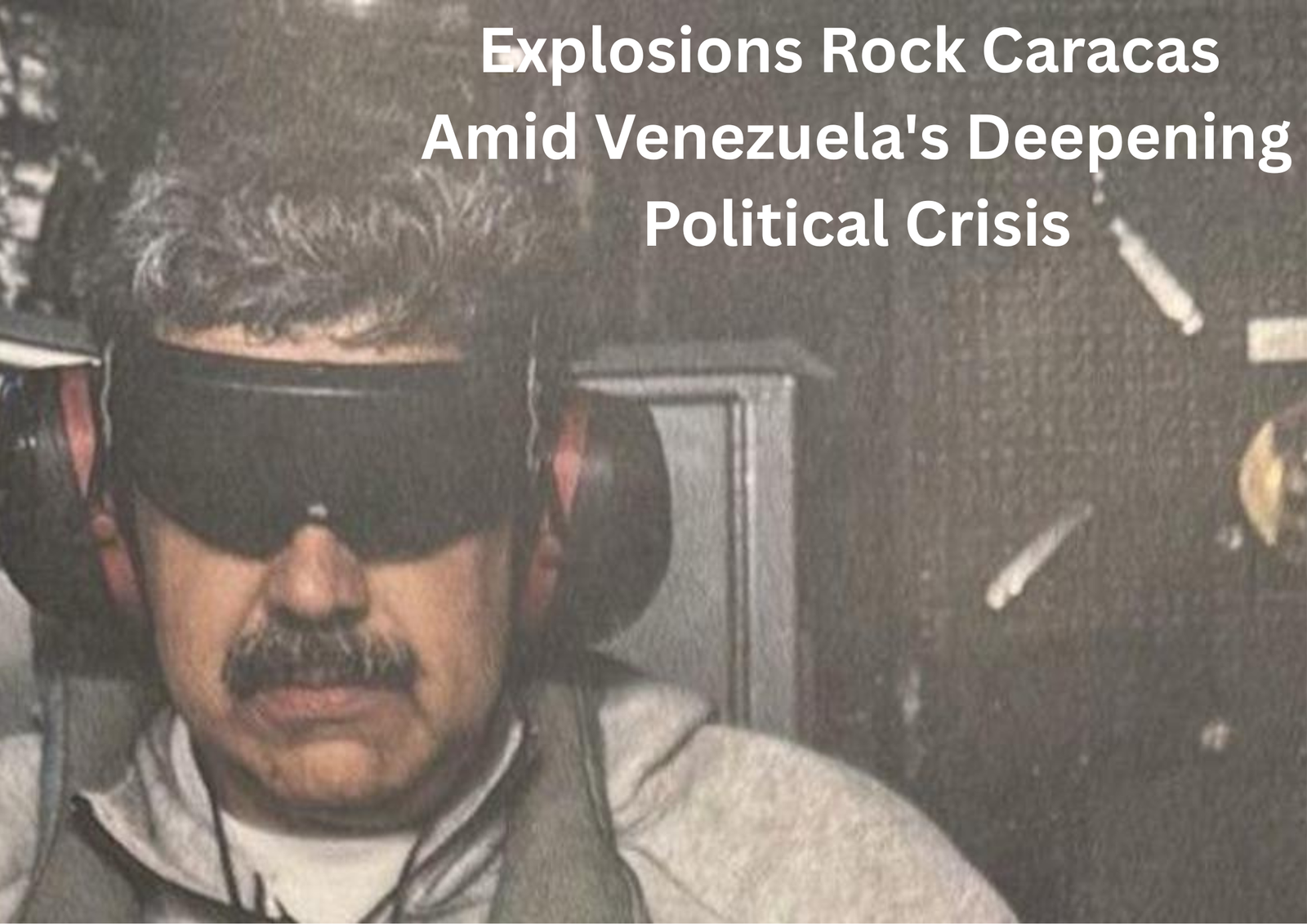
A wave of reported explosions in central Caracas has intensified political uncertainty in Venezuela, as questions continue to mount over the country’s leadership and the absence of clear official communication from the government.
Residents in multiple districts of the capital described loud blasts in the early hours of Friday, January 3, with smoke and fire visible near areas housing key government institutions. The reported incidents occurred close to historically significant administrative zones, prompting emergency responses and the temporary closure of several surrounding streets.
Images and videos circulating through international media outlets and social platforms showed plumes of smoke rising above the city skyline during nighttime hours. Emergency personnel were seen navigating debris-covered roads while fires burned in the vicinity of affected structures. Authorities have not released a detailed damage assessment, and casualty figures, if any, remain unverified.
What has added to the tension surrounding the events is the lack of clarity regarding Venezuela’s political leadership. As of Saturday, no official statement has confirmed the location or status of President Nicolás Maduro. International media reports citing unnamed sources suggested that Maduro is no longer actively exercising power, though no formal resignation, transfer of authority, or succession announcement has been made public.
The absence of clear leadership communication has fueled widespread speculation and concern among citizens and observers. Political analysts warn that uncertainty at the executive level, combined with violent incidents in the capital, could deepen instability in an already fragile environment.
Communications disruptions were reported in parts of Caracas following the explosions. Some residents said mobile networks were unreliable, while others experienced temporary internet outages. It remains unclear whether these disruptions were caused by infrastructure damage, security measures, or unrelated technical issues.
State institutions have so far remained largely silent. No official explanation has been issued regarding the cause of the explosions, and no group has claimed responsibility. Security forces increased their presence in central areas of the city, and access to several government-adjacent locations was restricted as investigations reportedly began.
International reactions have been cautious. Foreign governments and regional organizations have called for calm and urged Venezuelan authorities to provide transparent information. Diplomatic sources emphasized the importance of maintaining constitutional order and protecting civilian safety during what appears to be a rapidly evolving situation.
Venezuela has faced prolonged political and economic challenges over the past decade, marked by institutional tensions, contested authority, and periodic unrest. Experts note that sudden leadership ambiguity can heighten risks, particularly when combined with security incidents in a nation’s capital.
For ordinary residents of Caracas, the immediate concern remains safety and access to reliable information. Many have expressed frustration over the lack of official updates, relying instead on fragmented reports from international media and social networks. Local businesses in affected areas remained closed on Friday, while schools in nearby districts reportedly suspended activities as a precaution.
As investigations continue, the situation remains fluid. Observers caution against drawing conclusions until verified information is released by credible authorities. In the coming days, clarity around governance, accountability, and public safety will be critical in determining the broader implications of the events reported in Caracas.
This story is developing, and further updates are expected as more information becomes available.
For deeper insight into Zelensky Restructures Presidential Office, Elevates Intelligence Leadership Amid Political Turmoil, this blog offers essential context, analysis, and developments worth following closely.