Political tensions between Iran and the United States intensified this week as Iranian officials issued firm warnings against foreign involvement in the country’s internal unrest, following strong remarks from U.S. President Donald Trump regarding ongoing protests inside Iran.
The latest diplomatic exchange comes as Iran faces a wave of demonstrations driven largely by economic distress, currency instability, and growing public frustration. While Iranian authorities have emphasized their willingness to address economic grievances, they have drawn a clear line against what they describe as external interference and violent unrest.
U.S. Statements Draw Sharp Reaction from Tehran
On January 2, President Trump posted a message warning Iran against the use of force on demonstrators, stating that the United States was prepared to act if peaceful protesters were harmed. U.S. officials later clarified that the statement was intended as a warning rather than an indication of immediate military action, noting that troop levels and regional deployments remain unchanged.
Iran’s response was swift. Foreign Minister Abbas Araghchi described the remarks as irresponsible and destabilizing, asserting that Iran’s armed forces remain prepared to defend national sovereignty. He stressed that Iran would firmly oppose any attempt by foreign governments to influence domestic affairs, adding that such actions could escalate an already fragile regional situation.
Araghchi also pointed to recent U.S. domestic security measures, arguing that maintaining public order is a responsibility faced by governments everywhere, not a justification for external intervention.
Supreme Leader Signals Tougher Security Approach
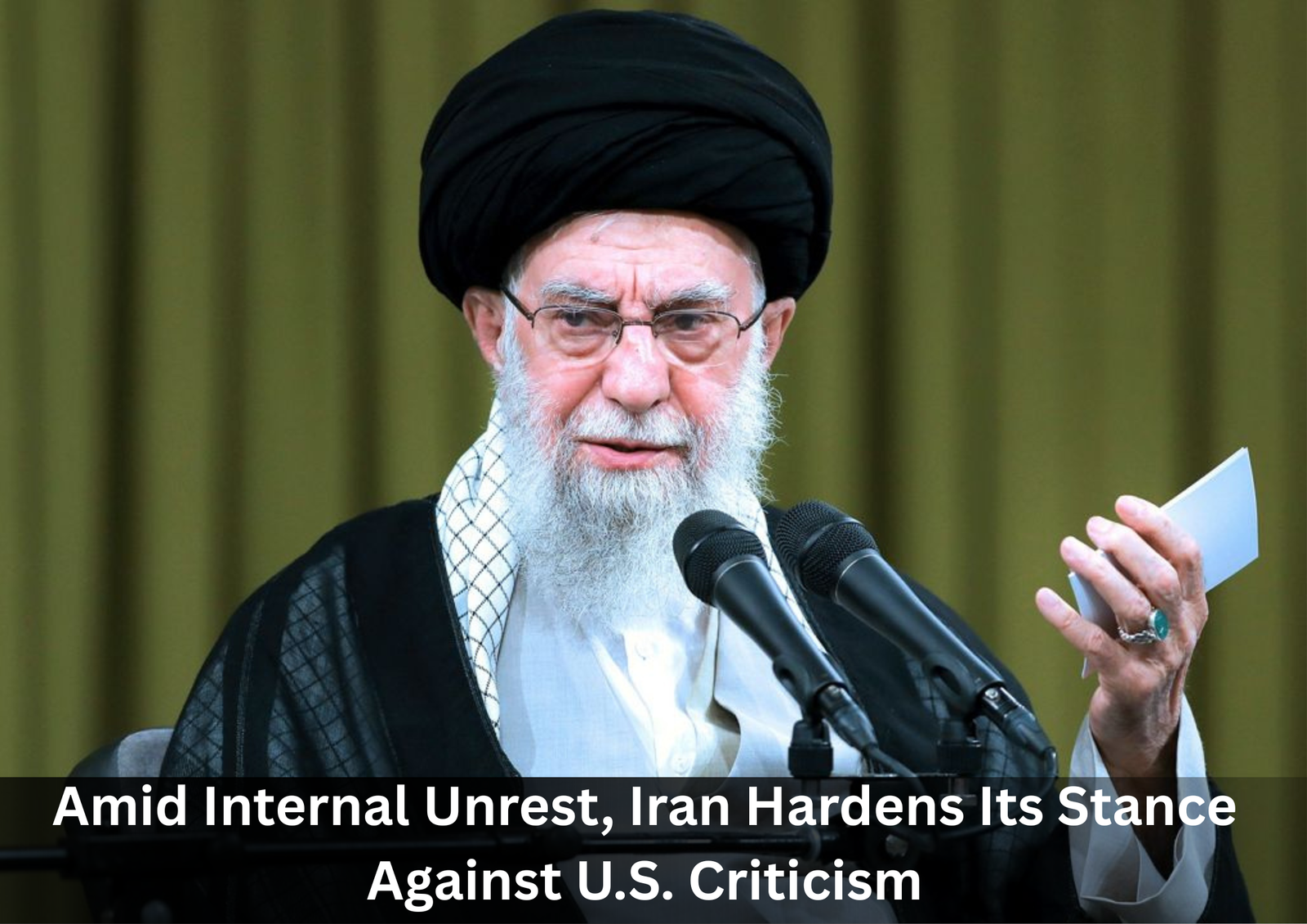
Iran’s Supreme Leader, Ayatollah Ali Khamenei, addressed the unrest publicly on January 3, marking his first direct comments since the protests began. While acknowledging that initial demonstrations by shopkeepers were rooted in legitimate economic concerns, he distinguished those protests from actions he labeled as violent or politically motivated.
Khamenei called on officials to engage with peaceful demonstrators but warned that acts of vandalism or attacks on state institutions would not be tolerated. He reiterated long-standing claims that hostile foreign powers were exploiting economic hardships to provoke instability, a narrative frequently used by Iranian leadership during periods of unrest.
His remarks are widely viewed as signaling increased authority for security forces to respond more aggressively where protests cross into violence.
Economic Roots of the Protests
The demonstrations began in late December 2025, initially led by shopkeepers in Tehran protesting another sharp decline in the value of the Iranian rial. The currency’s fall has intensified inflation, raised the cost of basic goods, and placed additional strain on households already affected by years of sanctions and limited economic growth.
Within days, the protests spread beyond commercial districts and into universities and residential areas, eventually reaching dozens of cities across much of the country. Social media videos circulating online show large crowds chanting political slogans, though the authenticity and scale of many clips cannot be independently verified.
Observers note that while the protests are geographically widespread, they have not yet reached the intensity or coordination seen during earlier nationwide uprisings.
Casualties and Arrests Reported
Clashes between protesters and security forces have resulted in multiple fatalities over the past week, according to various regional reports. Deaths have been reported in several western and southern towns, involving both demonstrators and members of Iran’s security forces.
Authorities have also confirmed a rise in arrests, particularly in areas where protests turned violent. State media reports indicate that some detainees are accused of possessing weapons or improvised explosive devices, though human rights groups have called for transparency and due process in handling those cases.
The Iranian government has not released a comprehensive national tally of casualties or arrests, contributing to ongoing uncertainty around the full impact of the unrest.
Broader Regional Implications
The internal crisis unfolds against a backdrop of heightened regional tensions. Recent discussions between U.S. and Israeli leaders, along with past military actions targeting Iranian nuclear facilities, have amplified concerns in Tehran about external pressure and security threats.
Iranian President Masoud Pezeshkian has attempted to strike a balanced tone, reaffirming that peaceful demands will be heard while warning that any foreign aggression would prompt a strong response. Analysts suggest internal divisions may exist between officials favoring dialogue and those advocating stricter enforcement measures.
International reactions have been cautious. European Union officials expressed concern over reported deaths and urged restraint, emphasizing the importance of protecting peaceful assembly and free expression.
Uncertain Path Forward
As protests continue, Iran faces the challenge of addressing deep-seated economic grievances while preventing further escalation. For now, both Tehran and Washington appear focused on rhetoric rather than direct action, but the situation remains fluid.
With regional tensions already elevated, observers warn that miscalculations on either side could have consequences extending well beyond Iran’s borders. Whether dialogue or confrontation defines the next phase may depend on how both domestic protests and international responses evolve in the coming days.
For deeper insight into “Explosions Reported in Caracas as Venezuela Faces Growing Political Uncertainty,” read this blog to understand the unfolding situation, key implications, and why it matters globally.