
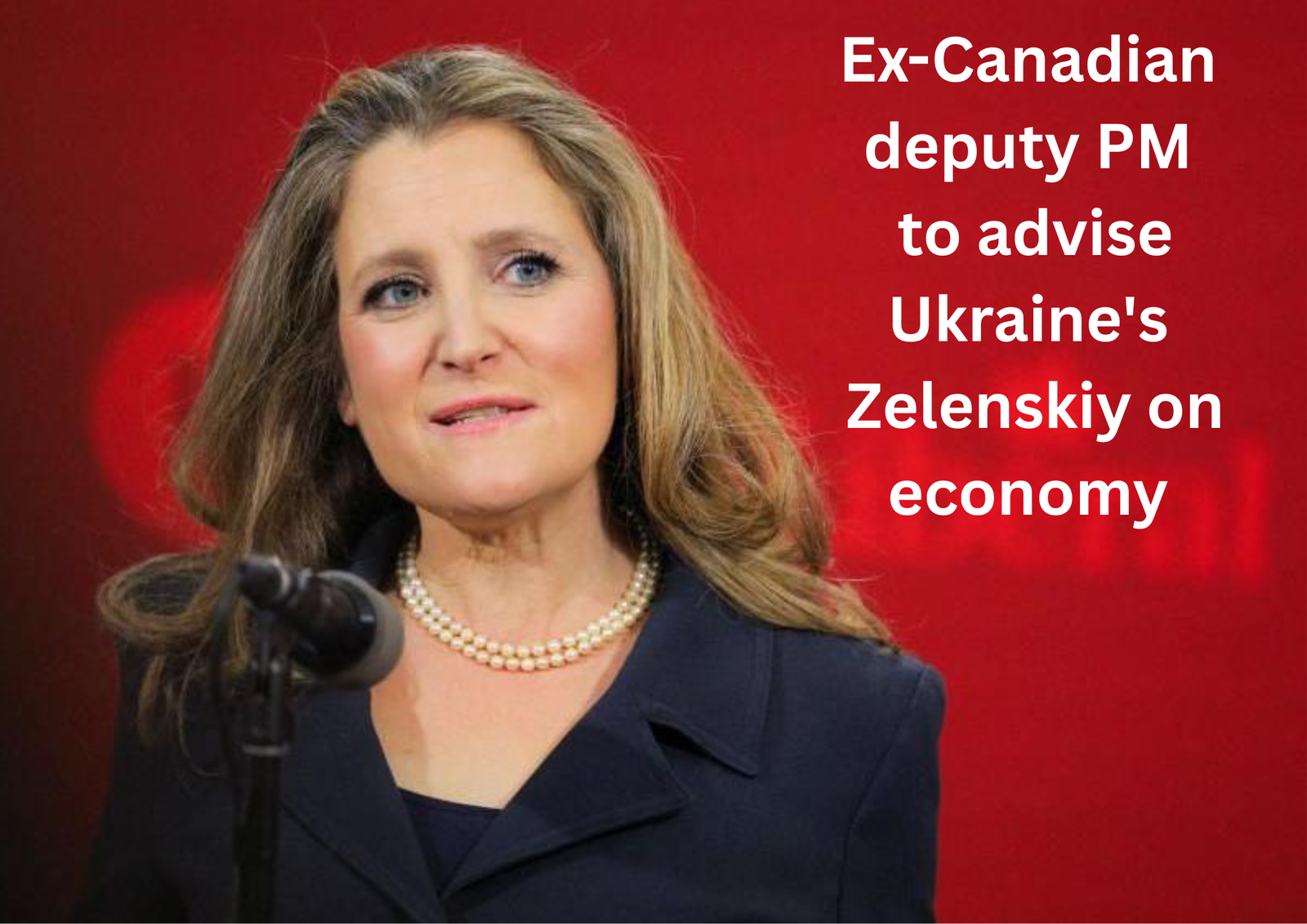
Former Canadian Deputy Prime Minister Chrystia Freeland has announced plans to step away from federal politics as she prepares to take on a new international role advising Ukrainian President Volodymyr Zelensky on economic development. The position will be unpaid and is expected to begin later this month.
President Zelensky confirmed the appointment on January 5, describing Freeland as a seasoned policymaker with extensive experience in global trade, finance, and post-crisis economic strategy. Freeland later confirmed that she would resign her seat as Member of Parliament for Toronto’s University–Rosedale riding in the coming weeks to avoid any conflict of interest.
In addition to leaving Parliament, Freeland will also relinquish her role as Canada’s special representative for Ukraine’s reconstruction, a post she assumed in late 2025 under Prime Minister Mark Carney.
A Prominent Political Career in Canada
Freeland has been one of the most influential figures in Canadian politics over the past decade. She previously served as finance minister, becoming the first woman to hold the position, and later as deputy prime minister. Earlier cabinet roles included foreign affairs and international trade, where she played a central role in renegotiating North America’s trade framework.
Her political trajectory shifted in late 2024 when she resigned from cabinet following disagreements with then-Prime Minister Justin Trudeau over economic policy and U.S. trade risks. That departure marked a turning point in Trudeau’s leadership and preceded broader changes within the Liberal Party.
Under Prime Minister Carney, Freeland briefly served as minister of transport and internal trade before transitioning to her Ukraine-focused envoy role.
Political Reaction and Domestic Impact
The announcement has prompted debate in Ottawa. Opposition figures argued that holding a seat in Parliament while advising a foreign government would be inappropriate. Freeland’s decision to resign has largely addressed those concerns, though it will trigger a by-election in her Toronto constituency.
The seat is widely regarded as a Liberal stronghold. While the governing party currently governs with a narrow minority, analysts suggest the by-election outcome is unlikely to alter the broader balance of power.
Ukraine’s Economic Strategy Amid Ongoing War
Zelensky framed Freeland’s appointment as part of a broader effort to strengthen Ukraine’s economic resilience during a critical phase of the war. He noted that the country must be prepared both for rapid recovery through diplomacy and for long-term resistance if international support falters.
Her arrival comes amid significant changes within Ukraine’s leadership structure. In recent weeks, the president has overseen multiple high-level replacements across security and intelligence institutions, describing the moves as a comprehensive reset designed to prepare the state for the next stage of the conflict.
Deep Personal Ties to Ukraine
Freeland’s connection to Ukraine dates back decades. As a university student, she participated in a democracy-focused exchange program in Soviet-era Ukraine, an experience that later emerged in declassified KGB files where she was reportedly monitored under a code name.
She went on to build a career in international journalism and authored a book examining post-Soviet economic transitions. Over the years, Freeland has remained closely engaged with Ukraine’s political and civic life and has been a consistent advocate for the country since Russia’s annexation of Crimea.
Her support led to sanctions imposed on her by Moscow in 2014, and she has since received one of Ukraine’s highest civilian honors for her contributions.
Looking Ahead
Freeland’s advisory role coincides with renewed international discussions on Ukraine’s reconstruction. Western leaders are currently meeting in Paris to explore potential pathways toward ending the war and rebuilding the country’s economy, including proposals involving large-scale investment funds and frozen Russian assets.
Separately, Freeland is set to assume the role of chief executive of the Rhodes Trust in July 2026, a paid position overseeing one of the world’s most prestigious scholarship programs. She has confirmed she does not intend to seek elected office again in Canada.
Her transition marks the end of a significant chapter in Canadian politics and the beginning of a new phase focused on international economic diplomacy.
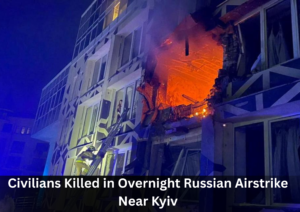
Don’t miss this in-depth blog on “Russian Overnight Air Assault Kills Civilians Near Kyiv as Europe Pushes New Peace Efforts”-read on for critical context, key developments, and why it matters now.