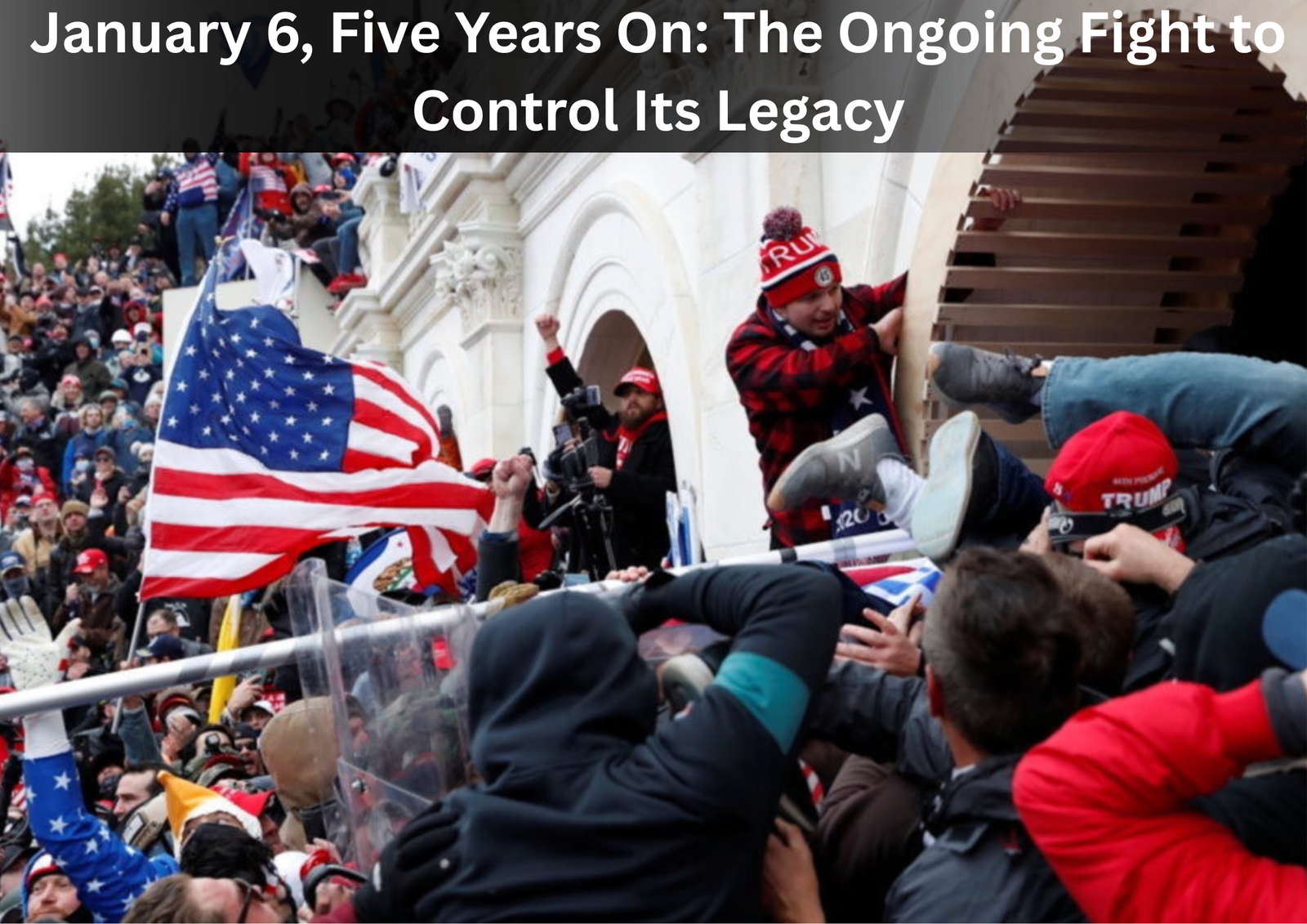
Five years after the storming of the U.S. Capitol, the events of January 6, 2021, continue to divide the nation-not only politically, but over the basic facts of what occurred. As the anniversary passed this week, the Trump administration and its supporters marked the date with sharply contrasting messages that revealed how deeply contested the legacy of that day remains.
At the center of the controversy was a newly launched White House webpage that presents an alternative account of the Capitol attack. The site portrays those who breached the building as nonviolent demonstrators and places responsibility for the chaos on law enforcement officials and Democratic leaders. Critics across the political spectrum quickly described the effort as an unprecedented attempt by an administration to reshape an event that has been extensively documented through court records, congressional investigations, and thousands of hours of video footage.
The webpage highlights President Donald Trump’s January 6 speech, characterizing it as a call for lawful protest while omitting language that prosecutors and judges have cited as inflammatory. It also disputes widely accepted findings regarding injuries and deaths linked to the attack, including the death of U.S. Capitol Police officer Brian Sicknick, who collapsed and died a day after confronting rioters.
Several claims on the site have been repeatedly challenged by officials and experts, including assertions that then–Vice President Mike Pence had the authority to block certification of the 2020 election and that House Speaker Nancy Pelosi rejected an offer of National Guard troops ahead of the attack. Both claims have been denied by those involved and contradicted by official records.
While the administration framed the website as a response to what it calls years of “media distortion,” Democrats and several former law enforcement officials argued that the project undermines trust in democratic institutions. They warned that minimizing political violence sets a dangerous precedent, particularly as the country approaches another contentious election cycle.
The anniversary also saw activity on the streets of Washington. A small group of individuals who had previously been charged or convicted for their roles in the attack-many of whom received presidential pardons in 2025-gathered near the Capitol. Some participants retraced parts of the original march route, while others paused to commemorate Ashli Babbitt, who was fatally shot by police during the breach.
Although many rallygoers expressed gratitude for their pardons, several voiced frustration that financial compensation and broader criminal justice reforms had not followed. Organizers framed their demands as a continuation of what they view as unresolved grievances stemming from the prosecutions that followed January 6.
Inside the Capitol, Democrats marked the anniversary with an informal hearing focused on the long-term impact of the attack. Former Capitol Police officer Winston Pingeon testified about being assaulted during the riot and criticized the decision to pardon those involved in violence against officers. Another witness, Pam Hemphill, said she declined a pardon and described her participation in the attack as a mistake fueled by misinformation.
Republican leaders, by contrast, largely avoided public comment. A handful of lawmakers downplayed the severity of the events, while others chose silence, reflecting ongoing divisions within the party over how-or whether-to confront January 6 directly.
According to findings from a bipartisan congressional investigation, the attack was an organized effort to disrupt the certification of a presidential election and resulted in injuries to more than 140 police officers. The committee concluded that the assault represented a direct challenge to the peaceful transfer of power, a cornerstone of American democracy.
Five years later, the physical damage to the Capitol has long been repaired. The political and historical damage, however, remains unresolved. As competing narratives harden, January 6 has become more than a date-it has become a test of how the nation remembers, records, and learns from its most turbulent moments.
Don’t miss this insightful analysis-Mayor Mamdani’s Opening Days Blend Symbolism, Dialogue, and Early Signals of Policy Direction offers essential context and perspectives worth reading to fully understand the administration’s emerging path.